The anime convention of the 2000s is alive at Anime NJ++, plus Keita Amemiya was there

I kind of forget that things are coming up, or that they happened two weeks ago, or indeed my position in space and time. So it was a last-minute thing when I asked my buddies if I could tag along with them to Anime NJ++, a very small convention run by the small anime importer Media Blasters in a small hotel in New Jersey whose guest of honor happened to be actual tokusatsu god Keita Amemiya, creator of Garo.
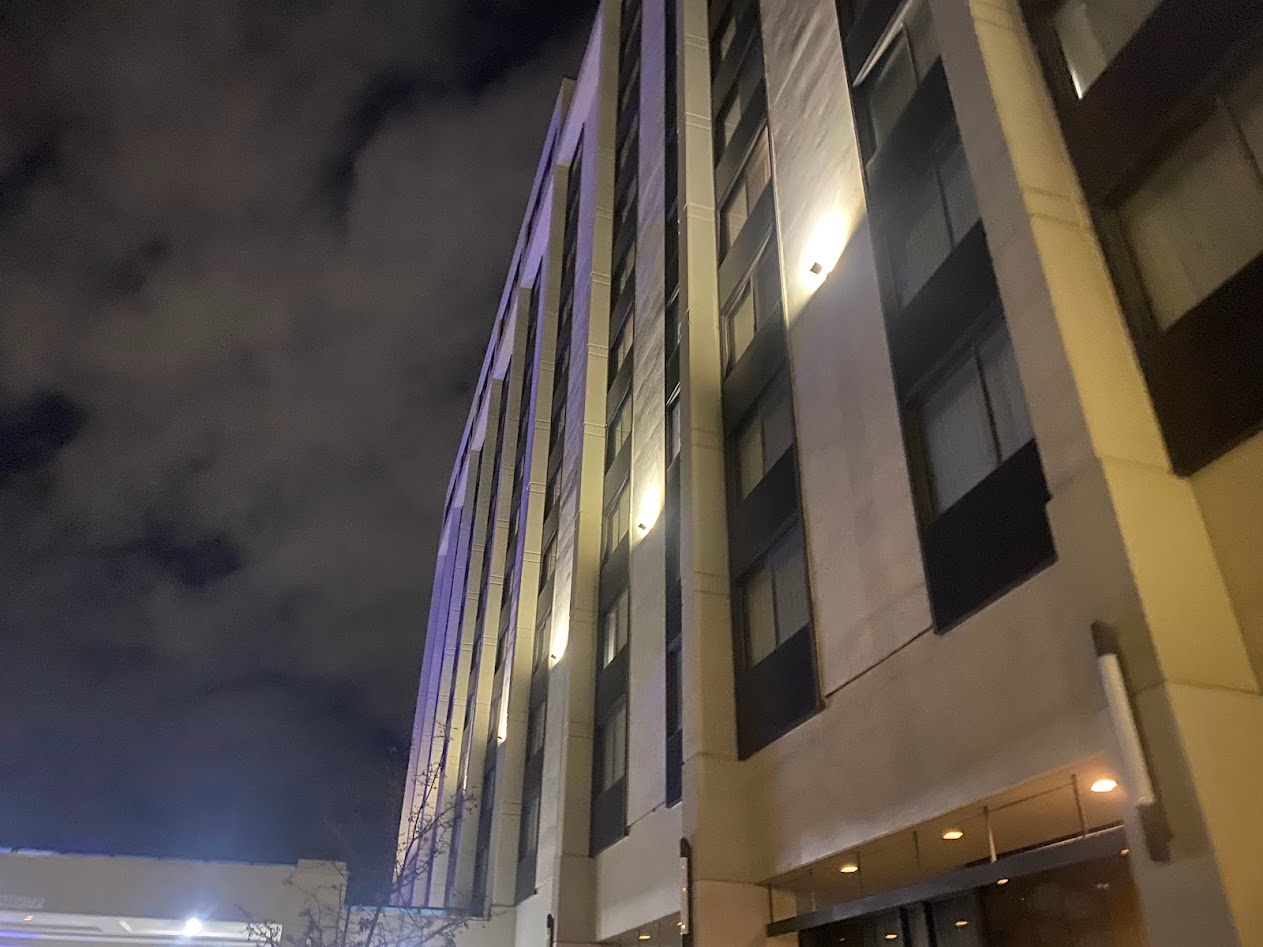
Key word, though: small. Visiting mostly large East Coast cons, I used to say that the 2000s was a bygone “wild west” era of a small space populated by unsupervised teens and college kids making their own party in whatever space they were allowed to occupy. The thing is, you’ll still pretty much find that today, if you go to a small enough party.
The Gamesoft Robo Fun Club is a solo labor of love that depends entirely on paid subscriptions from readers to exist. If you enjoyed this piece and you'd like to see more, I'd love to see you become a regular or paid subscriber. Paid subscribers get exclusive posts and keep me fed. Thanks for reading the pitch and hope to see you subscribe!
Being at Anime NJ++ felt like I had gone back in time to the kind of grassroots events I used to walk into (or even help out at) in the 2000s. I’m talking the kind of small where you look at some 70s robot models on a table and the guy who runs the convention walks up and tells you exactly how and with what paint he did the job. (Nice job John; I really thought that gloss was off diecast metal.)
The convention was equipped with what I believe con-goers would call the absolute minimum for a weekend: a small dealer’s room, a video game room, a couple of tables for trading card games, two panel rooms (a fan panel is an advanced technique in which you entertain yourself by entertaining others armed with only your own natural charisma and a Powerpoint) and a few nightly events in the modest ballroom at the top of the building. Beyond that, you were making your own fun.
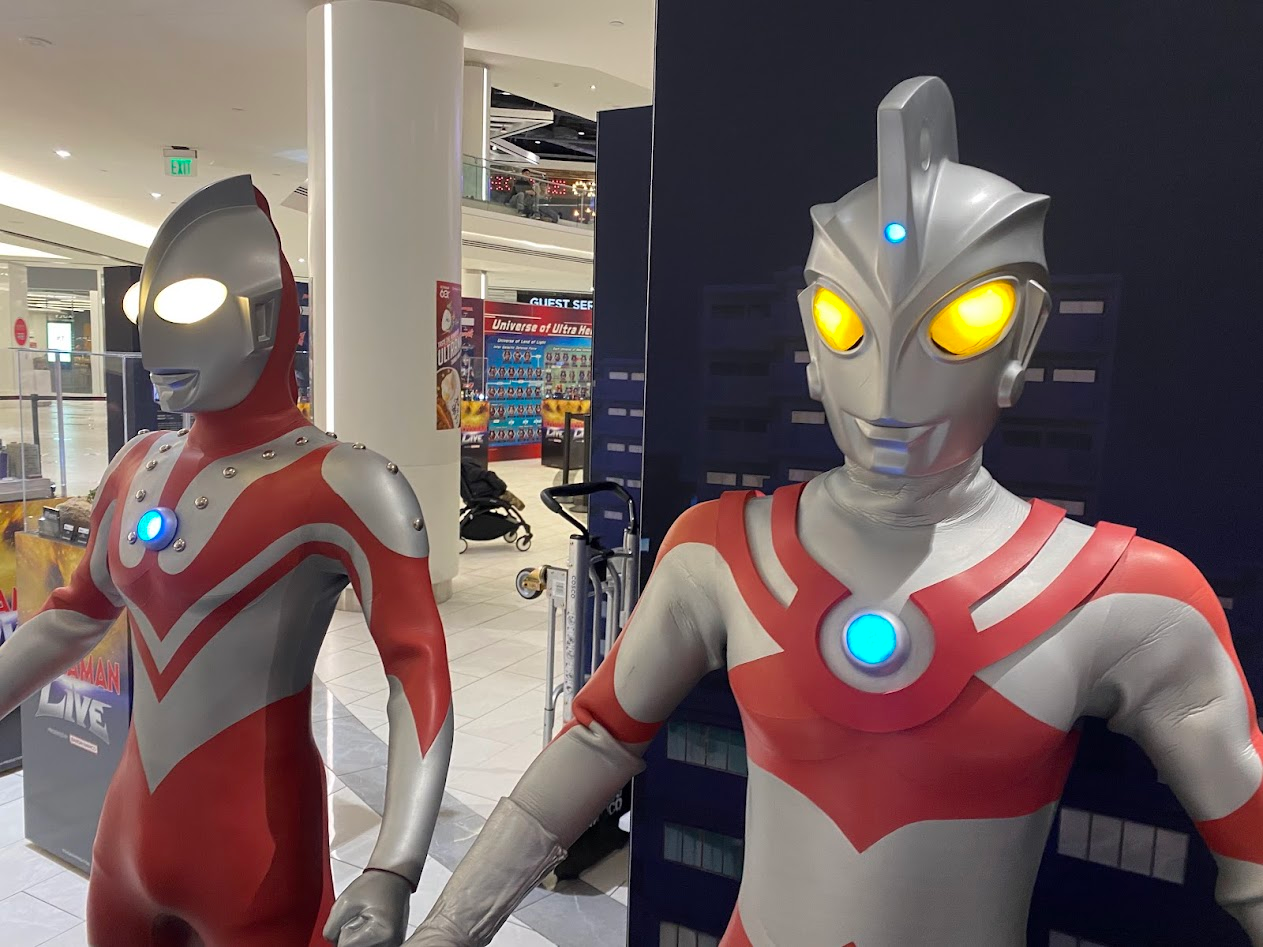
The schedule was slim enough that we actually spent much of Saturday at a second, fortuitously timed event: Ultraman Live at the American Dream Mall. When you pull into this place you definitely say “American Dream” ironically, as the massive imperial size of the parking lot alone un-ironically forces such a joke out of you. Shopping is your purpose, citizen. Procure these “Ultra” goods.
(I had planned to talk about the live show in this piece, but this piece is already extremely long. When I get to talking about Ultraman Live, expect it to be the bonus piece for subscribers.)
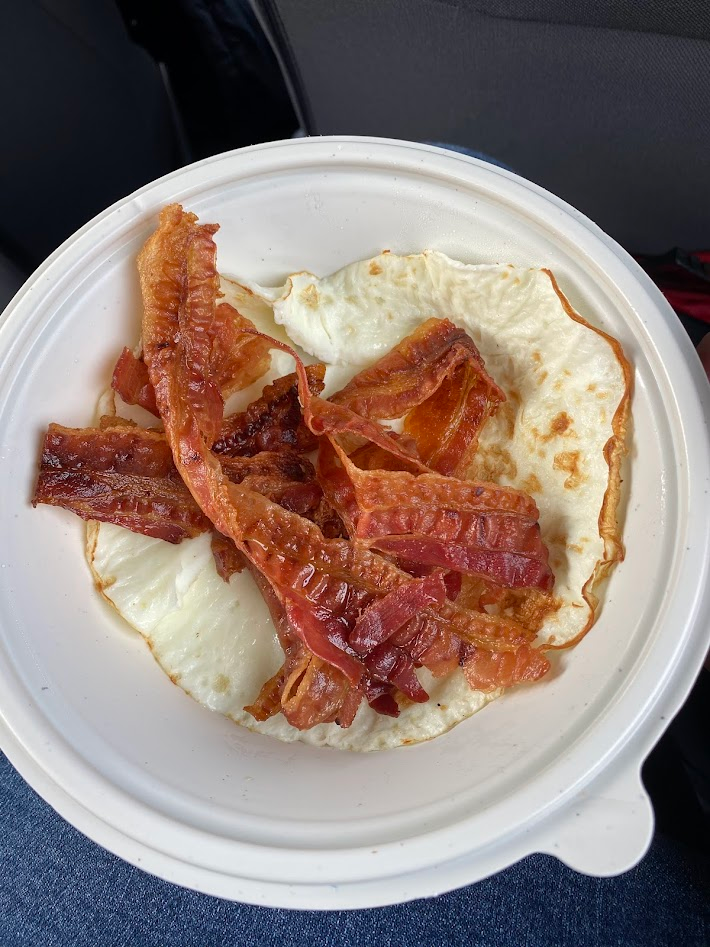
But enough about the stupid mall; the place I really spent all my time at that weekend was Wawa.
Who’s Amemiya?
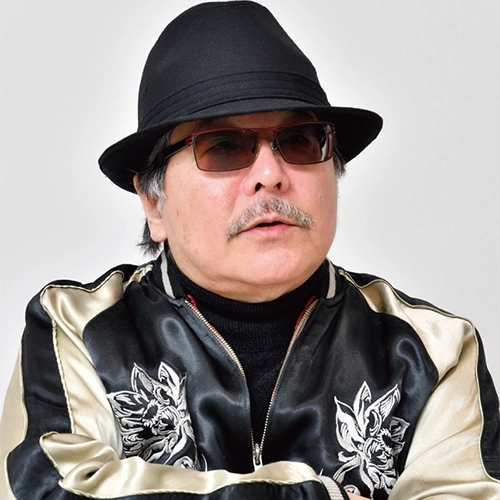
Before we get started, by the way, who’s Keita Amemiya? I’m glad you asked! Amemiya is a veteran director and designer, mostly on live-action special-effects (tokusatsu) series and movies. He's directed the big ones, Super Sentai and Kamen Rider, but even that seems like a footnote compared to his larger body of work. (He also has a quite diverse range of design work on video games, some of which you may know, like Clock Tower 3 or Onimusha 2.)
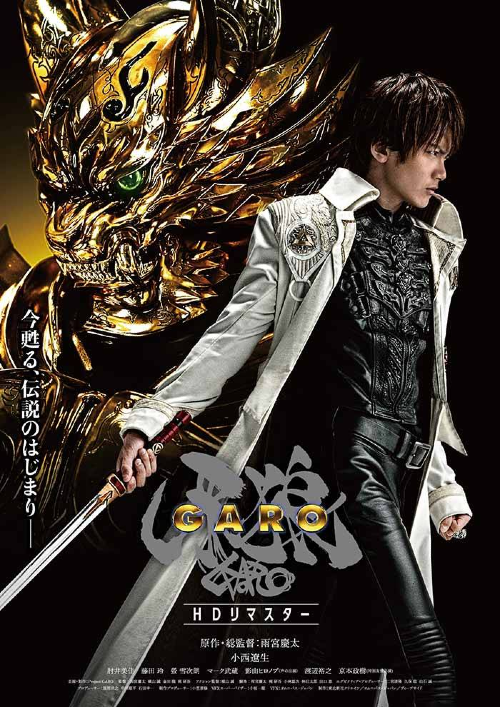
Amemiya’s style is dark, dramatic, and fantastical: his heroes are a little bit monstrous, and his monsters are a little bit beautiful. Exemplifying that aesthetic is Amemiya’s life work, the Garo series, a dark superhero fantasy in which armored Makai (underworld) Knights exterminate human-possessing Horrors as a family business. Everything Amemiya brings to life in Garo looks incredibly cool, from the heroes who dress like real-life Final Fantasy characters to the deeply creative and weird monsters they battle.
(His string of films from the late 80s to early 90s, including the Zeiram films, also feature some of the best of old-school Japanese special effects: I’m especially fond of Mechanical Violator Hakaider (here's the full movie on Tubi) as it features the hardest line ever spoken in the history of fiction.)
That being said, Garo has never been particularly popular outside of Japan; here in the States it’s only hardcore tokusatsu nerds and Japanese cult film fans who would know the name Keita Amemiya. He’s a tremendous talent, fully deserving of the title “guest of honor”, but simply unknown in the American otaku scene: the humble hotel was more than enough to accommodate the amount of folks who wanted to see him. But if anything, this benefited us. I'll get to that.
The con floor
The dealer’s room was largely tailored for the small audience of vintage (in both their interest and their age) fans that were presumed to show up. The very first vendor I approached immediately tried to sell me an extremely rare Gekiganger 3 resin kit— complete with rocket punch action– for $380. (If you know how hard Gekiganger stuff is to come by, you know that’s actually not a crazy price.) We spent quite a lot of time hanging around the dealer’s room almost buying a variety of very expensive robot toys… but then we saw how much Amemiya’s autograph cost ($50 and worth every penny), and we put our money back.
Video games were the other time-killer: a fighting game group brought the PS4/5s of everyone they knew and ran a Street Fighter 6 tourney while running every other mainstream FG somewhere on the game floor. This worked very nicely for me and my burning need to practice Joe Higashi BnB combos while Cyberpunk cosplayers stood on a chair next to me loudly demanding attention from passers-by. But I would recommend this game room have something for non-FG crowds, as the sheer amount of consoles being used to represent one genre seemed a bit of a waste. Plus not one of those consoles had Virtua Fighter 5 on it. Tragic!
There was a room for collectible card games attached to the game room, but I didn’t actually see anyone using it for that purpose: rather, it served as an informal rest station for anyone who needed to park for a while. We used it when I got my autograph from Amemiya, to let the ink dry. An impromptu Beyblade ring was set up by fans on the floor. Let it rip.
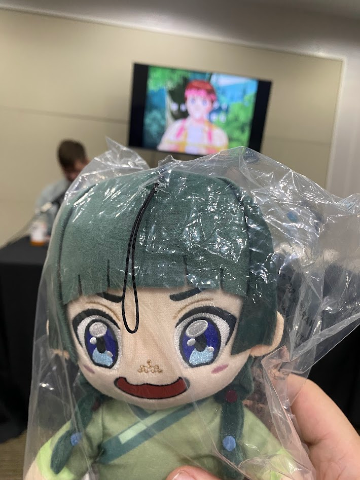
My buddies Pat and Tom ran their Giant Robots At Work panel to an excited, receptive crowd of about ten in a tiny conference room well out of the way of anything else going on at the convention proper: another moment that felt very “good old days”. I think more people like, or are willing to accept, giant robots these days. This makes me happy.
Giant Robots At Work is about the mini-sub-genre of anime of more realistic giant robots being used in real-world work settings. You would think there would be more Patlabors out there, considering how big that title was in its day, and how popular the concept is, but there really aren’t very many titles that commit to Giant Robot stuff as a mundane workaday job. If you see that panel title on a convention schedule (or you saw it at Otakon), it’s probably this panel, so attend with confidence!
Other than this and main events, we didn’t really hang for that long at the con. It was an event you could “finish” pretty quickly, including our stop-over for drinks at the hotel bar.
Events; a concert and tokusatsu movies
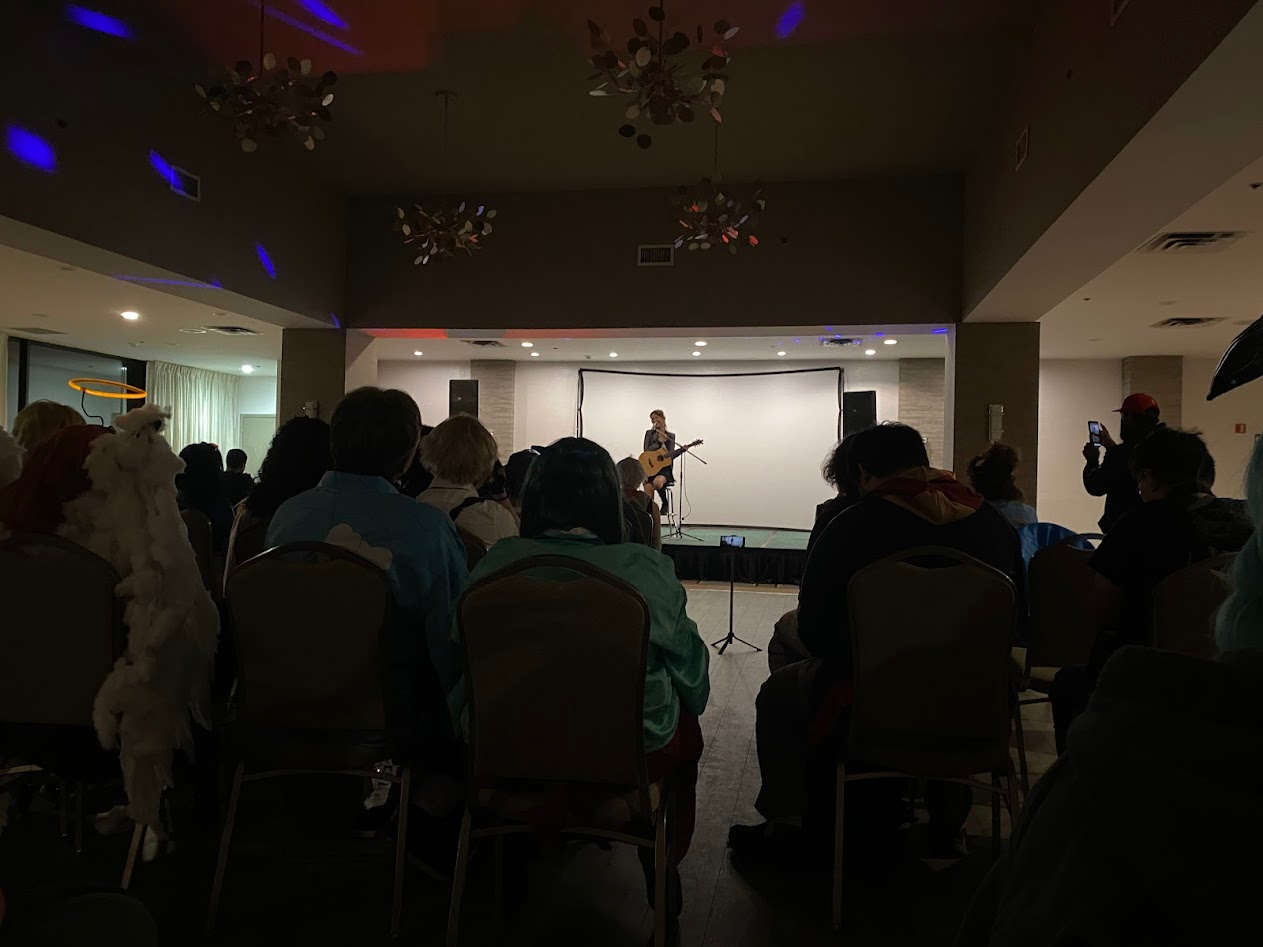
The first big event of the night was a concert with the musical guest Sawa. Also a super-niche guest, her claim to fame is as the vocalist in The World Ends With You soundtrack. This was my first indication that the events up in the ballroom were going to be pretty intimate; this was just Sawa and her guitar in front of maybe 30 people– I'm in the back of the crowd taking this photo– telling her life story and spilling her guts as is her right.
Kamen Rider J in kinda crappy quality with subs on Youtube. Media Blasters sells this on Blu and it probably deserves to be seen that way instead
After that it was a 90s Kamen Rider double feature: Amemiya’s two films Kamen Rider XO and Kamen Rider J. Unlike its Super Sentai cousin, Kamen Rider was on hold through most of the 90s aside from these films, which Media Blasters sells in a set along with the famously grotesque Shin Kamen Rider: Prologue (no, not the Anno one). XO feels like a test run or pilot film that never got further than this one movie, and Kamen Rider J (Amemiya speculated “maybe it’s J for Jumbo?”) is a wild maximalist ride that has all of the Amemiya trademarks: crazy fantasy concepts, scene-stealing villains, and brutal violence.
Amemiya himself popped out after the films for a nearly disastrous Q&A: after giving up on a clearly unprepared interpreter (the exact moment was when they couldn’t say “Eiji Tsubaraya”), Amemiya popped out his phone and started answering questions via Google Translate. Amemiya's a pretty to-the-point dude: when asked his influences, he'd say "Tsubaraya." When asked what he liked growing up, he'd say "Superheroes." But somewhere in there, between the Garo fans and the practical effects nerds and the artist, we managed a rapport. That small-crowd intimacy is something I haven't gotten to experience at a convention in a while.
This is the first ten minutes of the new film if you'd like to get a head-start.
The second night was a bigger treat: an American premiere of the recently released (like, still in theaters recent) Garo film, Garo: Taiga. A prequel movie about the father of the original protagonist, the new movie is, dare I say, cutting-edge tokusatsu. The monster designs are as wild as expected from Amemiya, the CG actually looks good and is beautifully integrated (in Garo?!) and the action choreography is top-shelf as always. A surprise animated sequence that integrates Amemiya’s illustrations is stunning, and having been exposed to the man’s artistic philosophy all weekend, it really resonated to see the movie tap on its essence.
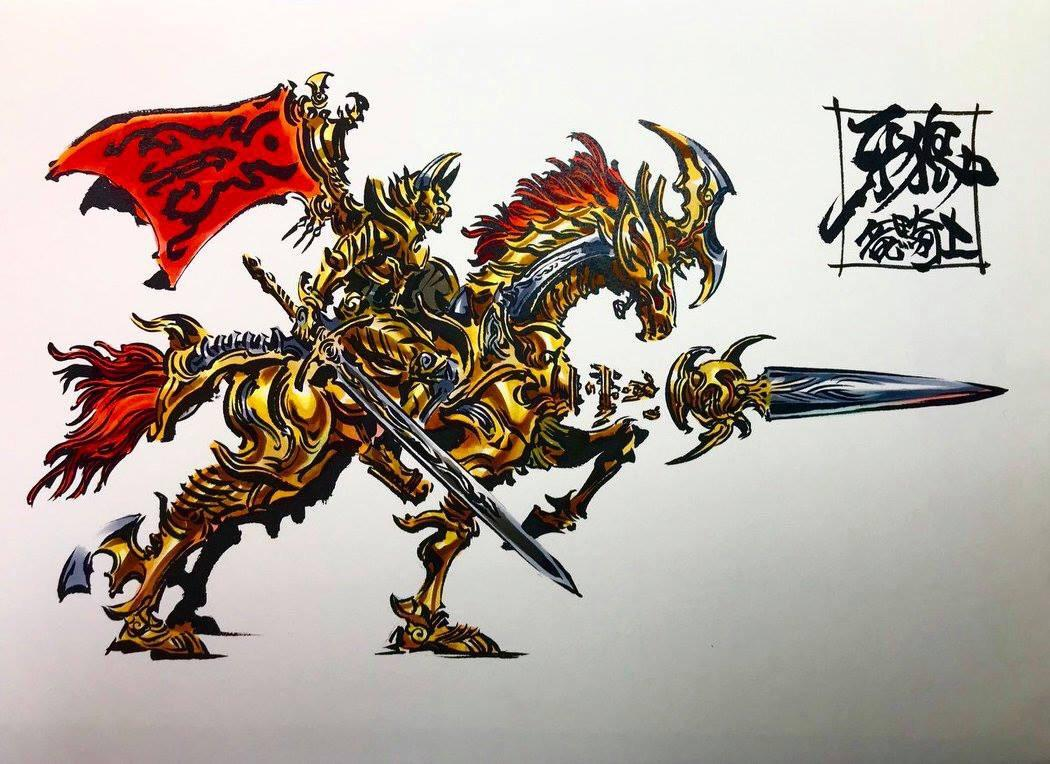
There is nothing like the old practical-effects Amemiya work, but I have long loved the dreamlike mystical world of the Garo series, heavy as it is on atmosphere and lore that, as in his art, Amemiya seems to cook up as he goes along. Sometimes it’s “real”— monster-fighting as the family trade, our hero forever on the night shift extinguishing tiny, pesky flames of evil— and in other moments it drifts out into the fantastical, the spiritual, the cosmic. It’s also achingly sincere; this film in particular signs off with a sentimental callback to the original series and an “in memoriam” for the late Hiroyuki Watanabe, who played the older Taiga in previous series.
The crowd was a little bigger as this was the premiere of a brand-new movie: however this also meant that— boy, this is "retro anime con" too, isn’t it— the crowd was so big and the projector placed so low that it was really hard to read the subtitles. I was close to the front and I still had to crane my head around the person I was sitting behind to read the dialogue. Even Amemiya joked about this afterwards.
As before, Amemiya came out for Q&A after the film, thankfully with a better interpreter this time.
Live drawing with Amemiya
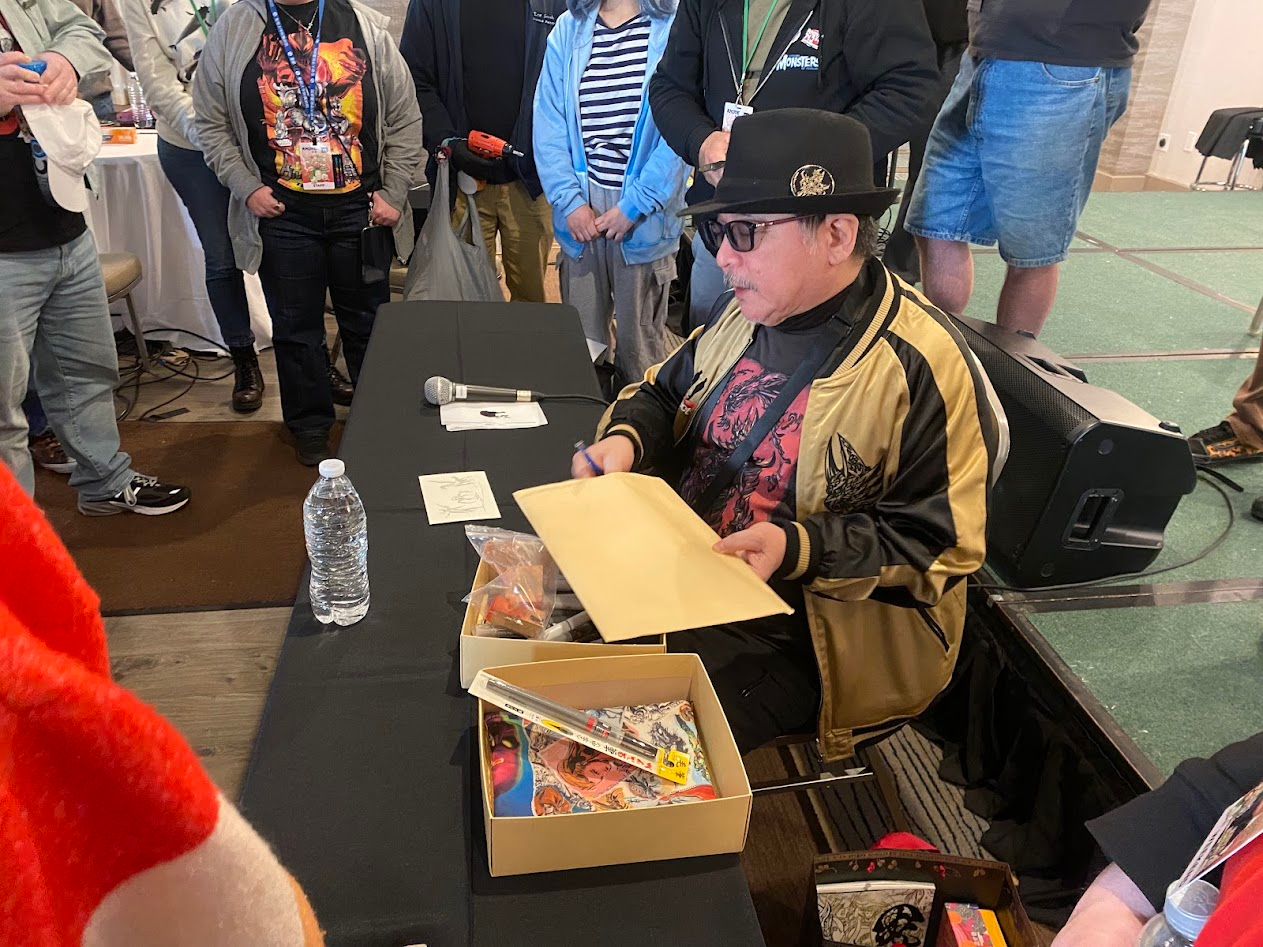
But more than seeing the movie and more than getting his autograph, the highlight of my weekend was getting to watch Amemiya work in person, directly over the man’s shoulder. As the turnout for a Sunday-afternoon character design Q&A was quite small— maybe 20-some people?— Amemiya suggested doing a live-draw where everyone could just crowd around him.
Amemiya draws daily in his sketchbook, a practice I believe he said he’s continued since his art school days. (Back before the destruction of Twitter I used to follow him, and I can attest that he really keeps in practice.) If you have seen the striking brush-like calligraphy used in the Garo series, you’ve seen what Amemiya is capable of doing with just an ink pen. Drawing without any guide lines, Amemiya drags a single beautiful brush line onto the center of the paper and tells us “At this stage, I still don’t know what I’m drawing yet.” Improvising, he pulls a fish out of the shape, then, as he adds details to it, decides that perhaps it is a dragon fish, and upon completing the scene decides that it is a beast that devours evil. All the while he looks like a damn wizard, willing this creature into existence.
When you see the way Amemiya works in his sketchbook, it becomes clear where the ideas come from. He doesn’t chase a target or set a goal: he simply allows the ideas to flow out freely from his pen.
To see Amemiya’s creative process in action, standing right next to the man, was an unbelievable surprise gift. He even gave the sketches to a few very lucky members of the audience; memory of a lifetime stuff right there. I was lucky just to be present.
Autograph
Autographs for Amemiya were 50 bucks, which is a little shocking— traditionally, Japanese guests have always signed for free at anime conventions— until you realize how much the artist put into his signatures. Remember, we're talking about a talented artist and calligrapher here: he's not just going to scribble out two lines like I do on a restaurant check.
Anime NJ++ is off to an auspicious start for me. This was Keita Amemiya's autograph: an entirely freehand ink pen drawing of Zeiram! It was incredibly impressive watching him just whip this up inside of two minutes.
— Tom Aznable (@tomaznable.bsky.social) 2025-11-15T00:27:17.452Z
Two of my friends bought a late-80s artbook by Amemiya featuring much of his work from the Zeiram era, and as such he drew them both beautiful sketches of the memorable villain. We gasped to see this, whipped up in minutes. It'd be insulting to ask the guy to do this for free.
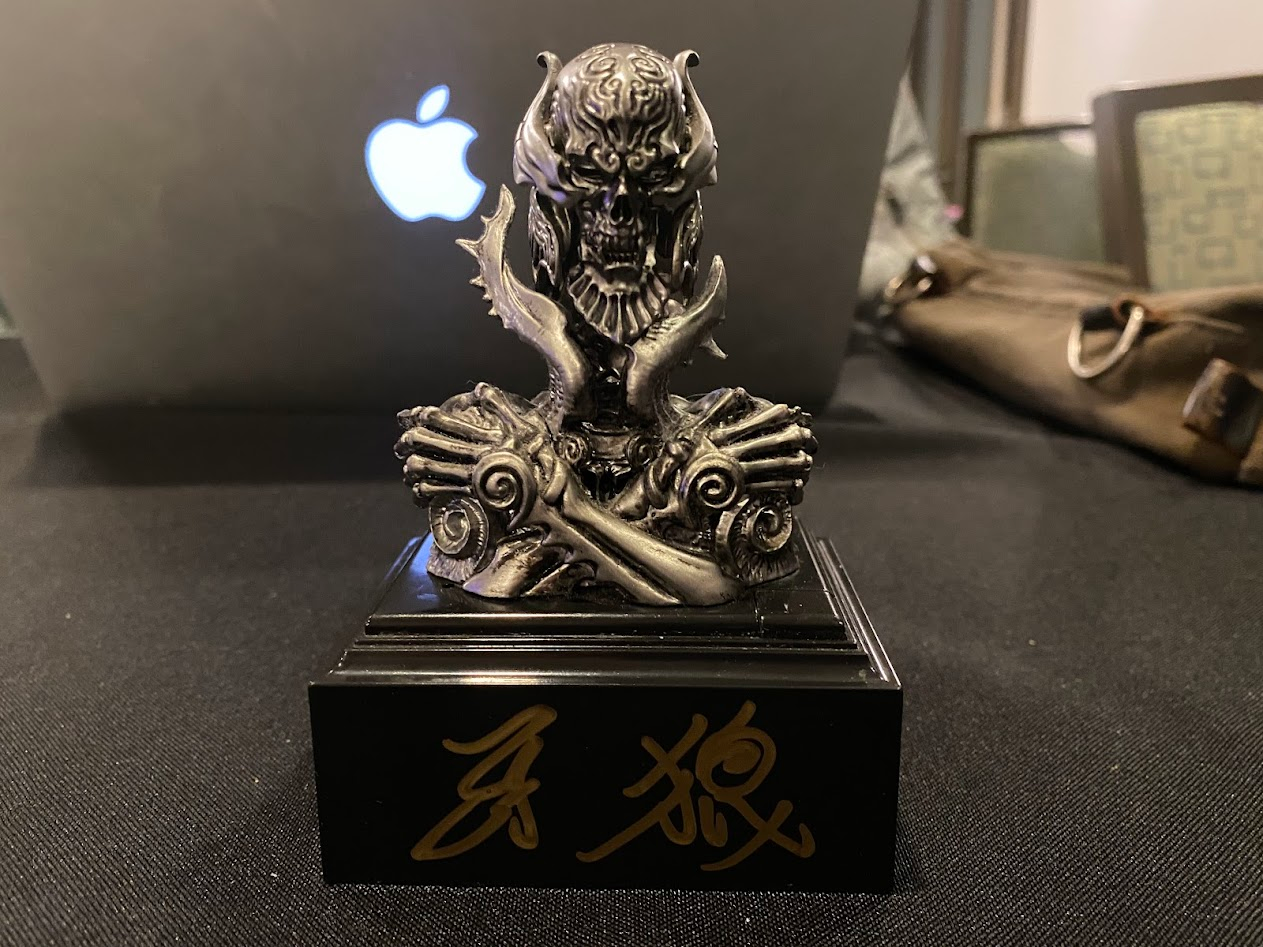
I had kind of a tough item to sign, but I knew I didn’t want anything else. My favorite piece of Japanese merch from maybe anything is this talking statue of the demon buddy Zaruba from the Garo series. Using a clever magnet trick, it really opens and closes its mouth to read off a dictionary’s worth of dialogue from the first season in the voice of the legend, Hironobu Kageyama. My talking red-eyed demon skull head is easily the coolest thing I’ve ever owned.
But there isn’t room on the small platform for Amemiya to do a large illustration like he did for my friends. He wrote the Garo title on the front, Zaruba’s name on the side, and his own signature on the other side. I could tell he was making up for not being able to do a sketch, but that was fine; I would have given this guy fifty bucks for drinks, I respect him so much.
The small anime convention still lives
I used to go to the mid-size Anime Next in Atlantic City— which this convention is likely meant to fill in for— every year: there wasn’t so much stuff at the con that I had to see, but it was a cheap weekend trip, a great hang, and I was back in New York by Sunday night. (My poker player roommate even pulled a profit for the weekend, thanks to the generosity of overly confident AC tourists.)
Anime NJ++ is not well-attended enough to qualify as a hang, but taking the train out and sleeping on my Jersey friend’s couch, it was definitely a cheap weekend trip. That it had a guest I would have spent real money traveling to see was a pretty major bonus. Perhaps in future years, and with a more accessible location, it can become a hang as well.