The annotated Cipher: The Video (1/2)
It’s pure mood and style, with no interest whatsoever in explaining to the viewer what the hell is supposed to be happening as the characters dance and mope and play football.
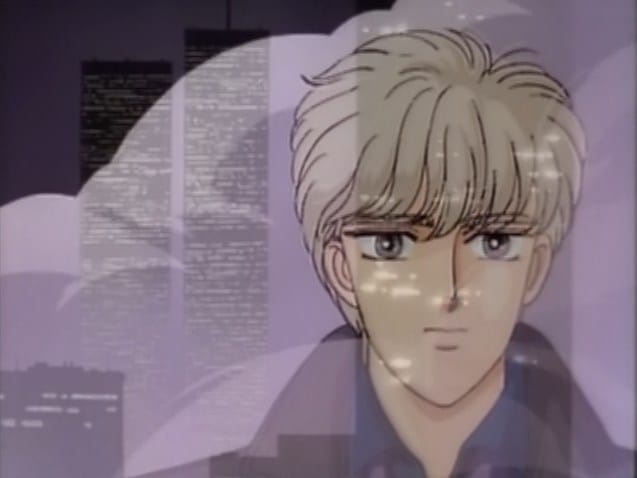
“Now, you are invited to the world of Cipher the Video. It’s packed with full of memories and new discoveries of Cipher and Siva, but actually, it will show you the fact that this is Siva’s video.”
You know what’s always on my mind? Cipher the Video.
Best capture you're likely to get, straight off the laserdisc. No, Cipher The Video didn't even make it to DVD.
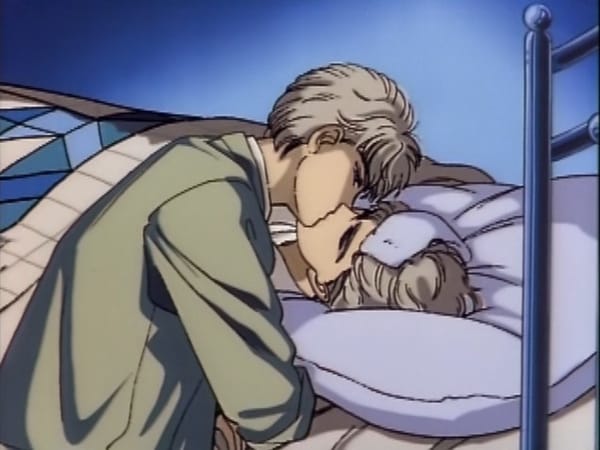
Stumble upon this video out of context— on Youtube, where it’s cult viral— and it’s inexplicable: a series of snippets of vaguely familiar 80s Americana through an anime lens, starring two twin teenage boys who trip over their English and kiss each other on the lips every morning. It’s pure mood and style, with no interest whatsoever in explaining to the viewer what the hell is supposed to be happening as the characters dance and mope and play football.
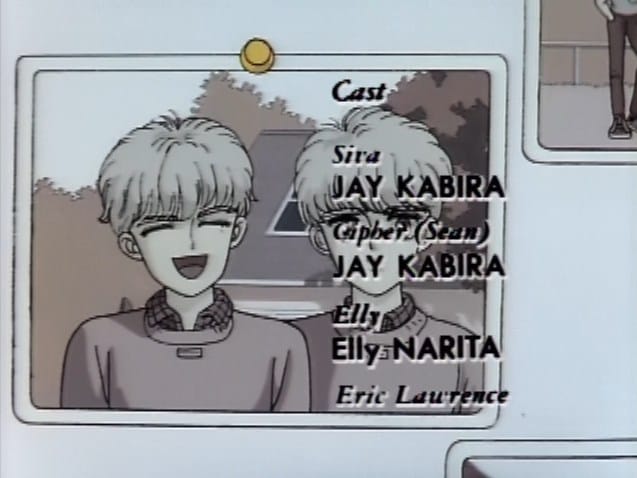
When the credits roll out of nowhere, you will ask yourself “it’s over, huh? …What was that?” I wonder if this is the best way for an American anime nerd to feel what a Japanese person might when they see the foreigners who are obsessed with their nation's cartoons. And it's fascinating.
There’s a very good reason this short is so confusing, one which applies to many 80s/90s direct-to-video anime shorts: you’re already supposed to know. Cipher the Video was never intended to function as a complete story, but as a companion piece to Minako Narita’s long-running (ongoing at the time of this production) manga Cipher. Manga series that weren’t quite popular enough to get a full-on TV season, or whose content was too extreme for TV— say, Crying Freeman or Violence Jack— or stories simply too long to animate often got short OVA treatments in these days.
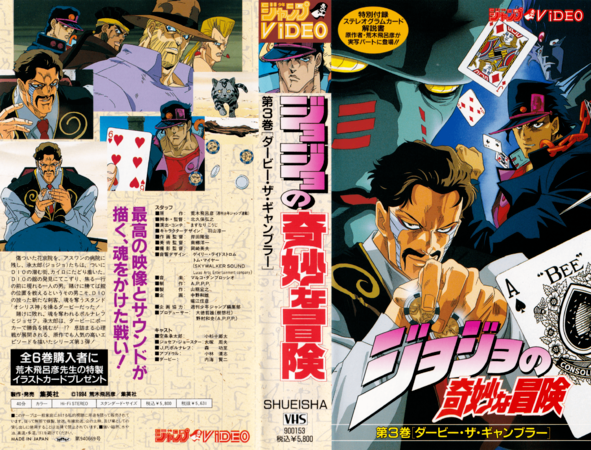
Contrary to animated adaptations today, these were meant for existing fans to enjoy as a supplement to, not a replacement for, the original work. Consider the 1990s Jojo’s Bizarre Adventure OVA, which only covers the highlight battles of Jojo Part 3 without any story setup. It fully assumes you already know the whole history between the Joestars and Dio, and why these big men are traveling the world together. Because you wouldn’t have bought the tape otherwise.
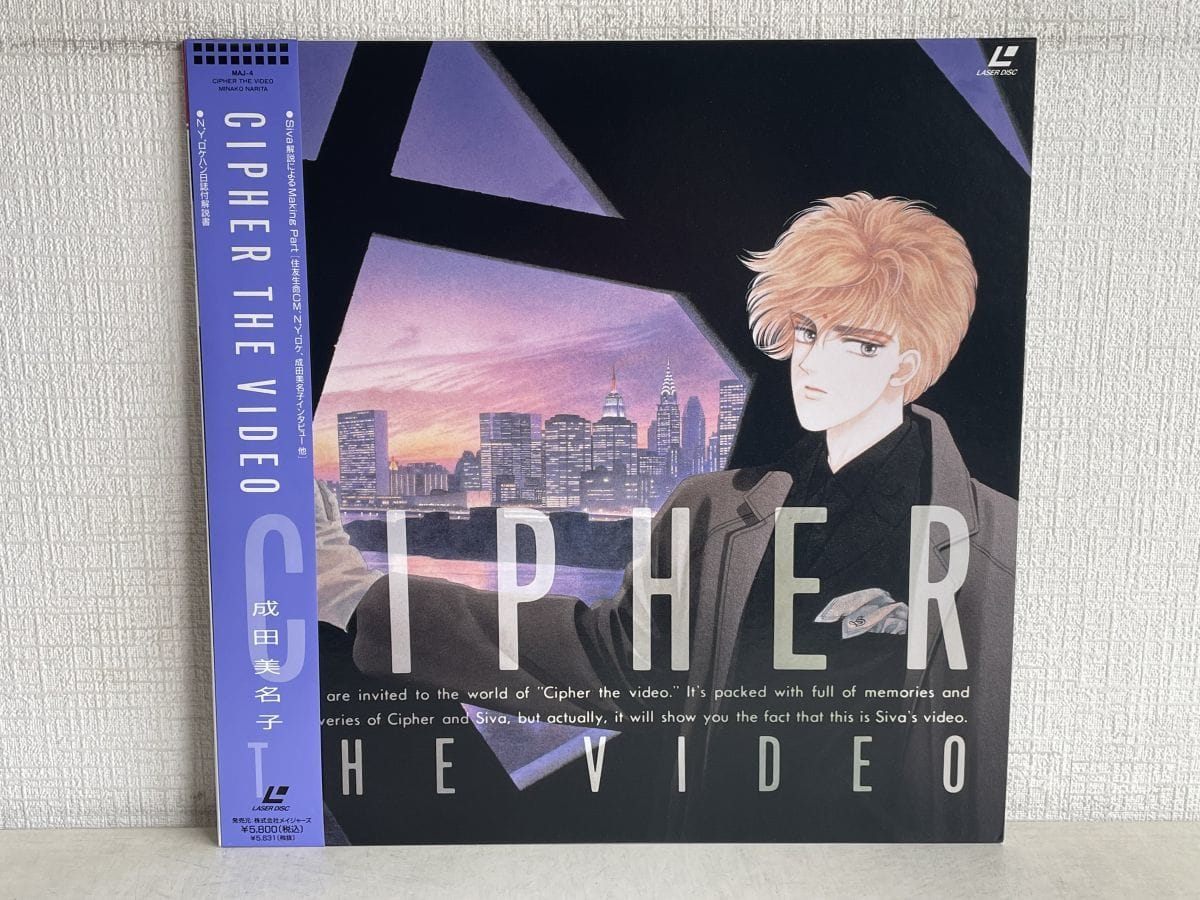
The intended viewer of Cipher the Video was someone who already had this long story fresh on their minds, who would instantly catch the short’s many allusions and references to it, and who was looking to be immersed in the glamorous 80’s New York teen lifestyle (as seen from Japan) presented in the series. In keeping with the 80s youth theme, it’s a scrapbook of music videos, commercials, and TV interviews set in the world of the manga. (Consider that the rise of the music video is a relatively recent development in 1987.) The brief run time of the feature is padded out with extras detailing the crew’s obsessive research trip to New York.
Spurred entirely by this unique piece of animation, I recently read the entire Cipher manga— via scans of the out-of-print, very rare and extremely expensive 2000s release by CMX (DC Comics)— and I thought it might be fun to go through Cipher the Video bit by bit, and offer some of the context that the feature refuses to supply. A pure mood piece, Cipher the Video rarely acts out the events of the manga; rather, it points towards ideas and moments that you’re expected to remember from reading it, and leads you to relive those emotions.
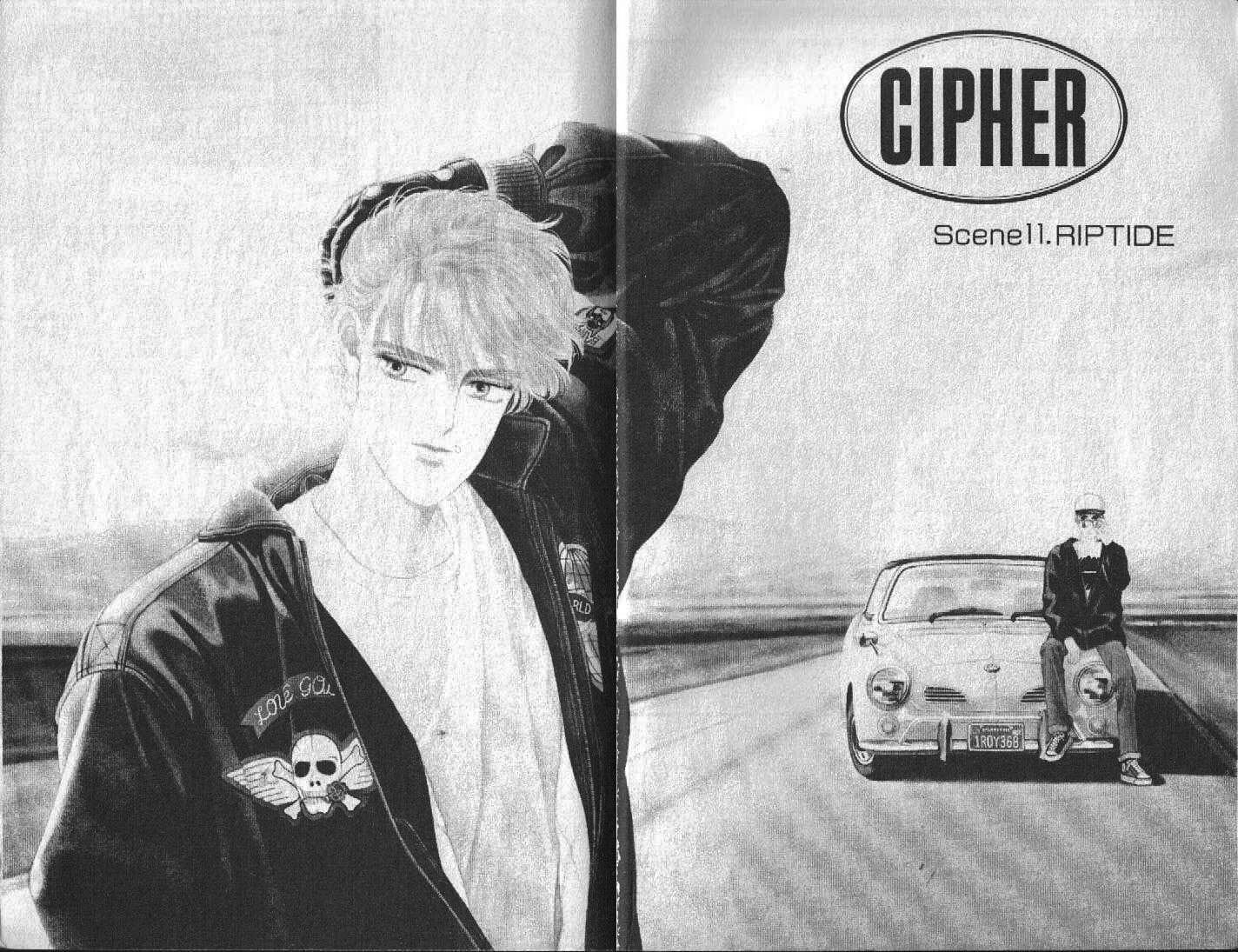
And if you have read Cipher, you remember those moments, feel a little bit of that melancholy, and finally understand what they were going for. So I thought I’d offer some notes and context as something of a service to every confused soul who's ever stumbled upon Cipher the Video.
This was a more time-intensive project than I'd ever planned for. Researching the original manga both in English and Japanese, re-watching this anime more times than I can count. Like everything else on this newsletter, it is a labor of love and the only reason I can spend the better part of a week on something like this is my subscribers' continued financial support. Subscribe for free, but if you want to see more like this, please consider supporting my work if you're able.
Reading Cipher and some notes
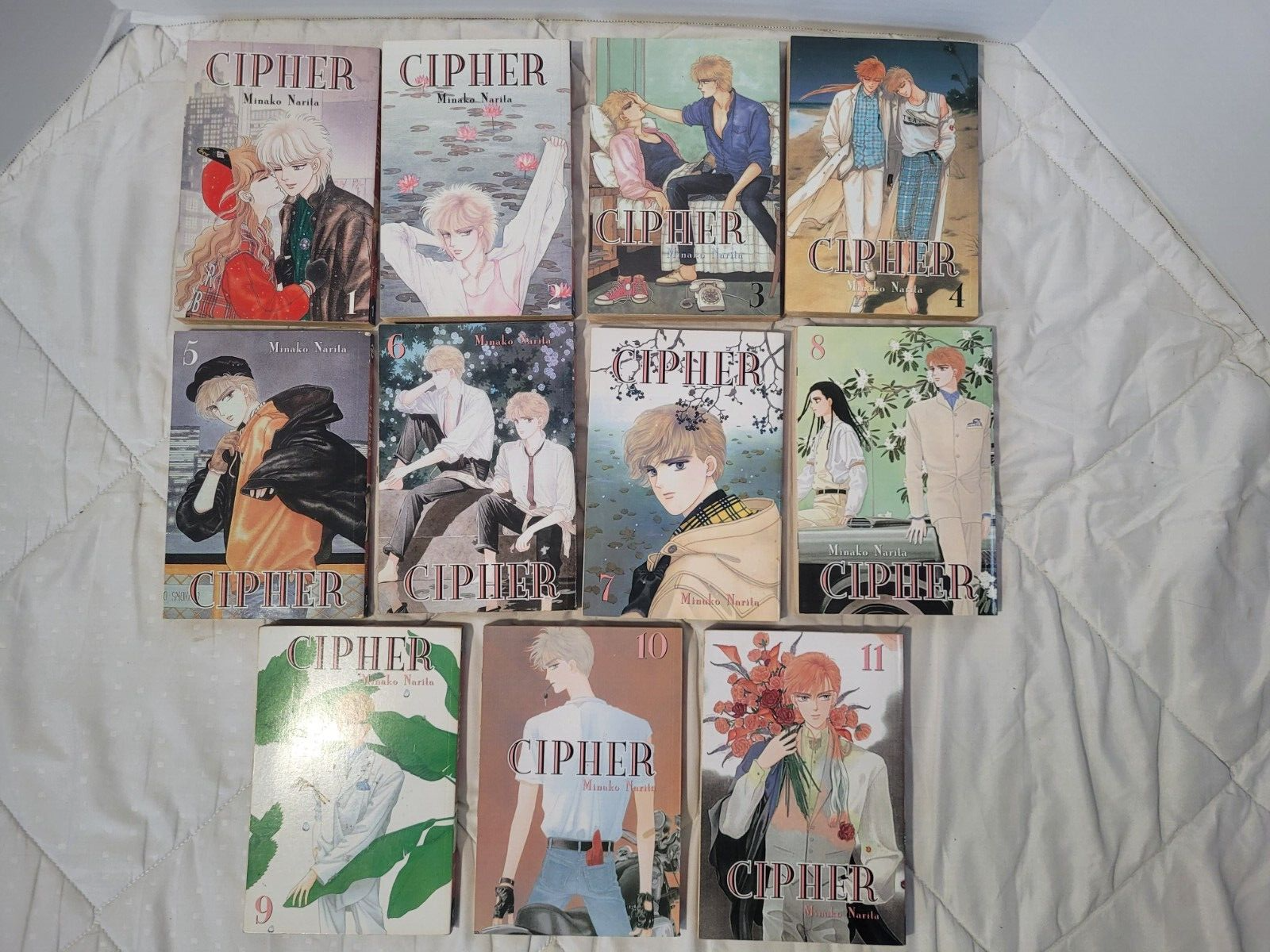
I read Cipher in scans. CMX’s print release is over 20 years old and well out of print, with the full run sitting on Ebay in the $600-800 range right now. So that’s not a realistic option: read the scans. It’s an old translation, the scans are low quality, and the first few books are pretty rough— vertical text in English is a real bad idea— but it’s what you’re getting for a 40-year-old series that’s 11 books long.
Cipher the Video covers material from about the first six books of the manga. Publication dates of the manga put the release of the anime at about the same time as the ninth book of the manga, way past the content it covers. Assume spoilers for the whole manga, as I will be using some examples from the end looking back at the start.
It's a reasonable stopping point, because after the scenes shown in the anime, a character is introduced (Dana) who— in the most cheap and contrived way possible— rockets the story into its real second act.
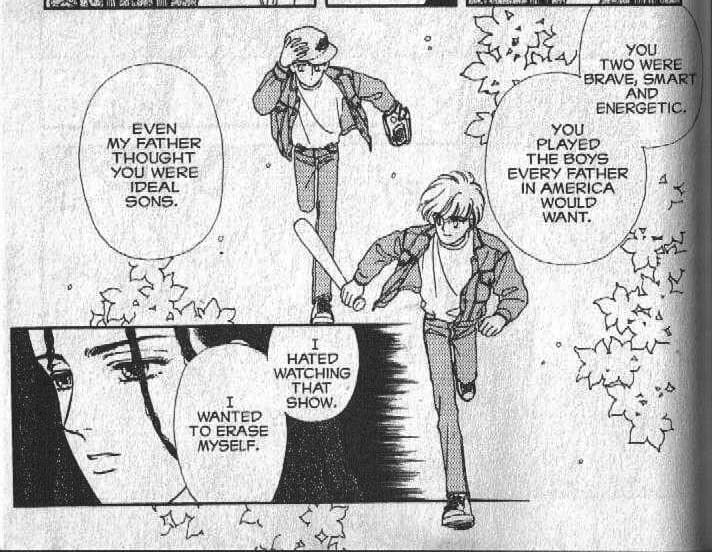
The guys have two names. Jake's stage name is “Siva” and Roy is “Cipher”. Jake and Roy are private names between themselves. (I couldn't quite figure out how the twins' swapping squares with their both being publicly known child stars.) I will use the names interchangeably but also will try and use “Jake (Siva)” or “Siva (Jake)” depending on the context of the scene. I will also use Lang for their family name despite the use of "Rang" in many sources. I am going to use the romanization “Siva” for consistency with the CMX version, despite the fact that the nickname is explicitly stated to be from the Hindu god Shiva.
Whew. Okay, let's get going.
Mescaline Drive - I Don’t Like (and interview)
It was very easy to miss this, but I noticed it when I looked up the soundtrack album, Cipher the Music. A snippet of this song by Mescaline Drive and a snippet of an interview with them– apparently recorded for this anime– are what you’re hearing on the fuzzy radio at the very beginning.
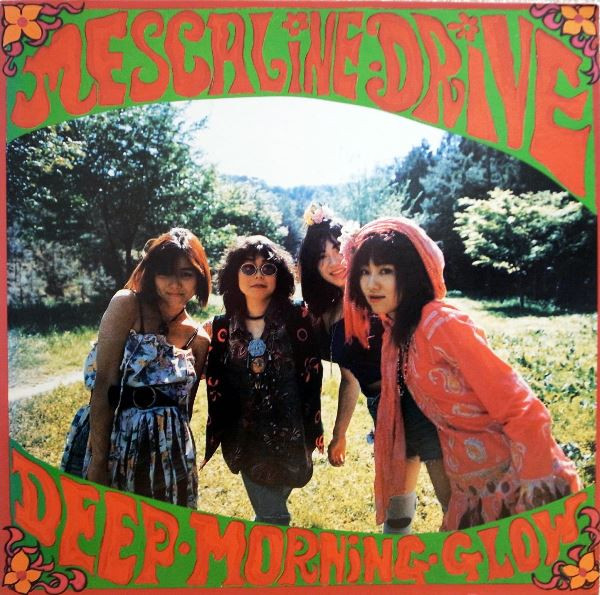
Mescaline Drive were a psychedelic alt-rock band from Osaka that were active for about ten years, and about as far from the next song as you can get.
Opening - Against All Odds, Phil Collins (cover)
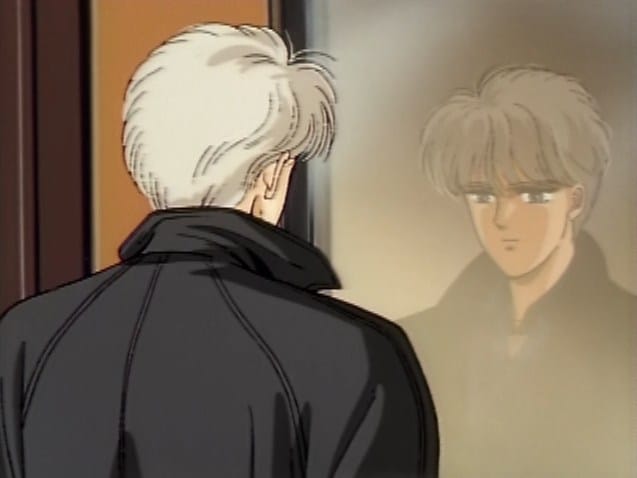
Contributing to the alternate-universe feel of Cipher The Video, the songs are awkward covers of famous 80s hits. Credits indicate that the singer here is Jay Kabira, the same man who voices both twins. You might actually know Jay from his current TV role as the bike in Kamen Rider Zeztz (no, seriously), or the extremely memorable bilingual narrator of Mr. Tonegawa: Middle Management Blues.
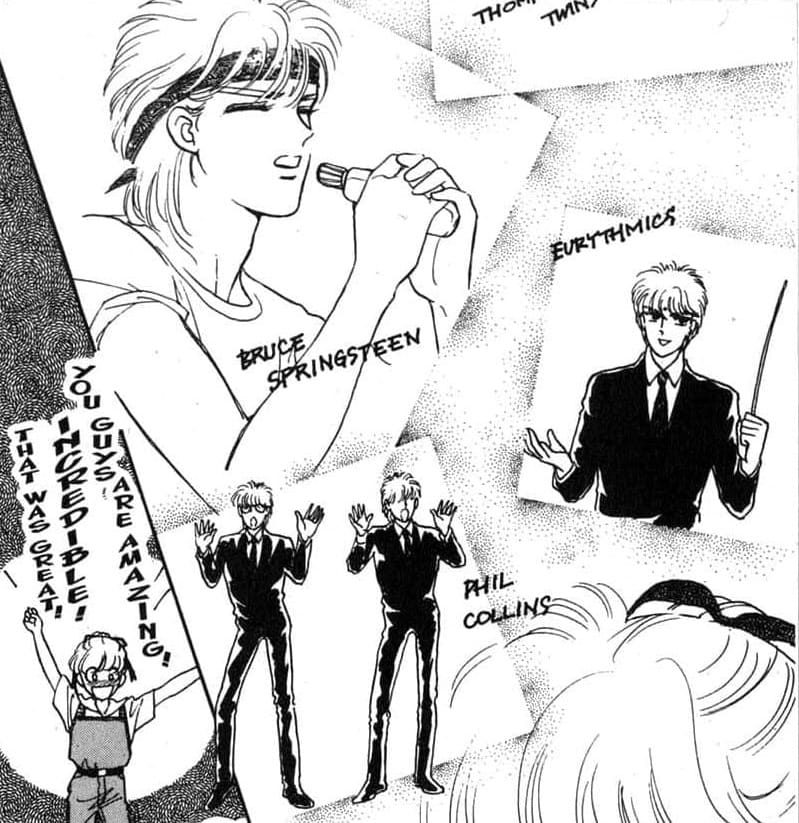
Why Phil? Why not? Even in the manga, the author surrounds her characters with the contemporary pop culture and music that real American teens would be listening to at the time of publication: Michael Jackson, Prince, and Madonna, among many others, all get adoring shout-outs. Narita herself is following the culture in real time, and as she enthusiastically shares with us through author’s notes every few chapters, she is a big new wave fan who’s obsessed with the Thompson Twins. The playlist for this OVA is not random at all: it comes straight from the author. An album compiling the music, Cipher the Music, exists but is somewhat rare (I definitely didn't buy the only copy in the world. haha what are you talking about).
The twin towers
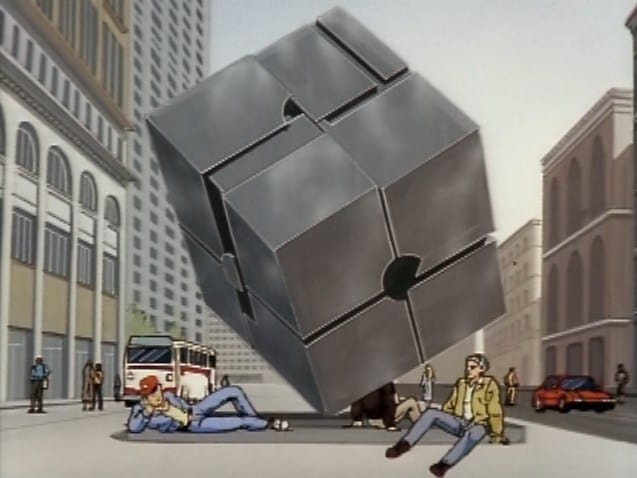
It’s beyond the scope of this piece, so I’m not gonna name every single New York City landmark; suffice to say that the thoroughness of the animation team's New York research trip is self-evident.
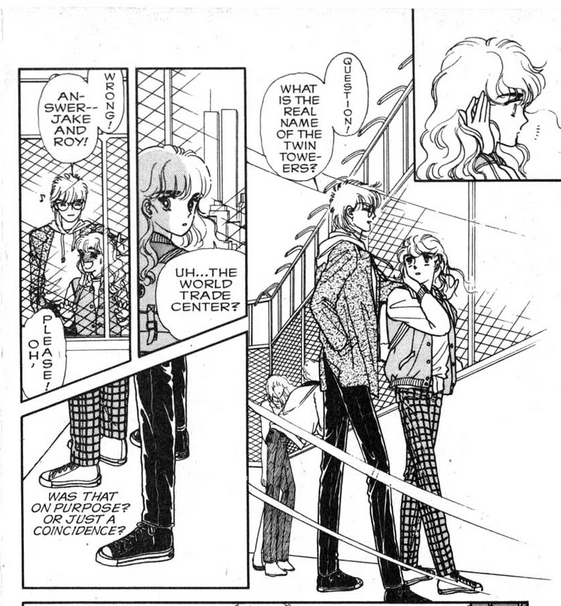
The first sight of the short is that of New York’s Twin Towers. It’s an extremely cheesy and on-the-nose comparison, but throughout Cipher, the author regularly juxtaposes the towers and the tall and handsome twin brothers. (Remember, this was decades before 9/11 and the sight of the towers is meant to inspire awe, not trauma.) It’s not a coincidence that we see them so much throughout.
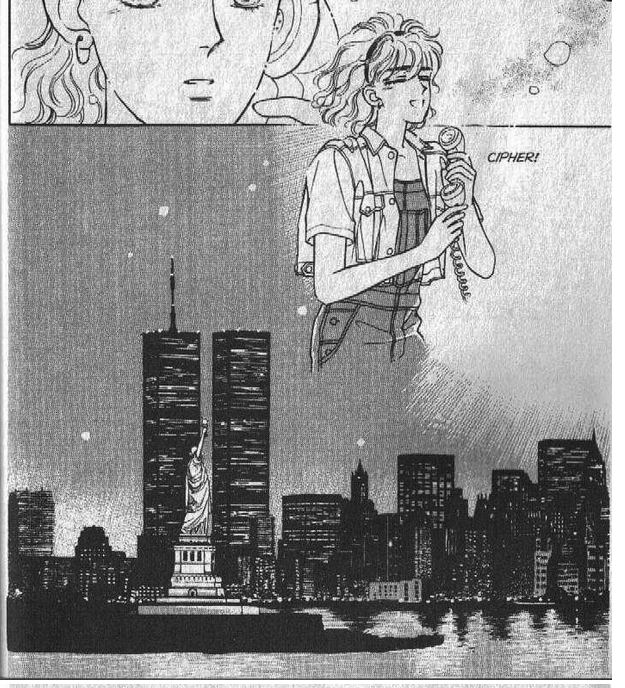
Late in the comic Anise’s building-sona will be revealed to be the Statue of Liberty, returning to this parallel regularly. The manga actually closes on it, very awkwardly. One could argue that Anise frees Cipher and Siva from their co-dependent spiral and nudges them both towards living their own lives, and I think that's where Narita was going with this.

The two brothers living on their own in this Lower East Side apartment (on Avenue A specifically) are Siva and Cipher, real names Jake and Roy Rang (which was clearly meant to be Lang). The cat is Ellie. The reason one (Siva) is leaving while the other naps is the basic setup of the comic: the twins split the labor of school and acting work by switching off every other day. There are a lot of reasons this doesn’t make any sense if you think about it for very long— and at a point in the manga everyone suddenly becomes aware of the charade and acts like they always knew— but it's shoujo manga, let it rock.
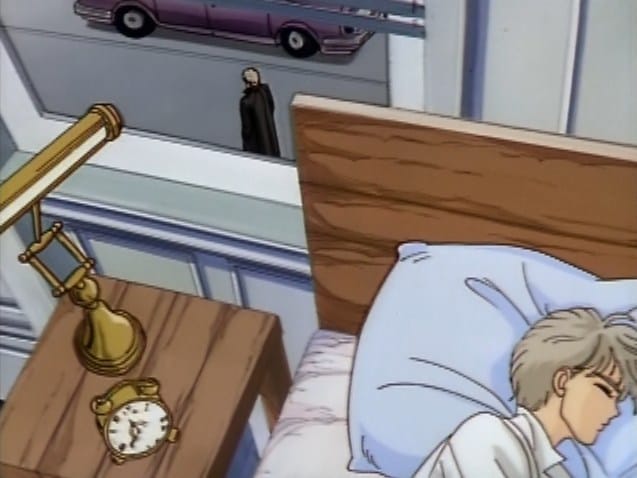
Siva’s the self-appointed caretaker of the slightly bratty Cipher, and their clingy, codependent relationship (they don’t think anything is weird about good morning kisses on the lips) has some deep-seated causes that readers already know, and which this anime nods towards later. This is probably the real reason I embarked on this project: this anime, which seems rather eclectic and goofy, also points towards some surprisingly heavy backstory.
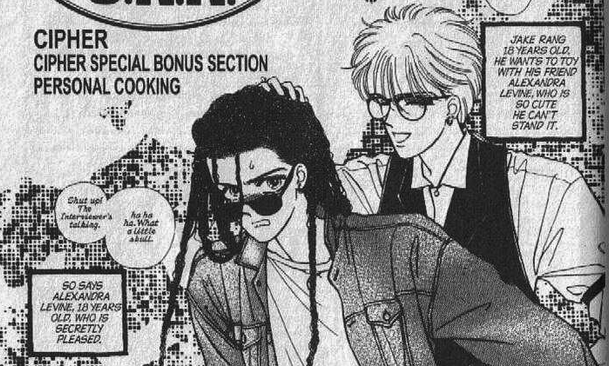
(Concerning the well-known kiss at the end of the video ("Yeah. Yeah."), I am going to note early that though the characters loudly and repeatedly insist that they are Not Gay, the men in Cipher have significantly more passionate, emotional, and dependent relationships with their male roommates than with the women they eventually settle down with, especially in the later part of the manga. In the sequel manga Alexandrite, the guys flirt more freely, while still ultimately dating and romancing women.)
Let’s Hear It For The Boy - Deniece Williams (cover)
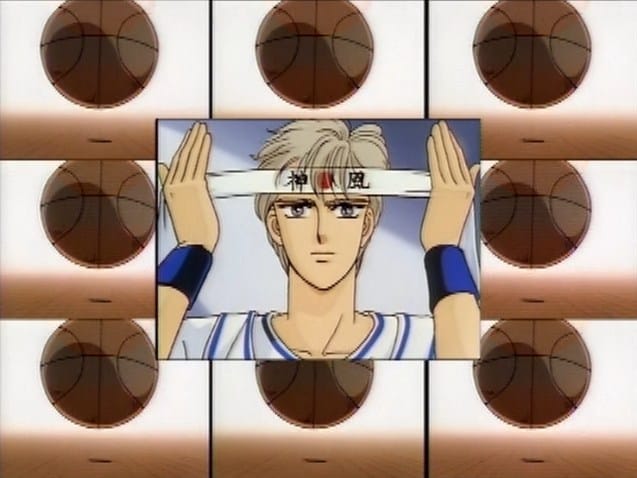
The gang are frequently shown playing basketball in the early part of the manga. It's probably related that the headband reads "神風" (kamikaze, divine wind) as the author is a big fan of the Thompson Twins, and their song Kamikaze plays over the most important scene in the video.

This is as much of the actual setup of Cipher as you get, as we witness the moment the heroine Anise walks up to Siva and proclaims her intention of friendship. They’re at some kind of Fame-esque specialized performing arts school, but what Anise does at such a place aside from hanging out with the Langs is never shown or stated. Like most high school fantasies (shoujo manga, Saved By The Bell), Anise is only ever shown doing fun stuff.
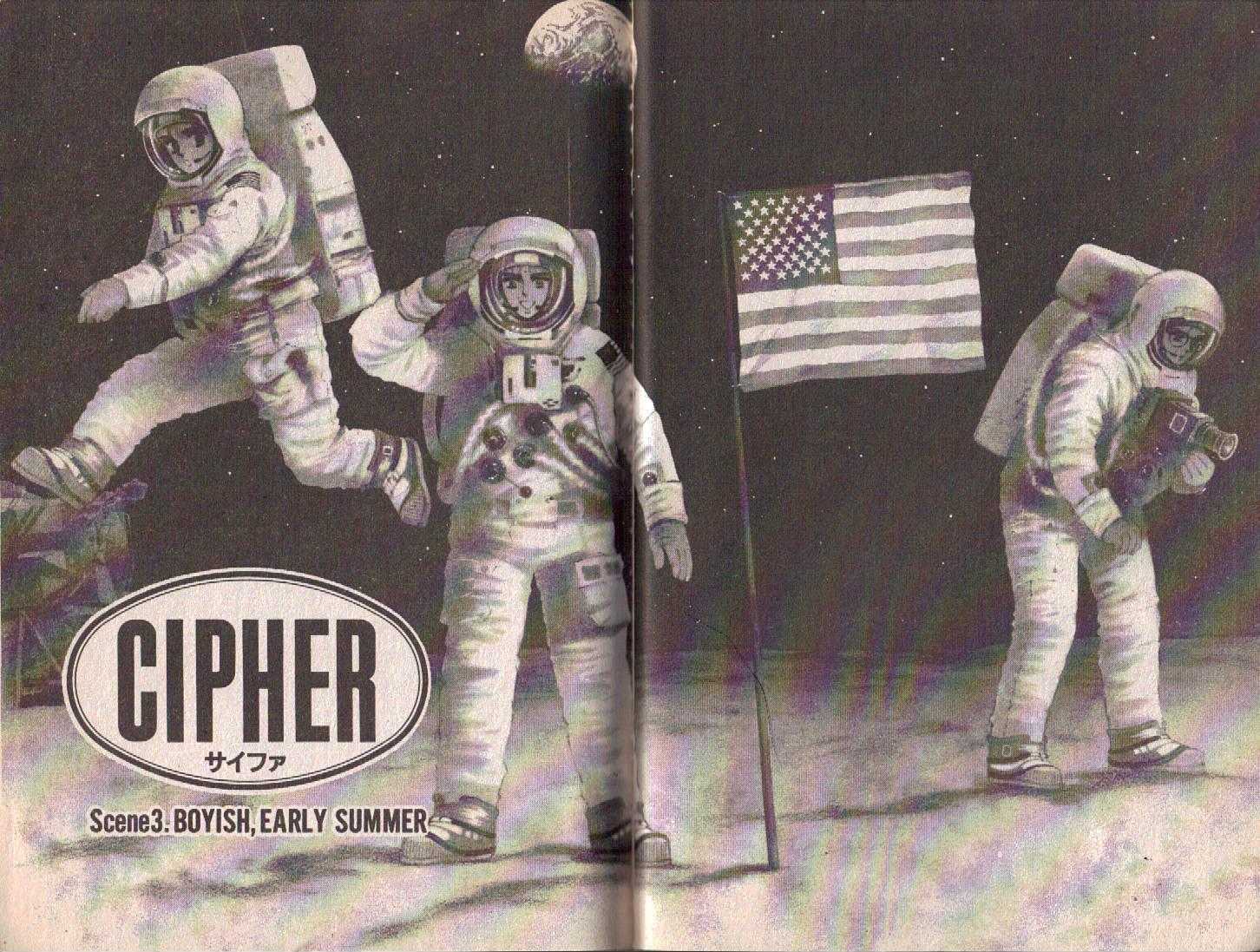
The moon landing shot is a callback to a title page illustration from the manga. In this chapter, Anise has to start wearing a bra but doesn’t want to, and Cipher is really pressed about the idea that other guys are going to be staring at her. He blurts to Jake, “If you had your way, you’d make Anise wear a spacesuit all summer.”
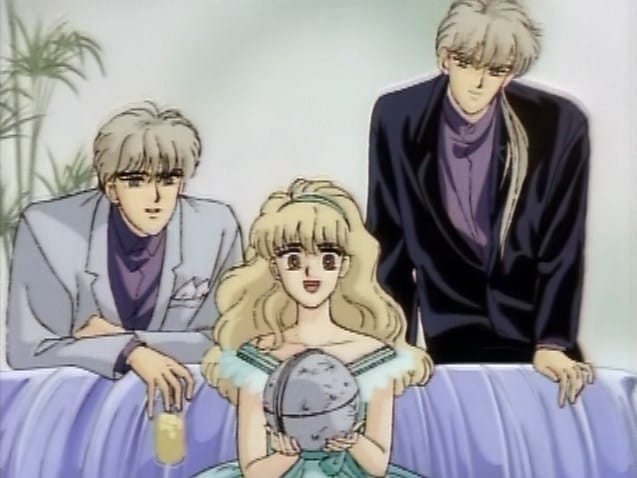
All of the scenes in this video are in fact from Anise’s idyllic early days bonding with the guys in the manga: school scenes, little dates with Cipher in the city, even the dancing is arguably from a throwaway scene where Cipher demonstrates his skills. There are a lot of these little scenes that represent entire story arcs in the manga, so I’m not going to detail every single one, but Anise’s 16th birthday (the only time you will ever catch her in a fancy dress) is notable.
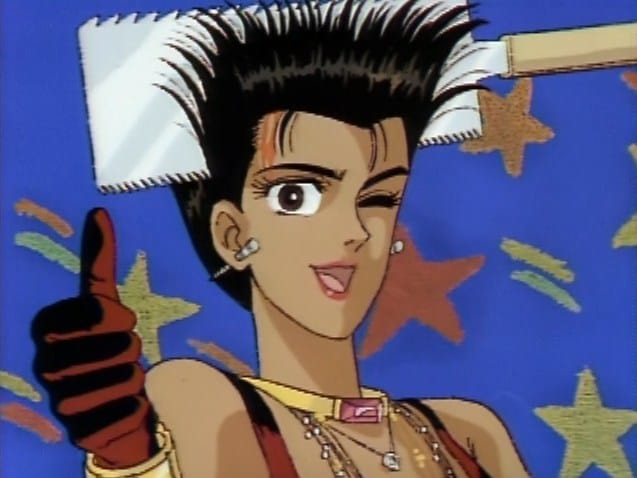
The Halloween segment expands a bit on what we only see in a few pages of the manga; one would imagine it is themed on the famous Greenwich parade. The girl with the prop saw on her head is Anise’s best friend Ruth, who is the second outsider to figure out the twins’ deal when she falls for Siva (Jake) and not Cipher (Roy).
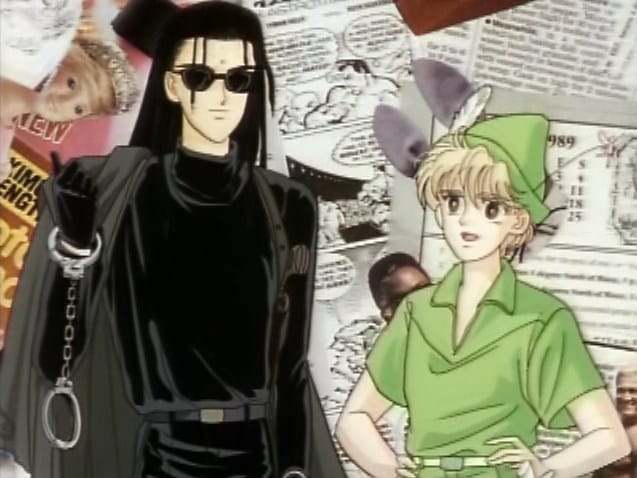
That’s Siva in this still, wearing his Halloween costume (“just some stuff I had around”) with Anise as Peter Pan.
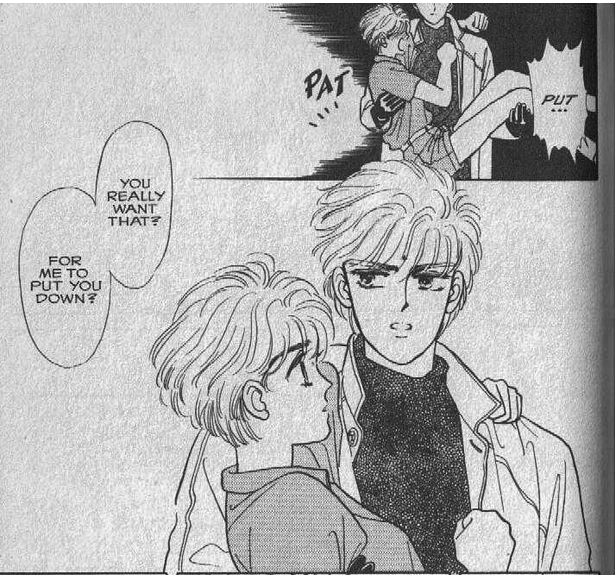
In this story Siva hears Anise and Roy have been fighting, so he runs home to Roy and pretends Anise is hurt, so Roy will rush to school... to see Anise in her Peter Pan outfit and, via shoujo contrivance, to carry her like a princess.
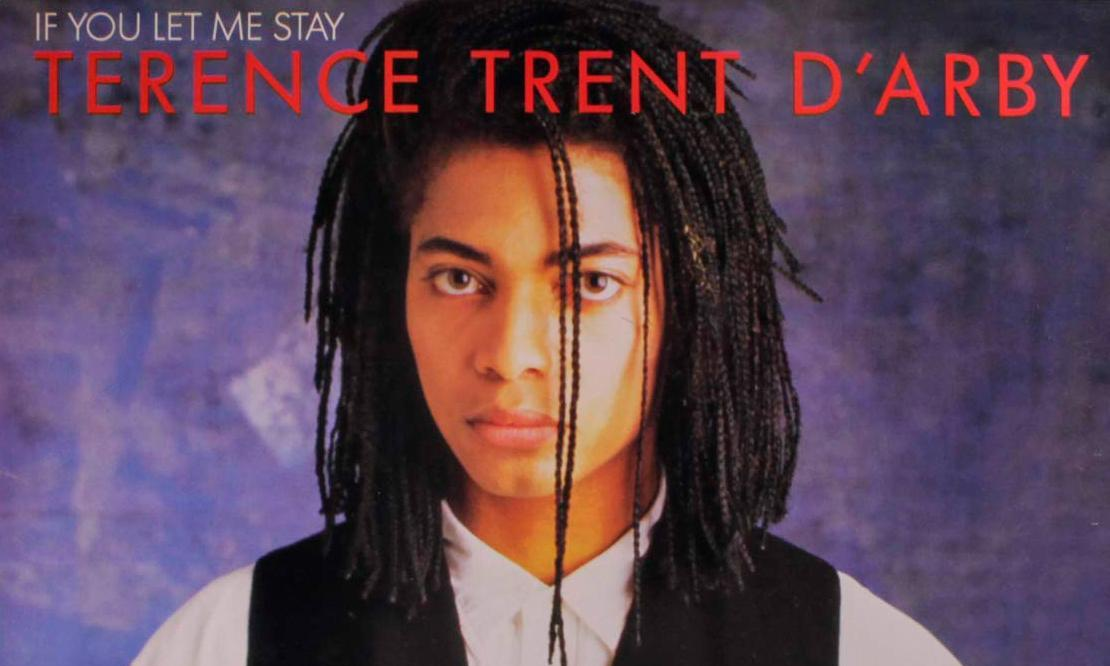
It is worth noting for later that the author gets really into Terence Trent D’arby (who now goes by Sananda Maitreya) as the comic runs, because this costume happens to share his thin dreads. Eventually a new character one could describe as “D’arby, but more femme and pale white” gets introduced (Alexandra) and becomes a major character; he’s got a cameo here and becomes the star of the sequel manga Alexandrite. Siva may be patient zero for the author's dreadlock obsession.
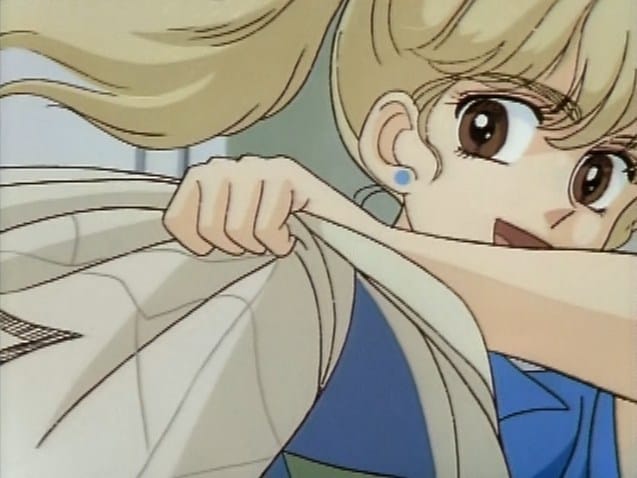
Here's a shot where you wouldn't even know what was supposed to be happening unless you were familiar with the manga. This song finishes with the scene where Anise unveils the hand-knitted blankets she made for both twins: we’ll see them again later.
(A New Yorker btw from the manga: Anise lives on Hillside Avenue in suburban Queens in what looks like a cozy part of Jamaica or Kew Gardens. She is about as far as it gets in NYC from Alphabet City: we’re talking two-hour travel time, easy. It makes sense that she bargains a long-term sleep-over arrangement with her dad, but once that ends it would be a huge pain in the ass for her to get back and forth to the boys’ place as much as she does. She is frequently seen waking them up in the morning when they didn’t know she was even there. How?!)
The next part will cover the rest of the video and have some observations from myself about the manga, if you'd allow. See you there.
This was a more time-intensive project than I'd ever planned for. Researching the original manga both in English and Japanese, re-watching this anime more times than I can count. Like everything else on this newsletter, it is a labor of love and the only reason I can spend the better part of a week on something like this is my subscribers' continued financial support. Subscribe for free, but if you want to see more like this, please consider supporting my work if you're able.