The Annotated Cipher: The Video (2/2)
I’m not sure I can really call it a criticism that these guys don’t act like any guys I’ve ever met, gay or straight. But I also suspect that this is one of those things you can file under “feature, not flaw” for the actual target reader.
So in the first part, we only actually made it through the first ten minutes of the video. I split what I wrote right down the middle; this covers the rest of the 25-minute video. If you'll allow me, some quick impressions on Cipher the manga are at the very end.
This was a more time-intensive project than I'd ever planned for. Researching the original manga both in English and Japanese, re-watching this anime more times than I can count. Like everything else on this newsletter, it is a labor of love and the only reason I can spend the better part of a week on something like this is my subscribers' continued financial support. Subscribe for free, but if you want to see more like this, please consider supporting my work if you're able.
Super Bound Bailey’s Cake Mix
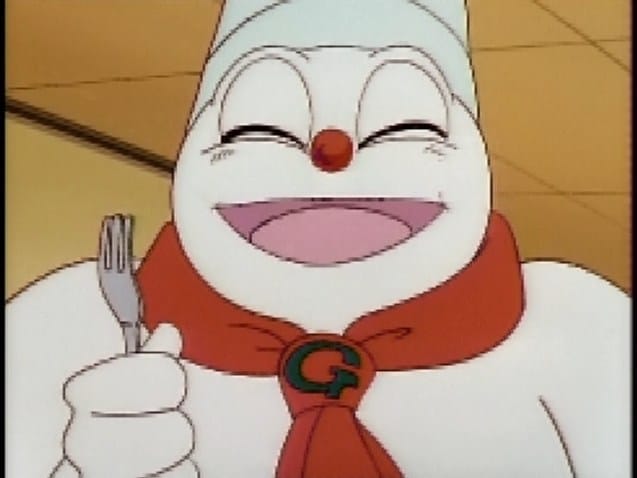
The ad for cake with a Pillsbury-boy-like cartoon mascot seems even more random and strange than the other scenes in this short.
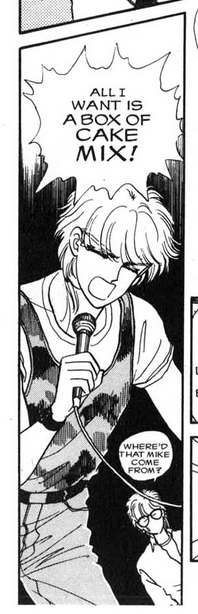
But it’s a callback to a scene in the manga where Cipher sees an ad— this specific ad— for a cake mix on TV and reverts to a toddler as he begs his brother, the household accountant, to buy it for him.
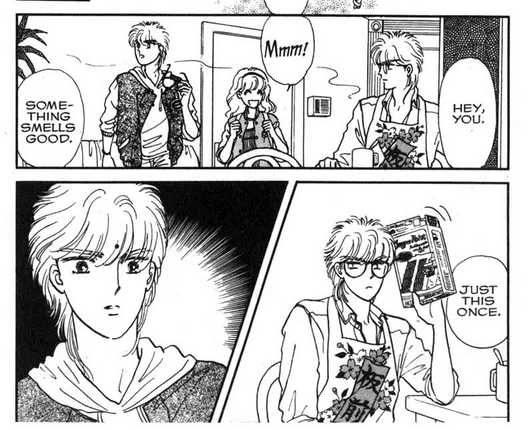
Siva turns him down, saying it’s unhealthy, and later buys it anyway.
Winning Tough (Living In The Dark - Army Call Up Test)
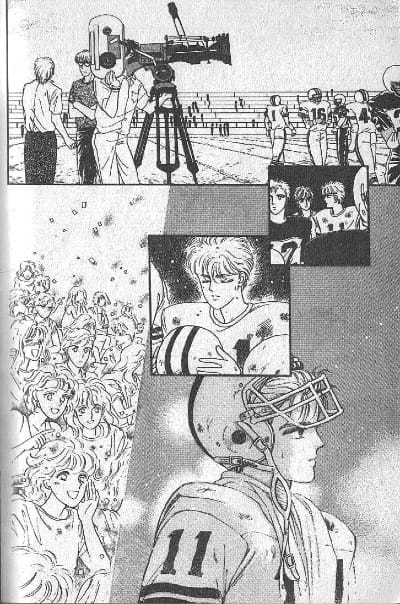
There’s an arc in the manga where the boys go to LA to film a movie. Once again Cipher the Video goes all the way in on a background detail and presents a full making-of, along with a trailer, of the fake high school football movie that Cipher (as “Siva”) stars in. This is all original to the anime. Putting the manga Cipher aside entirely, this is my favorite part of the entire short. The Eizin Suzuki blue skies, the pitch-perfect imitation of 80s teen flicks, and especially the sage old dudes, who I was surprised to find did not appear in the manga.
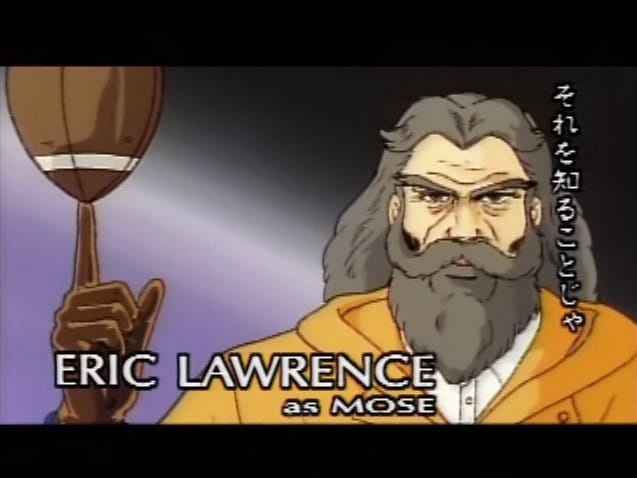
“You don’t catch the ball with your own strength. You use the strength of the other to stop it.”

I was surprised to find the song around; Army Call Up Test were a small short-lived Japanese indie punk band. I was even able to buy their only album on vinyl.
“I’ve been in this world since I was real small”
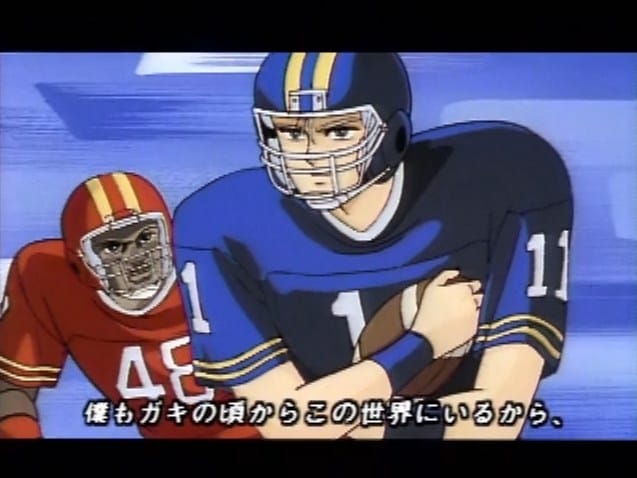
As unintentionally existential as this first sounds, I’m pretty sure I know what the context of this line is. Simply, in the background of the manga, Siva and Cipher were child stars. By “this world” Cipher means the entertainment world. He’s relating himself to the character in the football movie (Sean) who’s played football all his life. Still, I have been in this world since I was real small, and nobody can take that away from me, or from you.
Kenny Loggins - Footloose (cover)
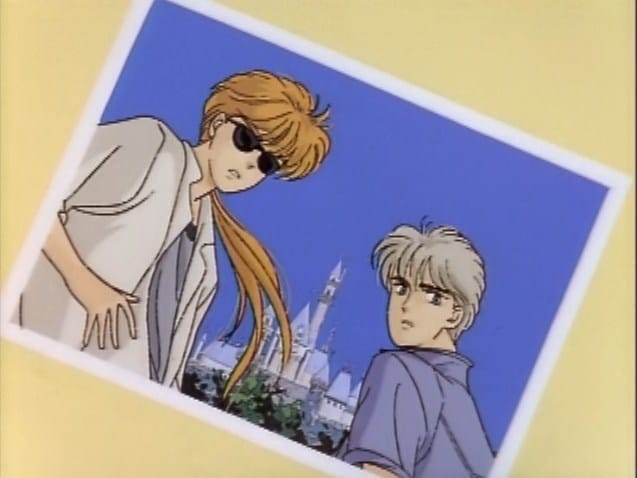
The orange-haired guy is Siva in disguise again, acting as Cipher (pretending to be Siva)'s manager (which he kind of already was anyway). It's not really clear why he has to assume this character when he's already a known media personality– well, anyway. The author coincidentally starts talking in about how good it looks when a blonde guy dyes his hair orange around this time; when Jake strikes out on his own, he keeps the color. In the manga the boys see a crowd of fans that have staked out their shoot, but they don’t actually get mobbed and have to escape as in this anime-original scenario.
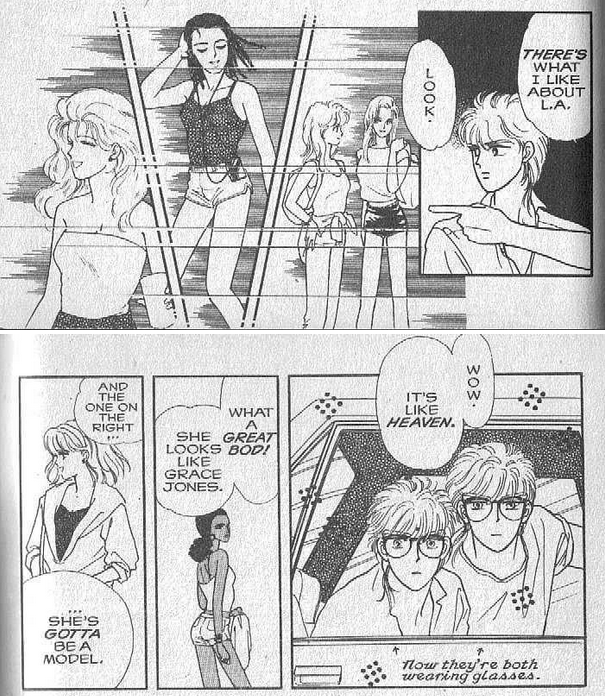
On their escape the boys check out local LA hotties from their car: this is adapted from a scene in the manga and the girls are the exact same girls, down to their poses, as appear there.
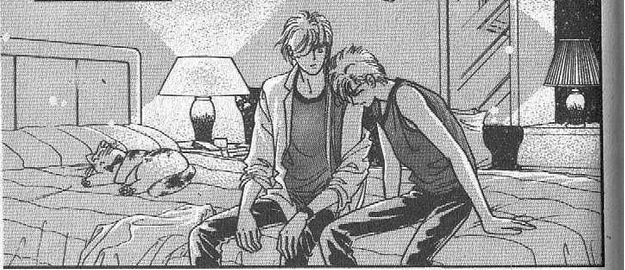
After the mob situation, Cipher, visibly frustrated and perhaps jealous, complains to (orange) Siva that the girls saw Siva as “just as good” as his twin. (The twins are prone to emotionally spiraling for the silliest reasons.) A shot in the video recreates the panel from the comic. This section closes with a scene where Cipher pushes down his jealousy and waves to the fans.
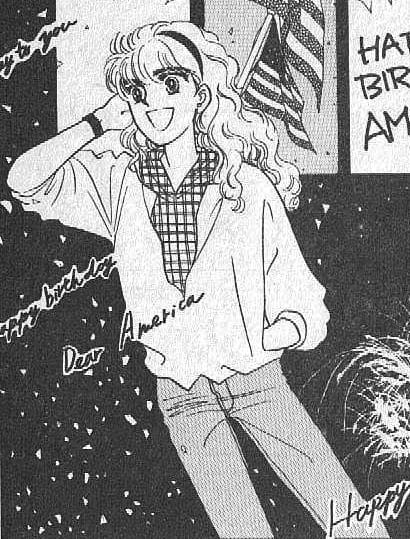
The fourth of July happens around this point in the manga too, and not long after this Anise chases the boys cross-country down to LA, running right behind their fans.
“Actually, his greatest fan is sitting right beside me”.
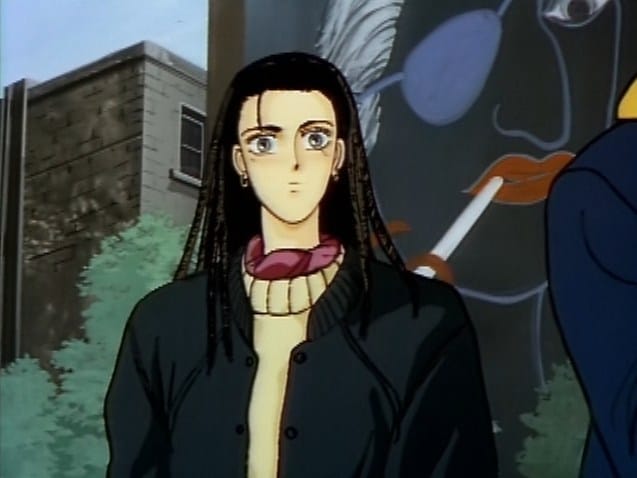
Cut to Alexandra Levine, who— again, well after this material in the manga— makes a grand appearance as Siva’s biggest fan and Jake’s new roommate after the twins start living on opposite coasts. (Despite name and appearances, Alexandra is a guy: his looks are his complex.) A major character who the author could not help but give a cameo.
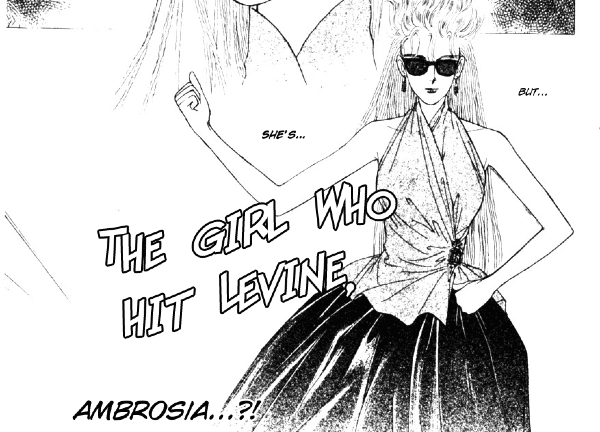
He is also the star of the much lighter Cipher spinoff/sequel manga, Alexandrite, in which Jake becomes the sidekick and Alexandra has a will they/won't they with Ambrosia Heart, a character blatantly modeled after Canadian singer-songwriter Jane Child.
To be fair, Narita has never been shy about music influencing her work. "Don't Wanna Fall In Love" is arguably Ambrosia's entire character.
Kamikaze - Thompson Twins
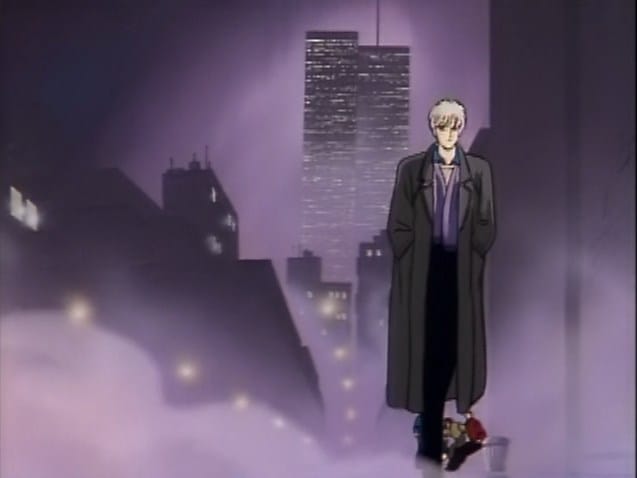
This is the only song that’s actually not a cover; this is the original recording by the original artist. Again, Narita was extremely into the Thompson Twins. I definitely knew this song, but I didn’t so much as know the name “Thompson Twins” before I started doing the research for this feature. When it comes to this song, though, I gotta agree with the author.
“What about your mother?”
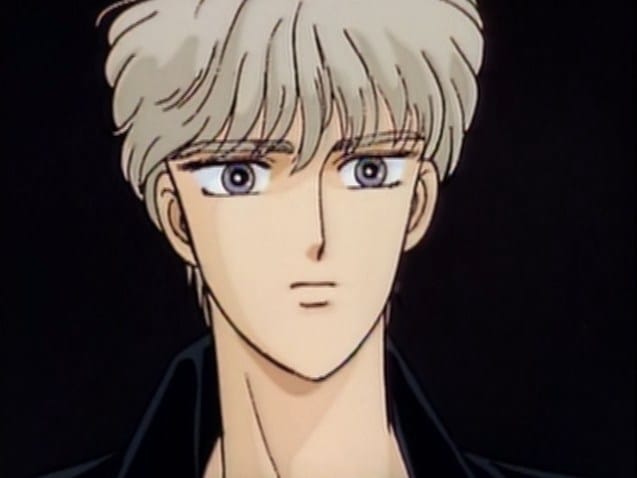
Readers understand the sudden shock on Cipher’s face and the way the interview scene slams to a halt: the twins’ trauma is inherited directly from their parents. In short, Mom cheated, and when Dad (a mountaineer, the all-consuming hobby which caused Mom to cheat) found out, he took Cipher (Roy) on a suicidal mountain climb that nearly claimed Cipher’s life as well. Having discovered the dead— implied mutilated— body of his father and nearly freezing to death on a mountain leaves the boy traumatized.
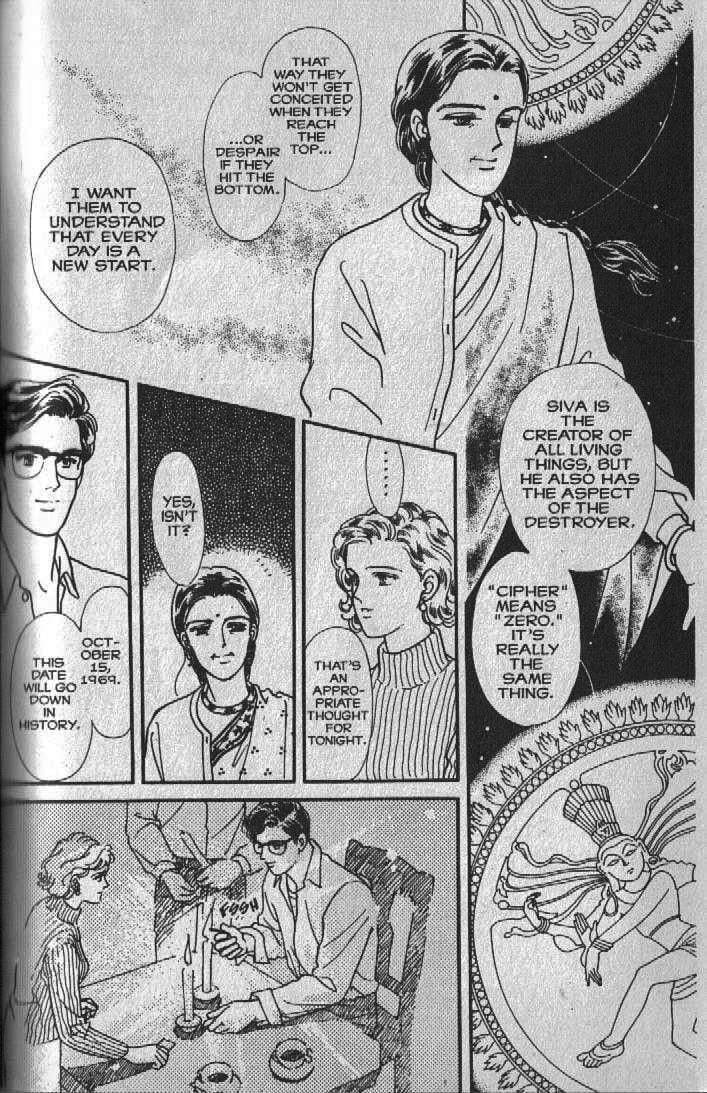
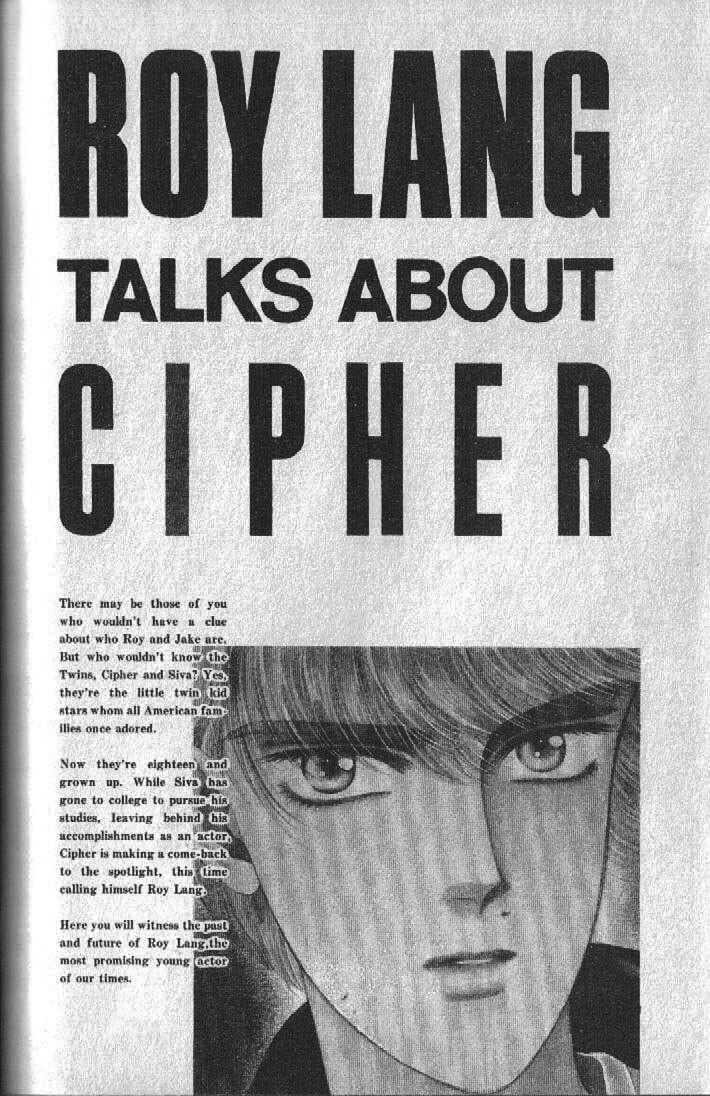
The Shiva imagery at the start is used in the manga in a bit that explains that Siva was purposely given that nickname by his Indian grandparents after the Hindu god. (“Cipher” is explained to mean in the sense of “zero”, a non-entity, and is meant to represent the cycle of destruction and rebirth.) I think its use here is intended to tell us that the character in front of us is Siva and not Cipher, and indeed this part of the video draws on many different scenes from the manga to allude to Jake (Siva)’s complicated feelings about the brother he’s been caring for for the last few years of his life.
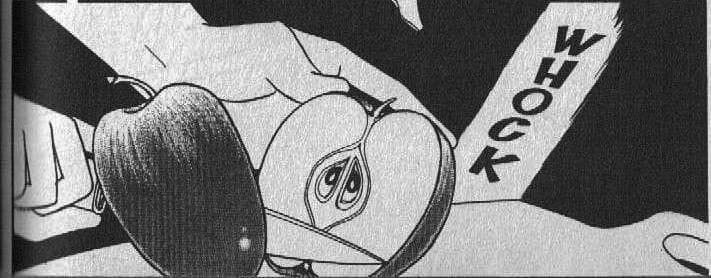
Shot of an apple being sliced in half is from the manga, explicitly a visual metaphor for the twins as two halves of a whole. “Why, God? Why did you… divide one heart so perfectly into two?”
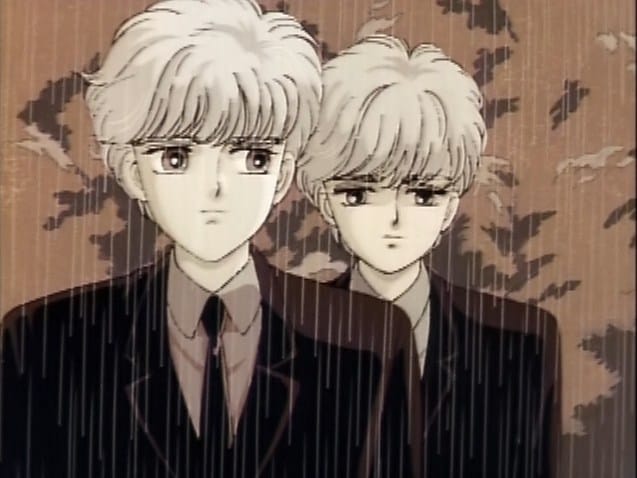
The sepia-toned flashback is to Dad’s funeral. This is the moment that shapes the twins’ future co-dependency: swallowing his tears, Jake (Siva) becomes the caretaker and “big brother” out of is worry over the the deeply traumatized Roy (Cipher). There is a bit in the comic where Cipher alludes to Anise that Jake needs Roy to need him as much as Roy needs to be taken care of, which seems to sum it all up.
Not in the video, but dad’s death is the reason the twins are living on their own in New York: immediately after the incident, Roy can’t so much as look at his mother and is determined to run away, so Jake pre-emptively decides to move out to a New York apartment with his brother. (There is forgiveness, at the very end of the manga).
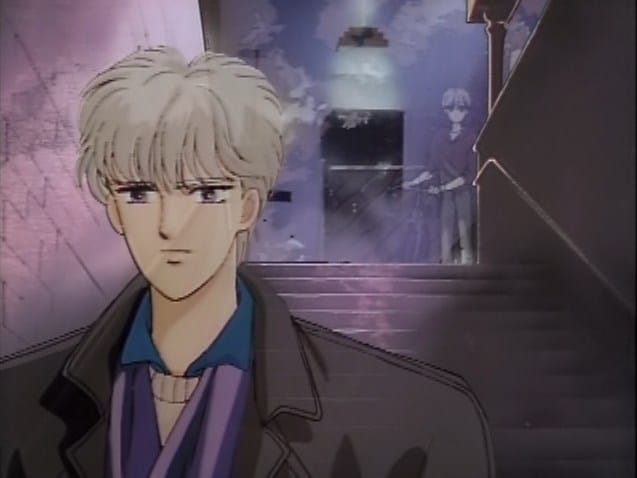
There isn’t really an equivalent to this scene (nor to the opening) in the manga, but Jake does take a similar depression-walk a few volumes later, at the end of which he runs into Dana and the direction of the comic changes permanently.
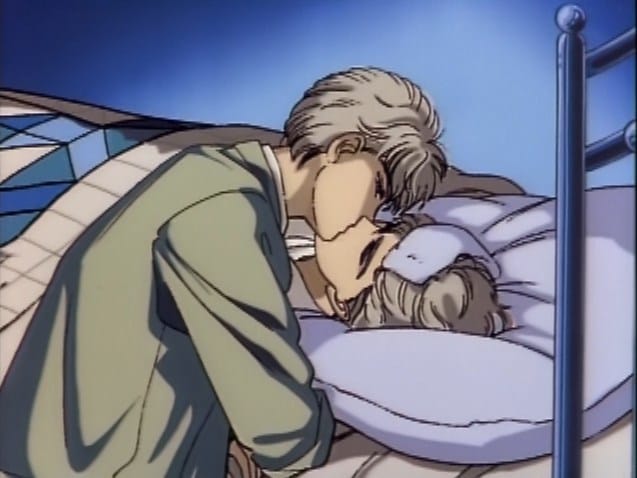
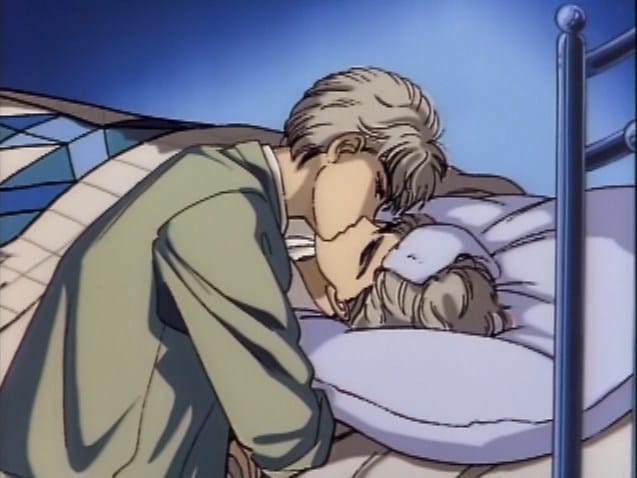
Anise’s home-made blankets return in the bed shots throughout. Scenes throughout the music video where Roy has a towel on his forehead are from a bit in the manga where he gets sick and Jake becomes especially possessive. He's likely flashing back to an event in their past I’m about to mention.
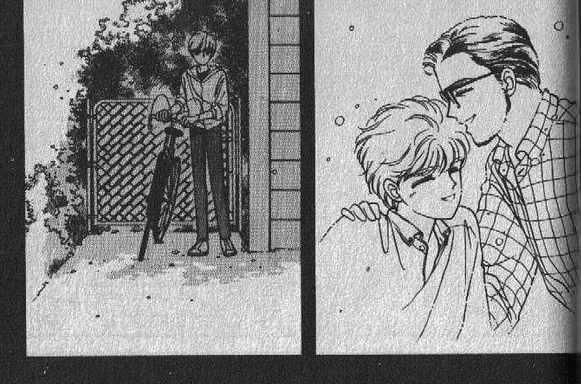
Jake standing in the dark spot beside the side door of his house is a flashback to a moment in their youth where Roy decides he has to get more serious about acting and starts chasing auditions. Jake is more ambivalent. Having just heard that Roy scored another gig, Jake stands staring, contemplating whether he has any value of his own in the face of his brother’s success.
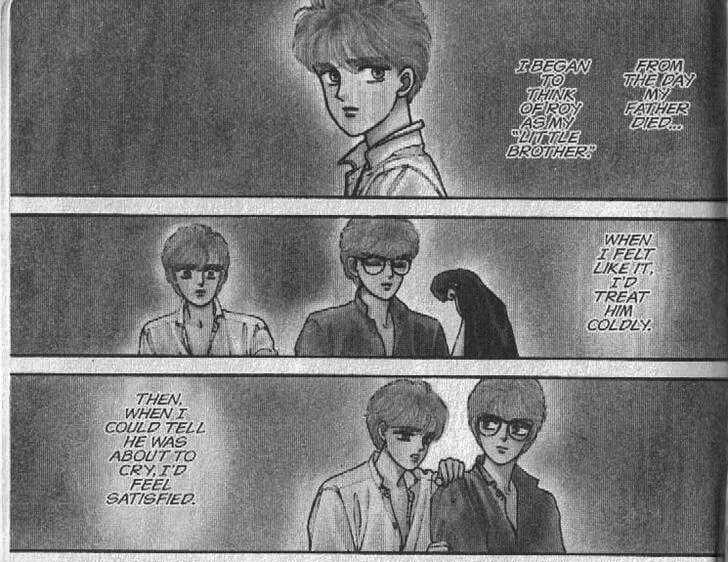
Jake is possessive of Roy and also jealous of him, in a way that he does his best to suppress by caring for him and taking pride in that role.
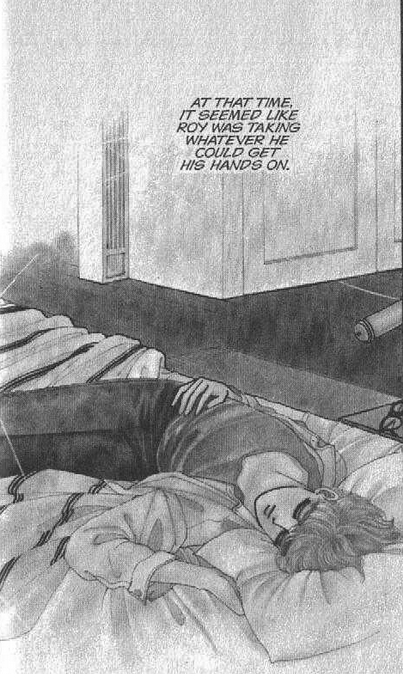
I’m talking quite a bit about what isn’t shown here, but what happens when Roy and Jake first get to the city is conspicuously absent: still traumatized, Roy has a long struggle with drug addiction. This flashback takes up half a book of the manga, and it’s the origin of the twins’ need to swap roles: it’s not just some cute thing they decided to do, it’s that Roy would frequently be strung out and needed Jake to do a job for him. When they first meet Anise, the real secret they’re afraid of revealing is Roy’s past with drugs. Once he trusts Anise, Roy shows her that he keeps a baggie of coke stashed, just to prove to himself that he has the addiction kicked.
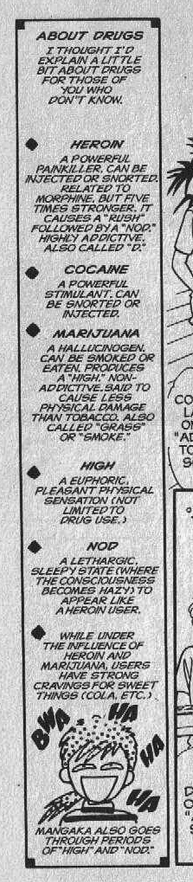
Not a trace of this is left in the anime version; not a single visual calls back to this storyline, and given Cipher The Video's level of attention to detail, I can’t help but think that this omission has something to do with Japanese society’s extreme aversion to drug use. Meanwhile in the manga, where adults aren’t looking, Narita is getting away with putting a beginner’s guide to recreational drugs in the sidebar. But the drug storyline is a major part of this story and of Jake’s baggage: this wouldn’t be complete without an explanation.
Ending - Against All Odds - Reprise
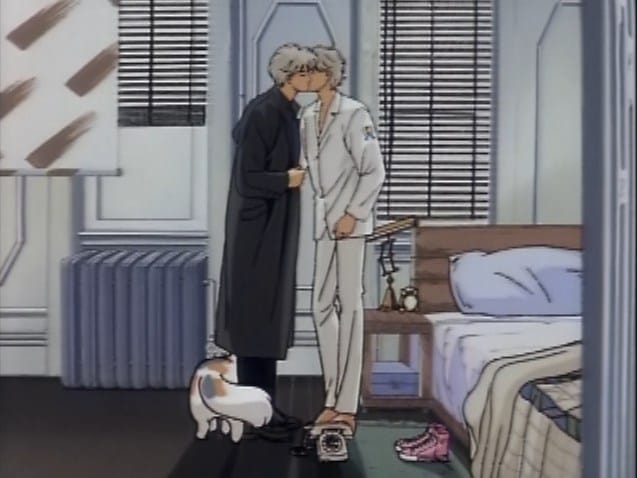
This brings us full-circle to Siva (Jake) coming back to the apartment after a night of quiet contemplation and waking up Roy (Cipher).
"Yeah." "Yeah."
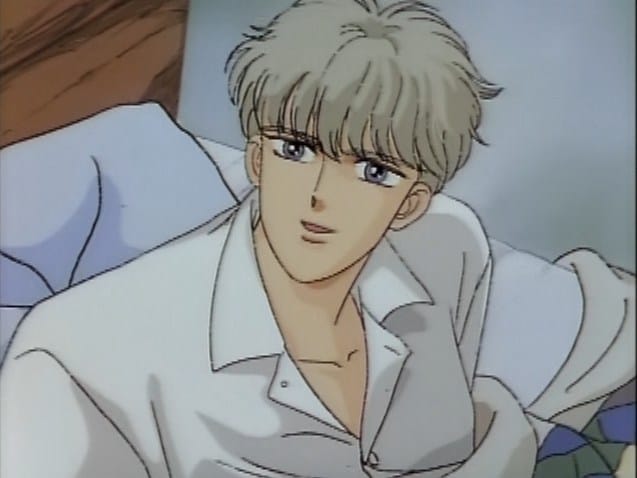
And the very important line “Good morning, Jay”. Jay was the real name of the voice actor playing both twins: yes, he’s talking to himself. But the character’s name is “Jake”, and Jay clearly says “Jay”. Narita notes in the manga that she was (mistakenly) thrilled that the voice actor had the same name as the character. Was the author confused on the name of her own character?
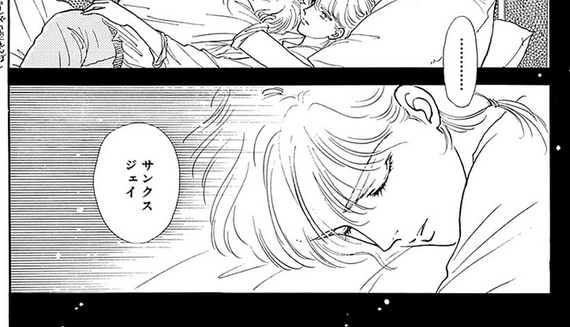
Twist: maybe?! Throughout the Japanese, Jake's name is spelled 「ジェイ」, phonetically "Jei". Jake would be read 「ジェイク」, phonetically "Jeiku".
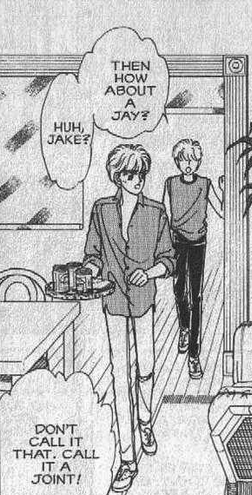
During the brief period when the twins drink and smoke weed, Roy asks "How about a J, Jay?" This was meant to be a pun.
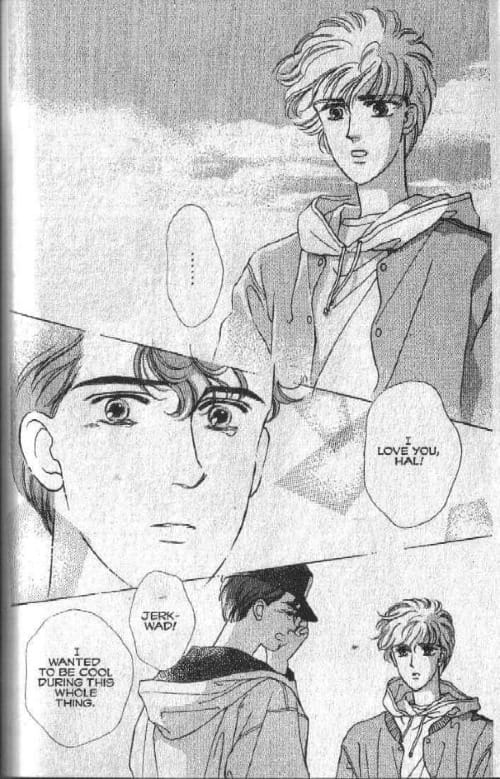
But throughout, when it uses English, Cipher uses Jake, and towards the end we start to see the last name Lang. In Cipher the Video we see "Jake Rang" used. Above is a page from close to the end of Cipher, which I'm pretty sure was in English in the Japanese printing. Note that it uses "Jake" and "Lang".
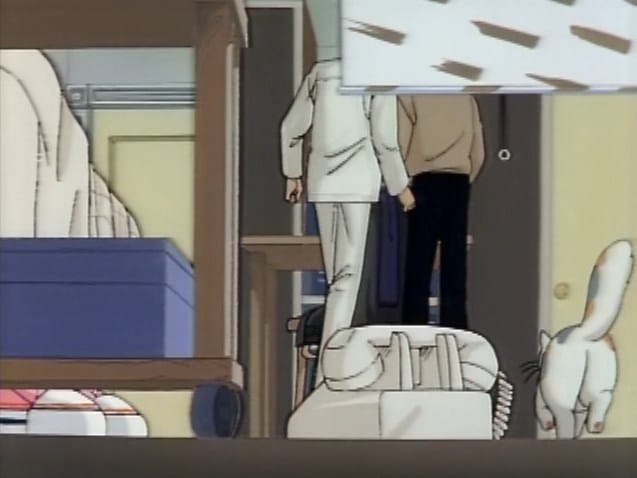
Then the boys head off to the kitchen to make some yogurt with vanilla ice cream, raisins, and peanut butter. As you do.
Conclusion and thoughts
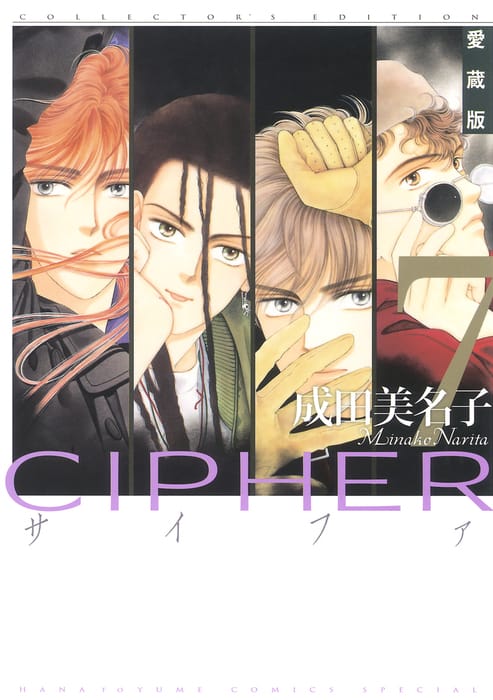
If you don’t care what I personally think about the comic Cipher, you can stop here.
I had a lot of fun putting this together: of course a project like this called for watching and re-watching Cipher the Video, which I’ve already done a million times, but also obsessively poring through the first two thirds or so of Cipher the manga, which took significantly more time.
Though I can certainly appreciate a good shoujo manga, I can’t say I read Cipher for any other reason than to contextualize its fascinating animated adaptation for myself. The funny thing was that it turned out I wasn’t that crazy about Cipher the manga. (I did love the art, the color pieces especially.) Past the material this anime covers, the manga takes some big jumps that didn’t land well for me: Jake gets a girlfriend named Dana who has no particular personality and exists solely to die.
This character sets up the second arc where the twins start living on opposite coasts and have to grow as individuals in order to reconcile with each other (and Anise, who drops out of the story for quite a while). But narratively, Dana’s story is beyond cheaply executed— Dana runs out of her house and we’re told she’s dead on the next page, like fucking Poochie— and the low point of the whole comic. Given the general leisurely pace of Cipher, this story felt forced, whereas the other dark stuff like the parents' death and Roy's drug addiction did not.
I’m not sure I can really call it a criticism that these guys don’t act like any guys I’ve ever met, gay or straight. Spiraling off into dramatic emotional spirals at the slightest nudge, clingy to an extreme, saying things like “you’re so cute I can’t stand it” to each other. But I also suspect that this is one of those things you can file under “feature, not flaw” for the actual target reader. Not a lot of girls out there act cloyingly cute like anime dream girlfriends or Vtuber personas either.
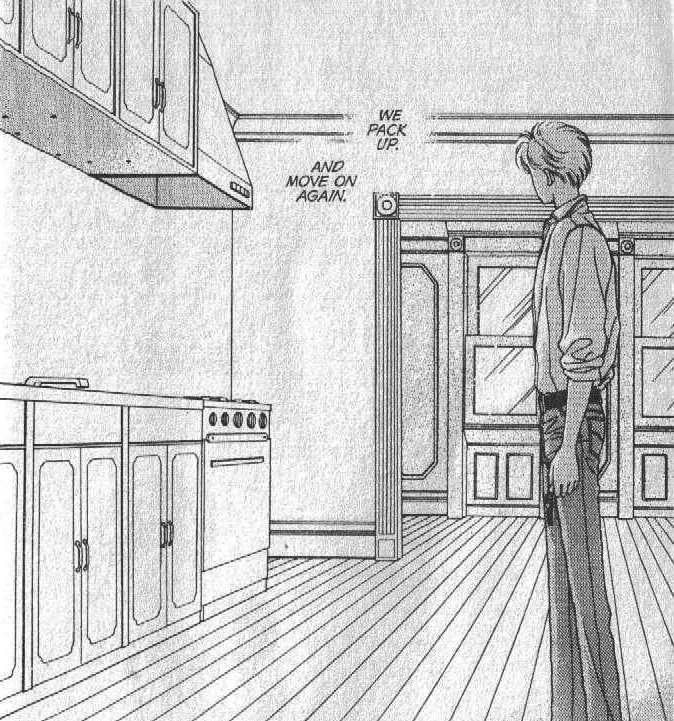
Cipher has a “life goes on” ending where the characters reconcile but their lives continue, particularly Alexandra’s (as the sequel manga is about him). This matches the leisurely pace of the second half of the series. But that finish is rather abrupt, and it feels like the main setup was forgotten as the author rushes to clean up all the romantic loose ends in the last couple chapters.
Anyway, what have we learned here? Well, I got so obsessed with a weird anime relic that I read the entire long shoujo manga series that it was attached to... and I had a pretty good time, and all of my questions about the weird anime relic are forever answered. Including some questions I didn't know I had. I'll pass it all along: hope this helps, but also read Cipher! It's alright!
If you’ve read this far, thank you! This piece is really long and I want to emphasize that I can’t take the days and hours it took to put this together without the direct financial support of my readers. I know it can get tiring to read that over and over again; it’s tiring to say it, too. I wish it wasn’t so. But it is.
If you enjoyed this deep dive in search of the context of an anime curiosity that’s achieved internet meme status, please consider becoming one of those supporters. From a book-length walkthrough of a famous retro game to an obsessive annotation of the finest details of a forgotten mahjong anime, I explore subjects that nobody else will to my heart’s content. I can do that because I work for me, and I hope that I’ve convinced you that that’s worth supporting.