The Weekly, April 8th 2026 - rakugo, defeat, coin pushers, surf guitar
Akanebanashi anime premiere came with Actual Rakugo

I was pretty busy this past week; all my plans turned out to be for this particular week in April. Any other week this would have been the highlight: I got to see a pre-broadcast premiere of the new anime adaptation of the cult Shonen Jump manga Akane-banashi.
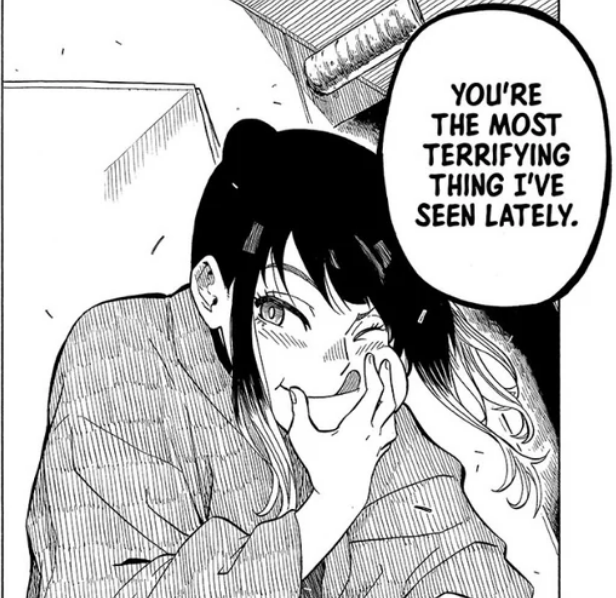
I have somehow never written a piece about Akane-banashi in the history of this newsletter, which tells me I need to write a lot more than I do. Applying the Jump formula to traditional Japanese performance arts, Akane-banashi follows a high school girl seeking to follow after her dad in rakugo storytelling.
Rakugo is a bit like stand-up comedy with its own literary canon: rakugoka perform pieces that the audience already know and which they have memorized. But with artistic license and their two props— a fan and a hand towel— each storyteller will tell their story, inhabit their characters, and land their punchlines just a little bit differently. The pleasure is in the variation.
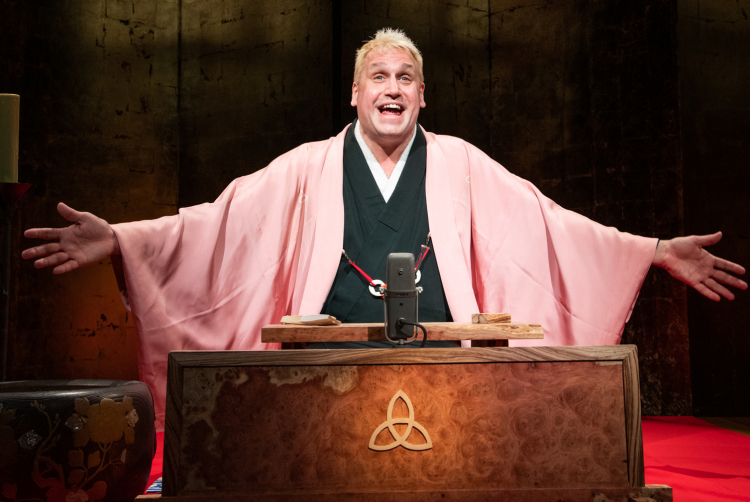
And if that sounded like it was my own knowledge, I got it all from this event’s special guest, Katsura Sunshine. A Canadian-born, Japan-based rakugo performer who has been through the full wringer of training with the masters and ascending the ranks, Sunshine flies out to New York monthly to do a show and often tour anime conventions around the coast (I believe he was at Anime Boston this weekend). As our special guest and rakugo accuracy consultant, Sunshine of course gave the anime his blessing.
We also had the unique treat of getting to see Sunshine perform after the anime episode. Thoughtfully, he chose a story that Akane-banashi uses immediately after the premiere we had just watched. You know, the one about the guy who’s scared of manju? Seeing someone perform this story in my native tongue expressed the rakugoka’s job— they’re entrusted with tradition and earn the artistic license to twist it just a little bit— better than any written explanation possibly could. I’m definitely going to try and see his show in NYC some time.
Now as for the actual anime episode! Of course this was a very brief exclusivity gap, you can watch the episode via Youtube as you read this: the whole event was set up by TV Asahi as one of those “look, foreigners love this!” events that Japanese corporations really like to do. (I’ve been to so many…) There was a line to talk to the TV people, which I get because I love Akane-banashi and damn, don’t get me going on Akane-banashi, and probably the whole crowd at this show felt like I do.
I was worried about this adaptation because the material is so difficult to capture. It was always either going to be a cheap disappointment or a painstaking work that spares no expense, and I am happy to say that we got the latter. The performance scenes might be even more powerful than they are in the manga, bringing these old stories and the characters that inhabit them to life on the screen in a way that makes the rakugoka look like a spirit medium, and their performances like they’ve been harmlessly possessed by silly old ghosts from hundreds of years past.
TV Asahi also supplied a short documentary about training the main three voice actors (Anna Nagase as Akane, Rie Takahashi as Hikaru, and Takuya Eguchi as Karashi) in rakugo for a year. This is TV, so we can’t really be sure how much is kayfabe, but Nagase visibly commits hard to the training, saying that it’s a “step towards becoming Akane.” Nagase in particular is shown being put to the test in front of real rakugo audiences, and her improvement throughout the doc is apparent.
Indicative of the level of detail throughout this show, when Nagase records in the studio she has a regular standing mic set up for her normal dialogue and a full traditional rakugo setup— stand, cushion, props— with a mic at kneeling level. I can’t wait to see her perform in the anime, and I’m so glad that Akane-banashi is going to get to more people. It deserves all this.
(These are all medium to big names, but I would be remiss not mentioning that Rie Takahashi is an extremely prolific voice actress (Emilia, Mash, Ai Hoshino, Megumin…) playing a character who is also, in-universe, an extremely prolific voice actress. The character required a superstar.)
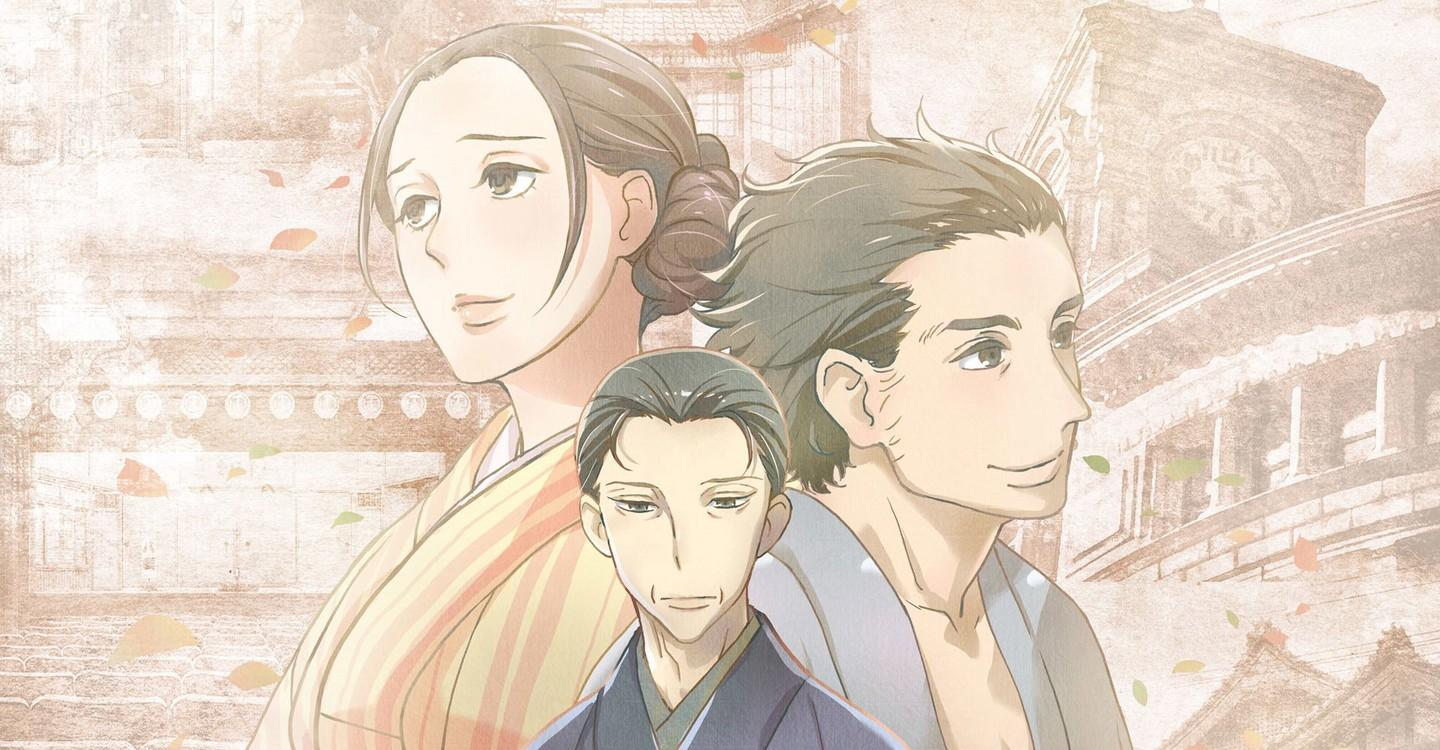
By the way, I can’t let anything about rakugo go by without recommending the dark, haunting and audacious modern masterpiece Showa Genroku Rakugo Shinju. It would be unfair to you.
The Gamesoft Robo Fun Club is a solo labor of love that depends entirely on paid subscriptions from readers to exist. If you enjoyed this piece and you'd like to see more, I'd love to see you become a regular or paid subscriber. Paid subscribers get exclusive posts and keep me fed. Thanks for reading the pitch and hope to see you subscribe!
Takanaka Live in NY
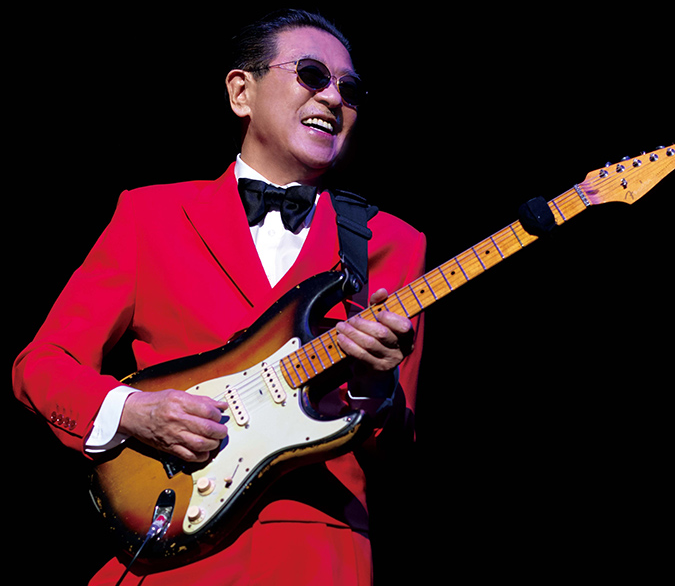
I was lucky enough to see Masayoshi Takanaka, one of the Japanese jazz fusion guitar gods, at a sold-out show live in Brooklyn a couple nights ago.
I would not have guessed this show would sell out or that tickets would get scalped for a grand. (I paid $55 for general admission.) I was certainly shocked when I found myself standing in a line winding around three blocks, and later smashed up against the wall in a standing-only crowd… and a little less surprised later, when they announced there were 3,000 people in the building. The merch line, bearing exclusive live records and $50 T-shirts, was too long to even consider.
Why was this surprising to me? It really shouldn’t have been. I know how I found Takanaka ten or so years ago, and that it was probably the same for most of the people in the crowd. I listened to 80s synthpop and 70s AOR and jazz fusion on Youtube, and pretty soon the algorithm was gently leading me into the Japanese side of that, the loose assembly of genres that collectors currently refer to as “city pop”.
(I actually hate “City Pop” as a label, probably because I associate it with this cooperatively weeb-authored glamorized image of a fantasy Japan that only exists in their imaginations, a vision where a neon-tinted Sailor Moon gif plays over a Tatsuro Yamashita song and the comments all say “I was born in the wrong country!”)
And when you go algorithm diving, yeah, the results are tailored for you. But as everybody learned during the Plastic Love phenomenon, the machine often mysteriously favors certain choices that nobody can predict, but which are definitely right. In other words, hundreds of thousands of other people were being fed the Takanaka discography, his playful guitar wizardry, those videos of him playing the surfboard guitar. The Rainbow Goblins in its entirety.
But you’re alone in that room, when you’re algo-diving, and you feel like it was just you “discovering” this stuff. And you know it’s not, because the record companies are re-releasing this stuff at exorbitant prices, and people are paying it, and some of those people are you. But you don’t see those people until you get out to something like this. You didn’t know they sold Takanaka T-shirts. Where did all these guys in red suits cosplaying Takanaka come from? And it’s a wonderful and happy surprise.
The showman himself is clearly enjoying his resurgence. Takanaka knocked down the doors from the start with his signature Blue Lagoon and gave us a monster two-hour set, swapping between at least four different guitars, playing Nagisa Moderato while sitting on a couch, hitting us with the Indiana Jones theme as he hopped across the stage… just having a great time. The crowd– a weird mix of chill head-bobbing fans with a healthy serving of extremely pumped “UOOOOO”ing otaku– were perfectly in tune and helped make it memorable, even if I was smashed against a wall for a good portion of the show. Absolutely unforgettable experience.
If the world somehow holds together, I’m starting to feel like it’s a matter of time before I get to see Tatsuro Yamashita live after all.
Raccoin impressions
Despite being worried I’d end up addicted to the point where I delete it from my computer, like Balatro, I installed the new coin pusher game Raccoin recently. I was uniquely interested in this because it clearly borrows a lot from the Japanese medal games that I’d done some digging on pretty recently. This is really smart on the devs’ part; it’s a genuinely ignored space that’s perfect for the Balatro high-score treatment.
After a couple of runs, I’ve come to appreciate what it does on its own terms, and it got me thinking about adjusting the game to your audience.
Japanese medal games are needlessly massive and slow, but that’s their appeal: dragging out the result of the spin to maximize the excitement. You score coins to spin a wheel, and that wheel triggers a bigger wheel, and maybe once an hour that wheel triggers something inside of the machine that is the size of a wall to turn over to you and spin a wheel the size of a person. It is not a coincidence that the world stops when you earn a spin on the wheel, or that the jackpot goes on for five minutes. These games are designed to keep an old person hanging for a lazy afternoon.
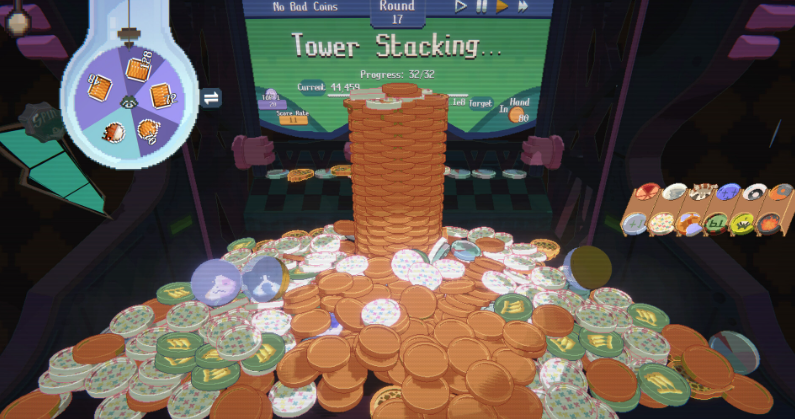
Raccoin adapts that to a run-based roguelike format: games run from 20 to 45 minutes or so. You score coins to spin a wheel, but the spin happens quickly in the corner of the screen while the game continues: you’re probably not even really looking at it. The experience is compressed for maximum spins, faster runtimes, and maximum addictiveness. That’s not the old folks at the game center model, it’s the Steam Gamer model.
As in Balatro, the focus in Raccoin is on creating an efficient coin-cashing machine with character classes ala Slay the Spire and special coins that can create synergies and larger point rewards. The game wants you to dabble and fail a lot, with most of the features locked to start: there might be something really big that I missed, but in the runs I’ve done I don’t think it was possible for me to beat all 15 stages because I didn’t have high-scoring gear unlocked. (I consider this a minus for a roguelike/roguelite.)
I haven’t fully composed my thoughts on this game, but I do want to say it’s very cute. I love the visual style, the many mascot animals that serve as the player character, and even the adjustable faux-pixel filter on its 3D graphics. Kawaii Gamesoft, for sure.
Final stand at N-League
(I want to note that a tremendous amount of work and money, offscreen more than onscreen, on a completely volunteer and out-of-pocket basis, goes into producing a broadcast-level mahjong stream like this one. Everyone involved deserves our thanks. And Riichi City too, for sponsoring.)
Just as a final tag on a pretty long Weekly, I just finished up my run this year on my club’s Youtube streaming mahjong league, the N-League. My team, the Opie Dopes, won last year with ridiculously strong luck and absolutely tanked this year with the absolute opposite. We are so far behind the other teams that we actually cannot get out of last place.
The average Dopes game started with us getting out in front early with a strong win, only to inevitably get overturned to third or fourth when somebody else drew something better. Runs this bad, runs with bad patterns like this one, are the kind of thing that make players superstitious. But like my teammate Max says, “Mahjong just happens.”
The season is not technically over, but we don’t have a chance to escape last, and I have played my last matches. On my last stream of the season I put in a pretty respectable second, but the next match, played offstream, was an agonizing defeat of the worst kind: the one where salvation is just barely in reach and you’re cut off at the last moment every time. The winner told me “truly, I’m sorry about that one.” I told him not to worry, I would have done it to him if I could’ve.
Playing a little less ranked match has made me less sensitive to my results. I tell people it’s my “sitting under a waterfall” training for emotional damage. You can’t deny that it hurts, but you can build up your mental defenses, repair the armor as you sharpen the sword. You can look at it differently, realize that even though you’re competing, this isn’t the kind of game that’s always about you. And when it is about you, like it was last year, you make damn sure to enjoy it.