I played the Japanese arcade Mahjong Fight Club for two weeks to support the pro who complimented my keychains: here’s what I got out of it
I recently hit a bit of a rough patch on my regular online mahjong grind, the ranked ladder on Riichi City. Stuck at 8th dan (out of 10, and then Legend rank after that), unable to get back up to 9th dan for over a year since I last demoted, it can get frustrating no matter how chill I try to be about it. And when I realize that I’m not having fun on the RC ladder, I head for different ladders. Sometimes starting from nothing can erase the frustration and bring the fun back. I could do Sega MJ, or Maru-Jan— I don’t want to do Tenhou, I’ll just get my account deleted for inactivity again— or what about…?
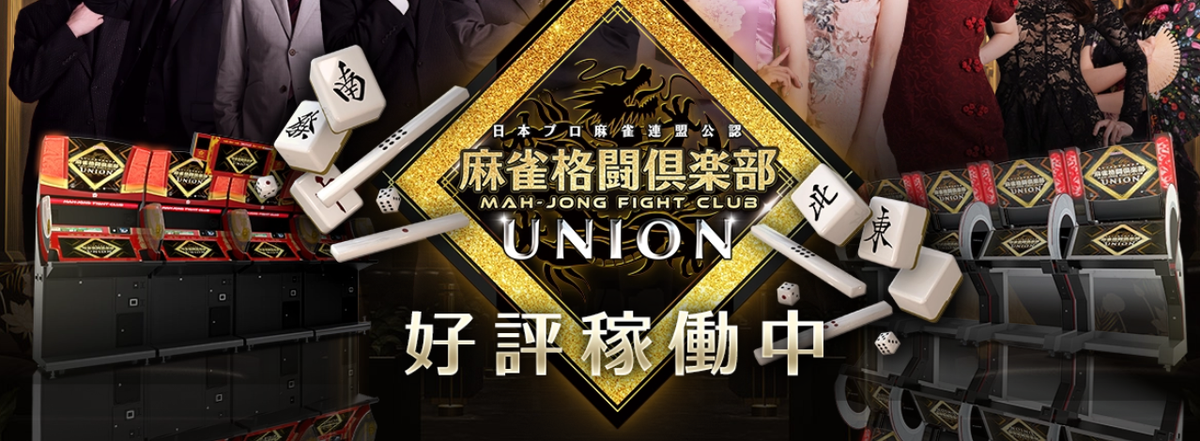
Mahjong Fight Club. How about Mahjong Fight Club?
So here’s how I’m playing a Japanese arcade-only game
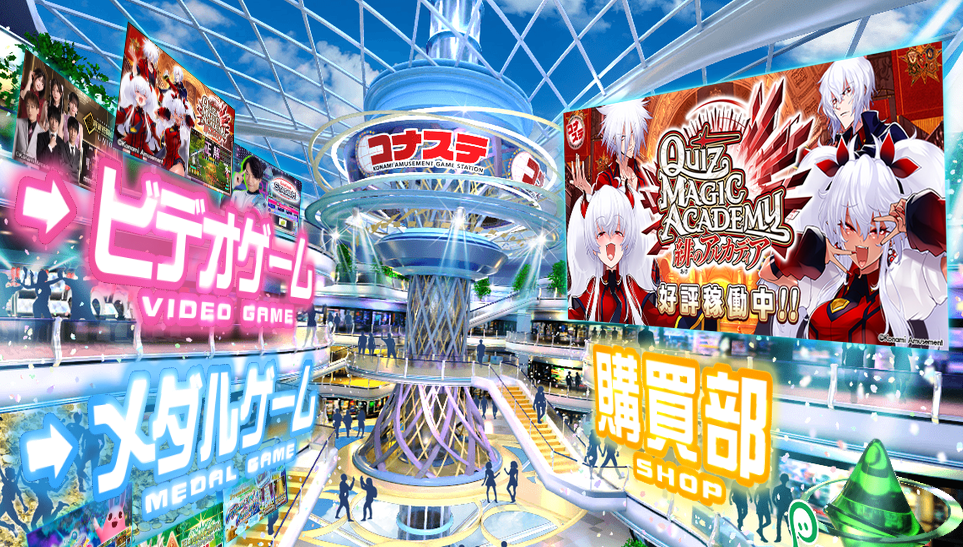
It’s all above-board, I’ll have you know! Konami started a cloud streaming service for their arcade games out of desperation during COVID, and it doesn’t block users by region. If you can read enough of the language to navigate some menus, and you have a credit/debit card that is compatible with the security checks the site runs, you can play arcade Mahjong Fight Club video-streamed to your device.
(It’s still an arcade game and you pay for credits exactly like you would at a real arcade. I spent 6000 yen or about $40 at the current, abnormally cheap exchange rate.)
But why would you pay to play an arcade game from home when you have any number of free online clients to choose from, including the free mobile version of MFC itself? The answer’s easy: you wouldn’t. I did it because it was there and I am always looking for something different. And is it meaningfully different? Well, a little bit. Enough to talk about, anyway.
Writing about games is no longer a feasible occupation, and The Gamesoft Robo Fun Club is a solo labor of love that depends entirely on paid subscriptions from readers to exist. If you enjoyed this piece and you'd like to see more, I'd love to see you become a regular or paid subscriber. Paid subscribers get exclusive posts and keep me fed. Thanks for reading the pitch and hope to see you subscribe!
What’s MFC?
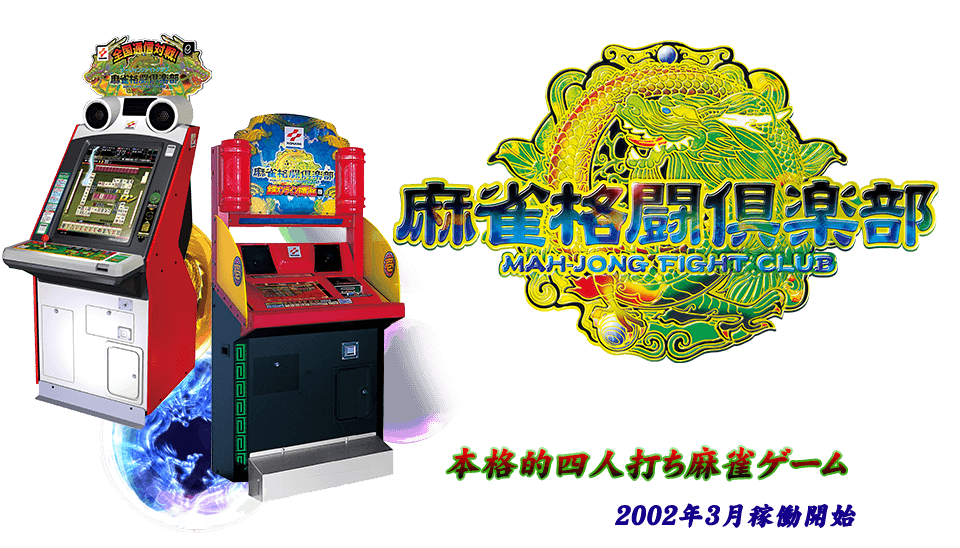
Mahjong Fight Club is an online arcade mahjong game by Konami that dates back to 2002 (it’s older than Tenhou!) and thus has been operating for over 20 years. You walk up to a bank of machines at whatever spot is convenient to you, load up some cash, and bam, you’re playing mahjong online against strangers. Today this is trivial, but consider it in 2002 and it starts to look like a revolution. (If you were alive then.)
It makes sense that Japanese arcade companies got to putting mahjong online before a lot of other game genres. Of course, there’s the issue of latency– a few milliseconds of lag time simply doesn’t matter very much for a turn-based board game– but there are less technical factors in place as well.
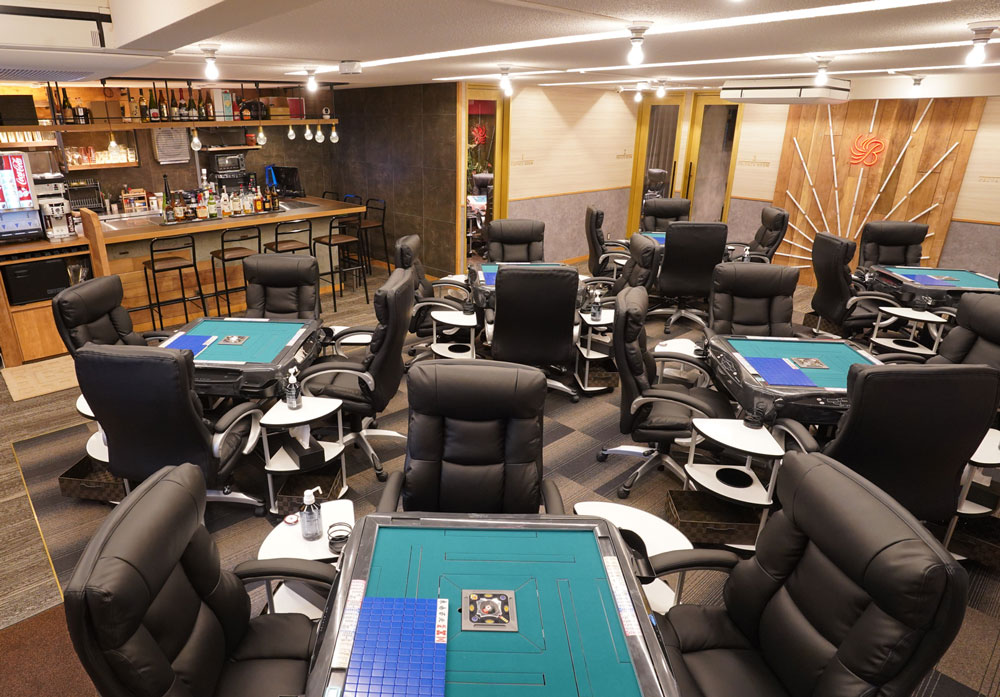
The whole reason the mahjong parlor was invented in the first place was the difficulty of consistently getting a group of four together for a time-consuming game: hence, a business where mahjong junkies can just walk in, quickly enter a game against strangers, and pass the day before they realize it.
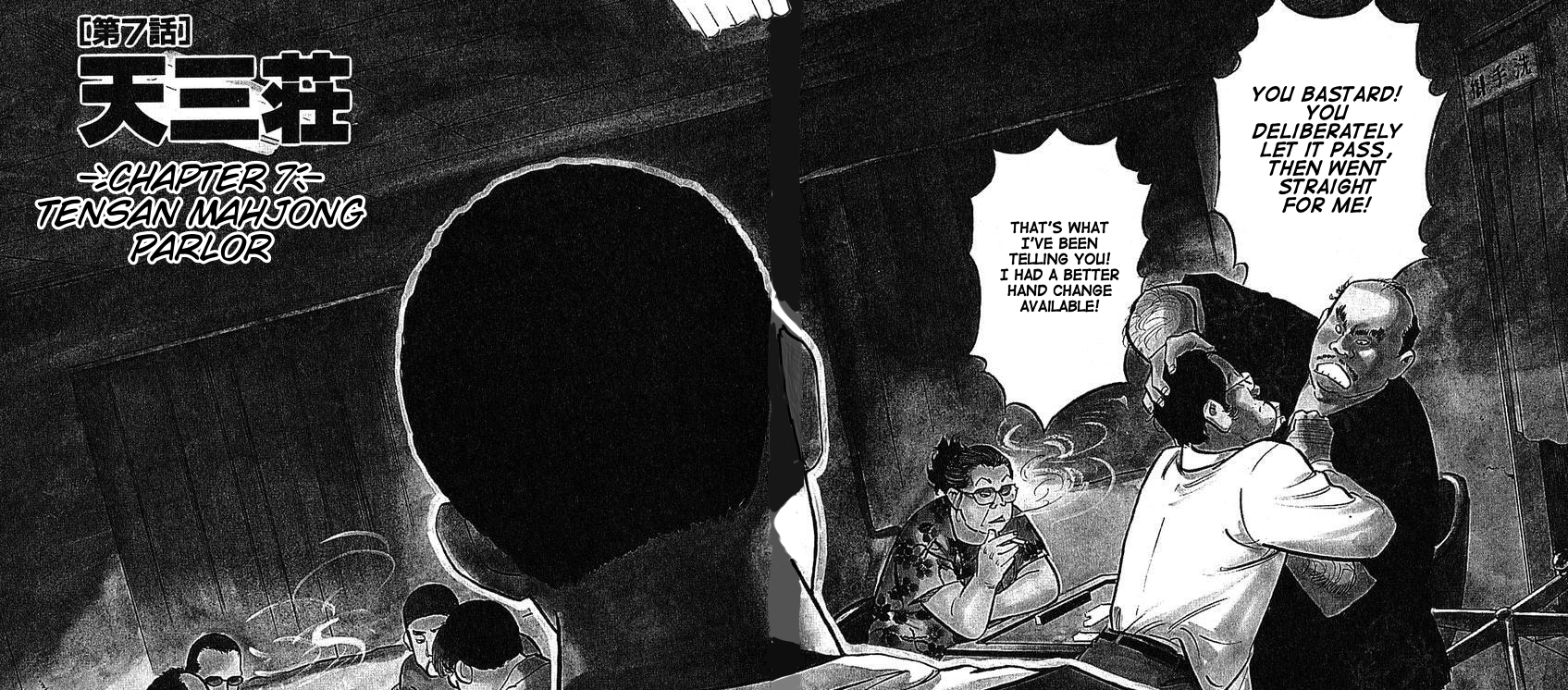
However, the classical and well-earned old-time image of a mahjong parlor is of a smoky, seedy, intimidating and possibly even dangerous gambling den. (In Japan there are non-gambling parlors, but they are a minority and the exception: the default cultural assumption is that there will be cash on the line. Lots of people find it weird to play the game without stakes.) The concept of playing a quick game in relative anonymity, without the disapproving stares of grouchy old men or potentially ruinous cash stakes, is alluring.
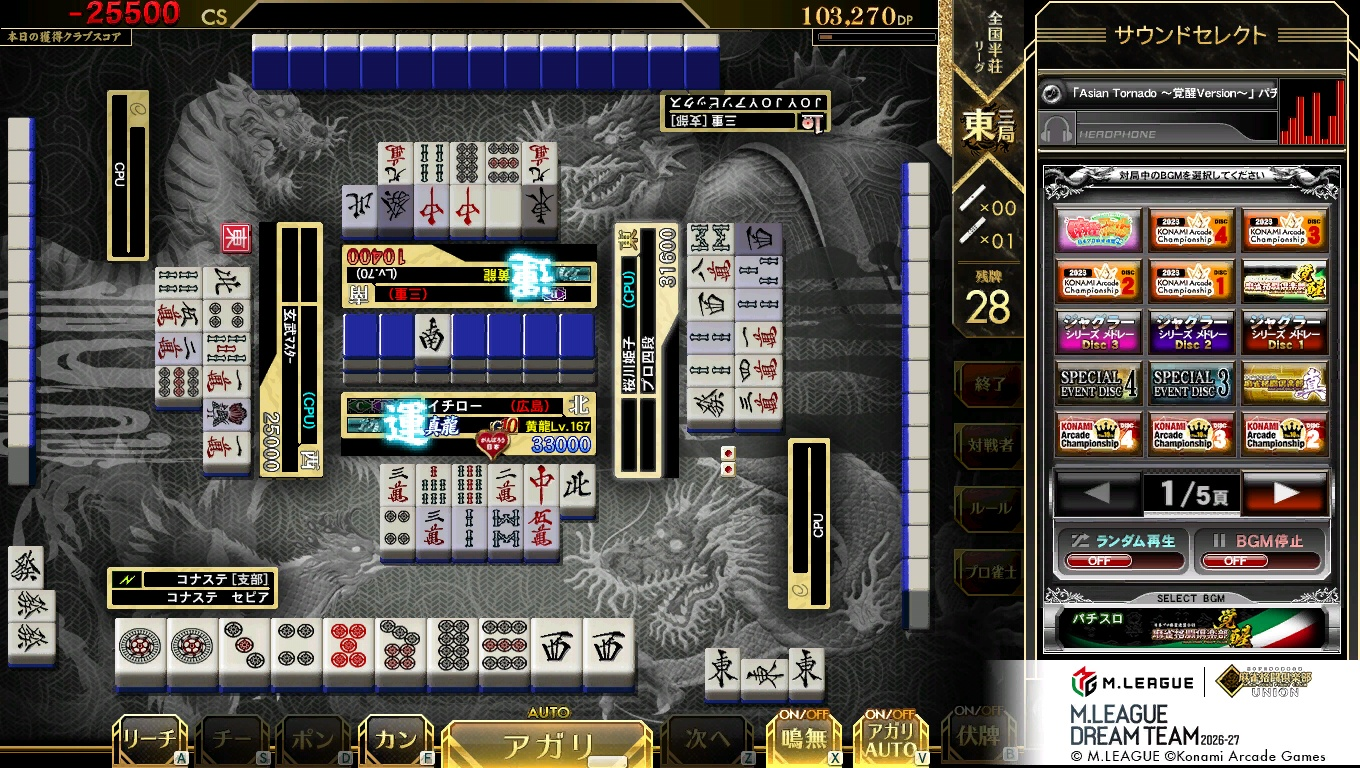
Not to mention video game mahjong can be a lot easier than the real thing: the computer handles not just the complex scoring (a game unto itself, one which demands dedicated memorization) but also a variety of other player-assistance features, like highlighting the dora tile and telling a player what their wait is, or the score they need to improve their placement. A parlor player might consider these features to be crutches and heretical, but screw that guy! He’s not here!
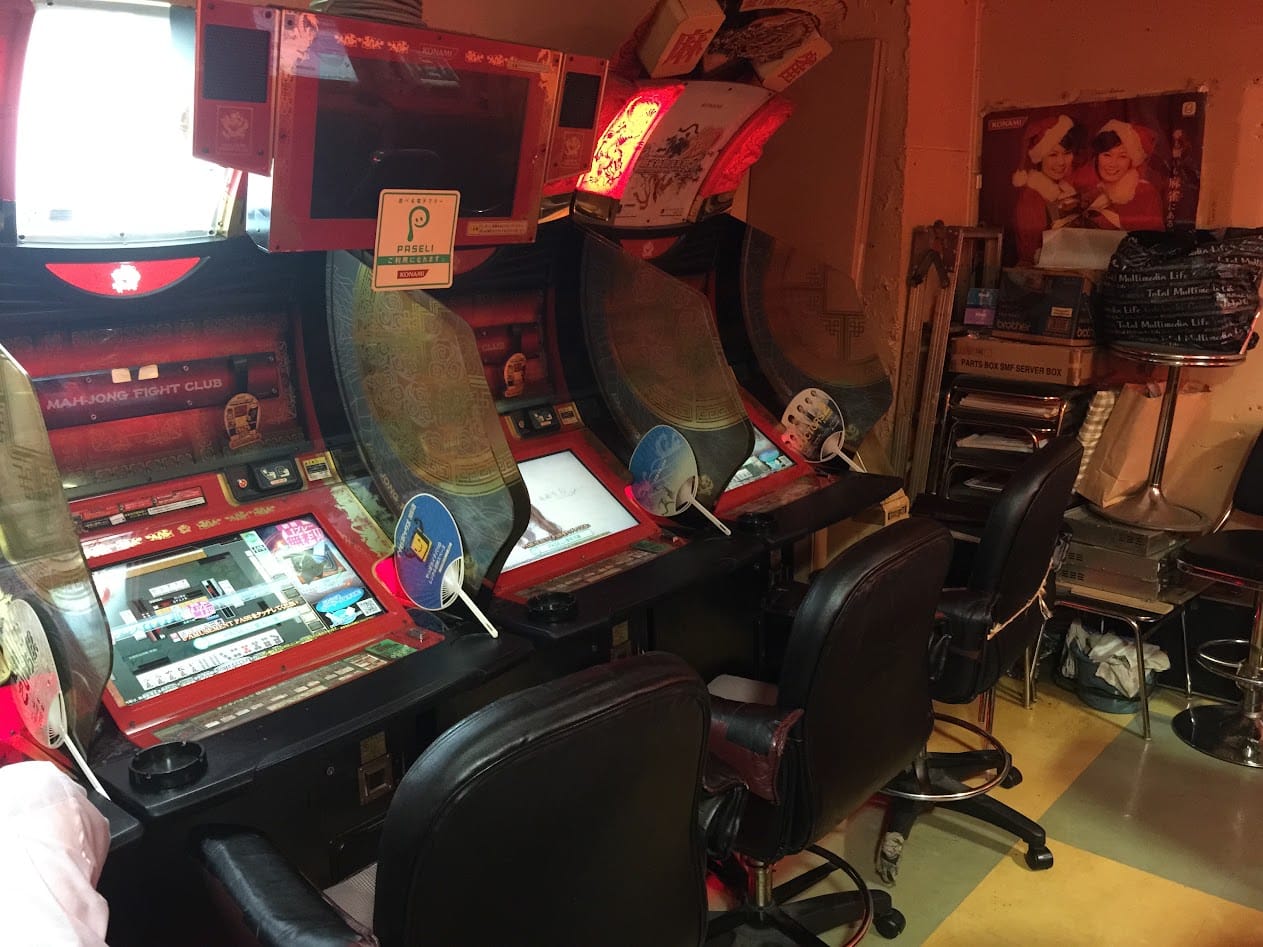
So just sit down at the station, plug in your phone to charge, and enjoy a match to yourself with some strangers: the monitors are nice and low, and there are even privacy screens so passers-by can’t easily peek over your shoulder and judge your game like they might at a real parlor. This is an experience with clear audience appeal, and indeed it was successful enough to last decades. I myself have pleasant memories of relaxing with mid-day Sega MJ sessions on my travels in Japan.
MFC is still in operation today— it even has an offshoot with anime girls aimed at fleecing gacha-addicted otaku, aptly called Mahjong Fight Girl— and it doesn’t appear to be going anywhere. I was curious as to exactly how a game like this keeps players playing and paying in an age when a free mobile app (or even Konami’s own free app, Mahjong Fight Club SP) is already probably in their pocket.
As it turns out, the game has serious hooks after all: I had only intended to play for one week for this experiment, but it got me for two. MFC gives players a tall ladder to climb, plenty of distractions, and some pretty devious reasons to come back. You might be surprised to hear there’s even idol stuff going on here.
Arcade mahjong is fast
The biggest difference between arcade mahjong and the online games that you may be used to is that arcade mahjong is fast. From the moment I started up the streaming app until the second I finished my post-game stat check, I was on the clock. I could spend 20 seconds at most in any menu, or the game would make my choice for me and keep on moving, whether I wanted that or not.
That’s the thing with arcade games: as their operators are primarily occupied with their potential earnings per hour, the games are designed to actively rush you through the act of playing. (The next time you play Gundam Extreme Versus, consider that the arcade game charges 100 yen for matches that can be as short as one minute: there’s a reason the game was designed to play at that speed.) MFC makes some substantial rules changes from standard online mahjong to speed up the proceedings (like the dealer must win the hand to get a repeat round; extremely long rounds due to excessive dealer repeats are very uncommon).
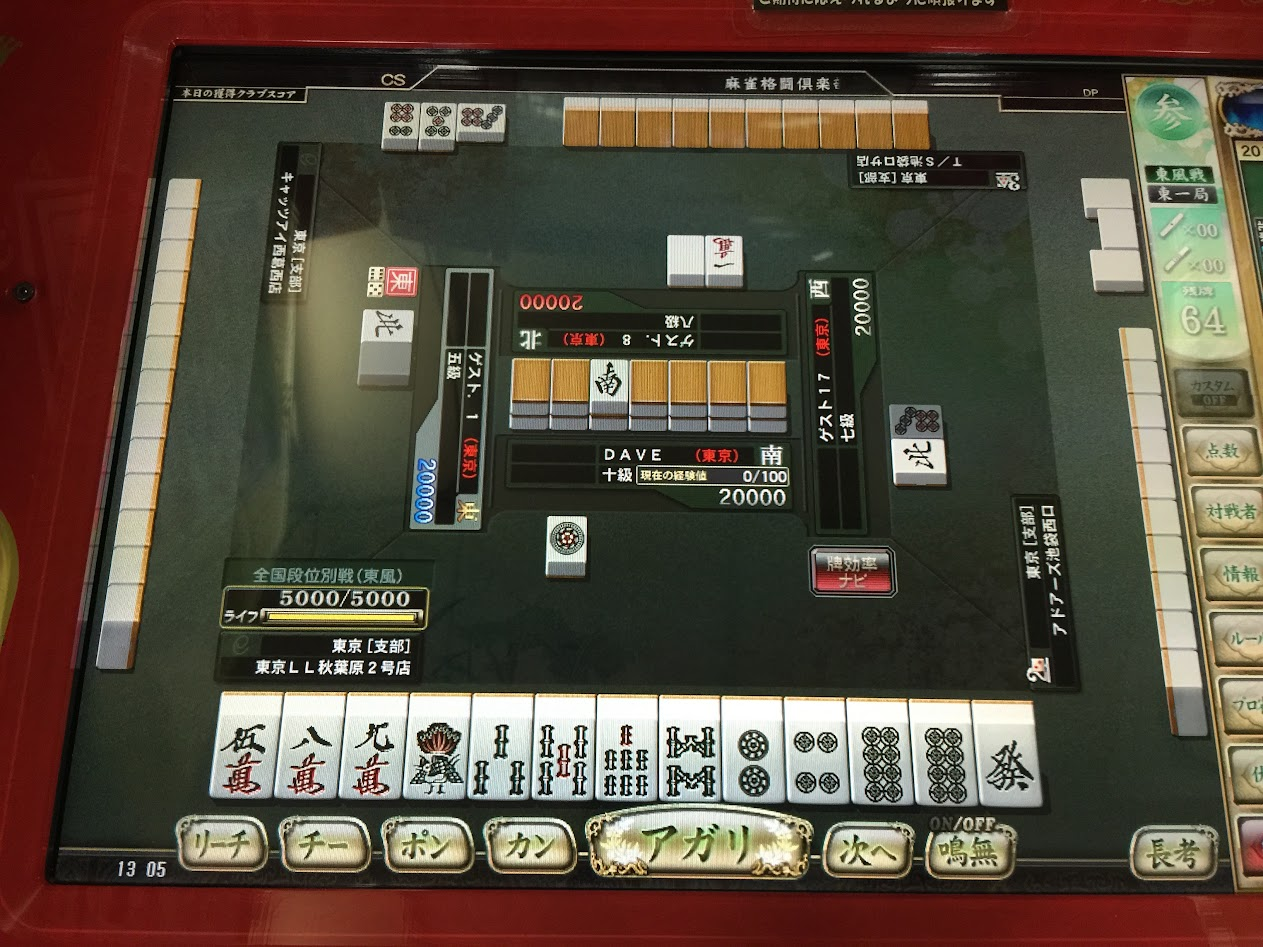
The standard 100 yen will only get you a very limited “life bar” mode where you effectively buy 10,000 points (in a 25,000-point game) and must continue if you lose more points than that. It’s not really recommended: you’ll just pay more in the long run. Rather, you’re going to pay more like 200 yen for an East game (~15-25 minutes) and 400 yen for a full East-South round (~30-45 minutes), with various “premium” upsells courtesy of Konami’s company scrip system, Paseli. If you win your match with a high score (I believe this was 40,000?), the next game is free.
If you’re thinking that’s really fast for a mahjong round, you’re right. MFC expects you to keep up with its pace or die. Players have a very limited amount of reserve time if they need to think over a move, and if you use it all at once, you won’t have any time left for the rest of the match. If you don’t have your head in the game like a veteran, actively thinking about your hand, you’re going to run out of time and the game’s going to miss that call, or auto-discard that tile. Coupled with loud, flashy music that gets extremely intense during a riichi, MFC’s full-throttle and high-pressure atmosphere made me feel legitimately anxious at times. The game forces you to play faster than even a skilled and confident player would in a live game situation. (Even at the highest level, pros will sometimes take a long turn to think about difficult situations.). This gets games knocked out in a very short time, but it's also pretty newbie-unfriendly.
I try to listen to more laid-back music when I play because mahjong is already really tense. One time I put on a Guitar Wolf record during a ranked match and I had a "stop this right now" feeling.
(The MFC soundtrack, brand new for every yearly revision of the game, is the definition of “didn’t have to go this hard”. I’m surprised no music from the series was on the Mahjong Bangers mixtape.)
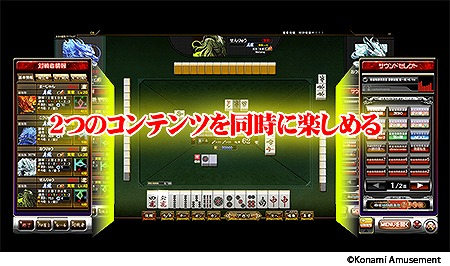
Should you have time for your focus to waver, there is space on the side of the monitor to check your stats and rankings. The side screen is also home to a rotating suite of little mini-games on the side of the screen that are affected by your performance in the match: horse races, pirate battles, and even a bonus lottery for experience points every time you win a big hand. (As this game gives out real rank XP for random nonsense, I wouldn’t take MFC rankings too seriously.) I considered these little games silly, but they worked: I was absorbed in every moment, because if there was a down moment of any length, I could always go look at the status of my Dragon Jackpot or my standings against a bunch of strangers in the randomly generated league. The side window is a cheap trick for players with darting attention spans, but as one of those people, I can’t deny its power.
Player pool
Obviously, most MFC players are on the other side of the world. This meant that I was typically playing at night or in the early mornings, in an attempt to be online at an hour when the population wasn’t asleep. Japanese riichi games are already pretty empty in the daytime: consider how dead an arcade game would be.
I could barely find players at all when I was blowing through the beginner ranks. In those battles, I frequently faced off against merciless "pro CPU" players that were significantly faster and smarter than the humans I would play against in the same pool. I thought I was just dealing with the time difference with Japan, but once I reached higher ranks and suddenly found my competition was plentiful and much more skilled, I got a different idea.
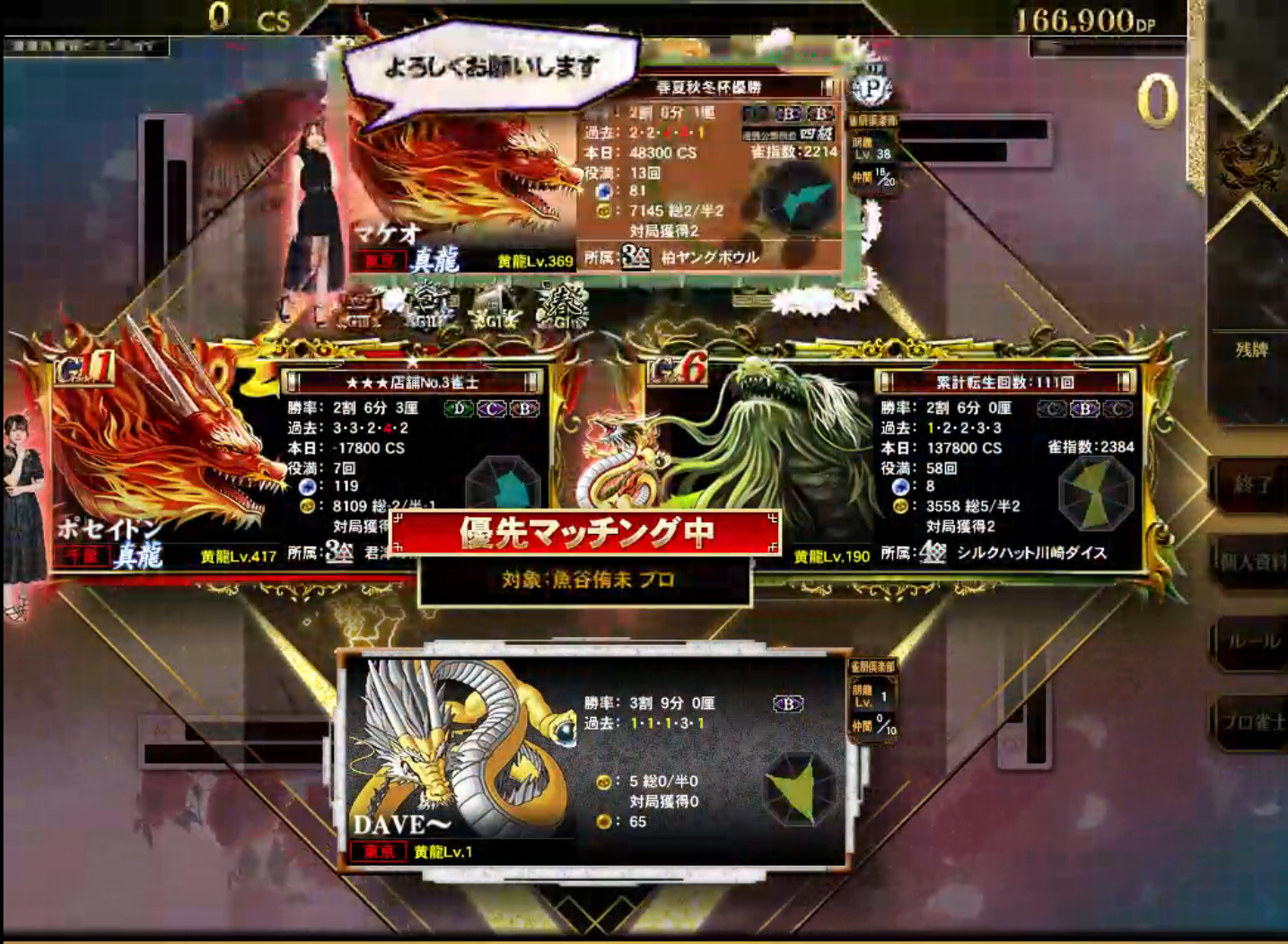
It seemed to me that, contrary to mobile games, there simply aren’t a lot of new accounts playing in MFC's beginner kiddie pool: the average player still playing this game has probably already been at it for at least over ten years. I saw players with 20,000 East-South matches. I did the math: that’s three games a day, every day, for twenty years.
MFC rewards players with endless accolades, slapping a title on a player’s profile for any outstanding achievement they might make: best at their arcade, best in the prefecture, won a tournament a while back, and so on. Should a player qualify for something like this, the game loudly announces their accolades during matches. I battled quite a few “best in X prefecture” and "best at this location" players. So another reason players stick around is that they’re decorated. Why start from zero some place else?
These arcade games might seem irrelevant when placed against their free-to-play rivals— and they may well be, to someone just taking up mahjong now— but they have no chance of dying; that is, not until their players do.
The pro factor
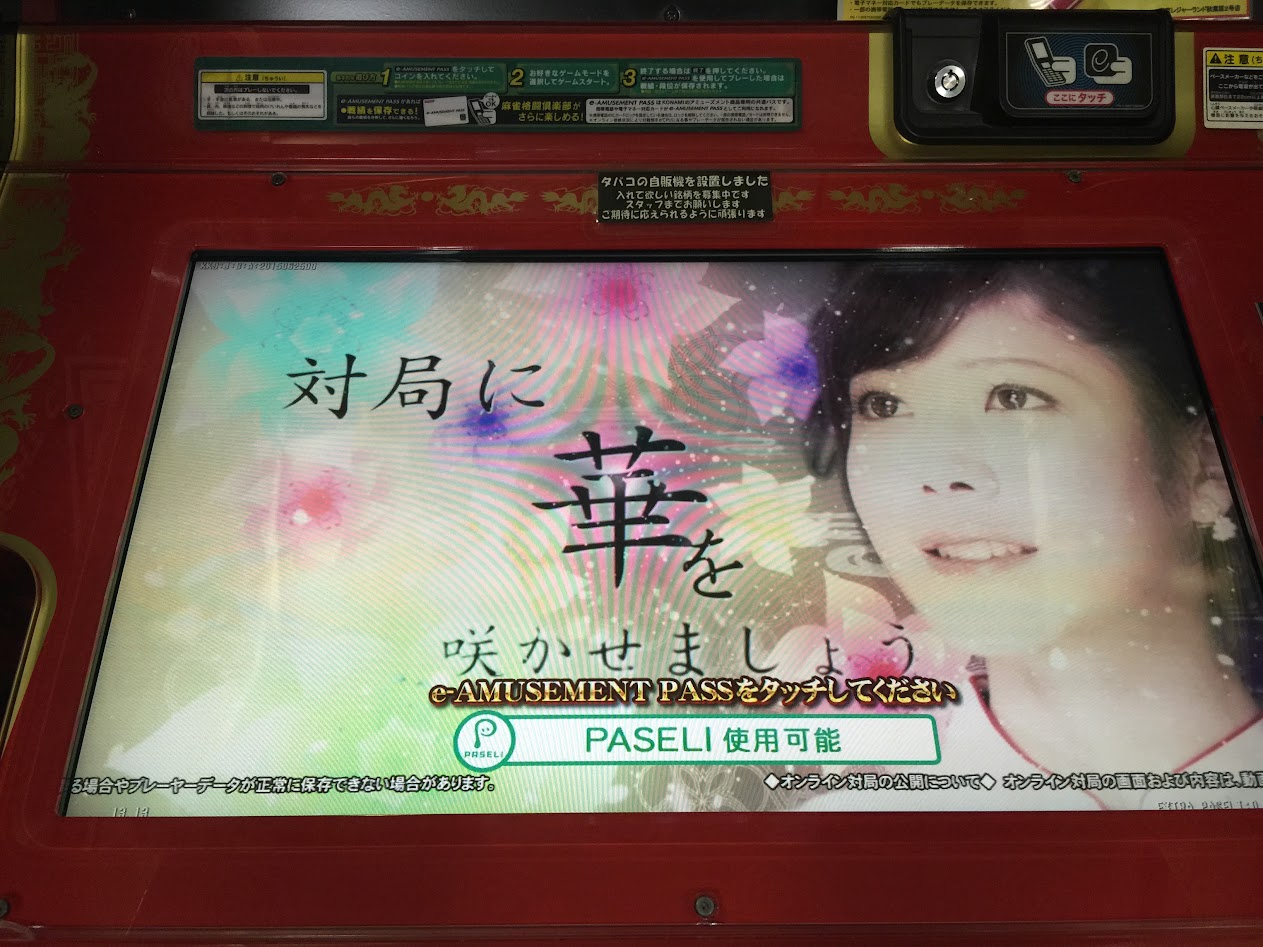
Both of the major arcade mahjong games quickly allied with different Japanese pro mahjong organizations: Konami with the Japan Pro Mahjong League (JPML) and Sega with Nihon Pro Mahjong (NPM), Saikouisen, and others. This wasn’t just branding, or a corporate statement of affiliation: it was a key selling point for the games.
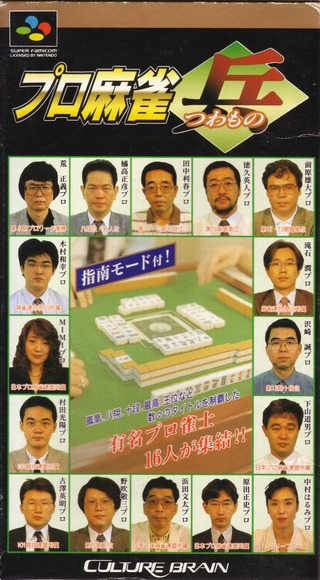
Previous generations of mahjong games put famous pros’ faces on the box and in the game: a likeness, maybe an AI programmed to their tendencies. But with online play, it was now possible for an ordinary player to be matched up against the actual person. And should you be lucky enough to run into a real pro— they have a quota of matches to play, so they have to show up online sometime— their actual likeness and voice will show up in the game too. In MFC lightning strikes, the screen shakes, and the pro’s piercing stare graces the screen as they announce “ron” or “tsumo”.
(Sega MJ actually has pros doing play-by-play commentary over your matches in the style of a TV broadcast. Classic Sega. Who doesn’t love them?)

This is a serious selling point for the devoted niche of pro mahjong fans, one which has lately been booming in Japan with the growth of the professional MLeague. It’s always been a lot like idol culture— complete with exclusive merch, meet-and-greet sessions, and photo books— and no devoted idol fan would miss a chance to meet their fave.
This element is considered so important that an in-game menu lets you know which pro’s online and which type of game they’re playing, so you can get in their queue next game. A big, loud alert even pops up on the screen each time a new pro logs in. You might not pay to play a game you can play for free on your phone… but would you pay if your oshi was online?

(Mahjong Fight Girl is also JPML-affiliated and is even more interesting with this stuff: some of the most popular female JPML pros are “mahjong actors” who officially represent their assigned character, using them online.)
Sadly, I didn’t get a single game in with a pro in my two weeks online. (They were all on East-only or 3-player mahjong, fast games that presumably let them fill quotas quickly so they can get to their other obligations.)
The pro vote
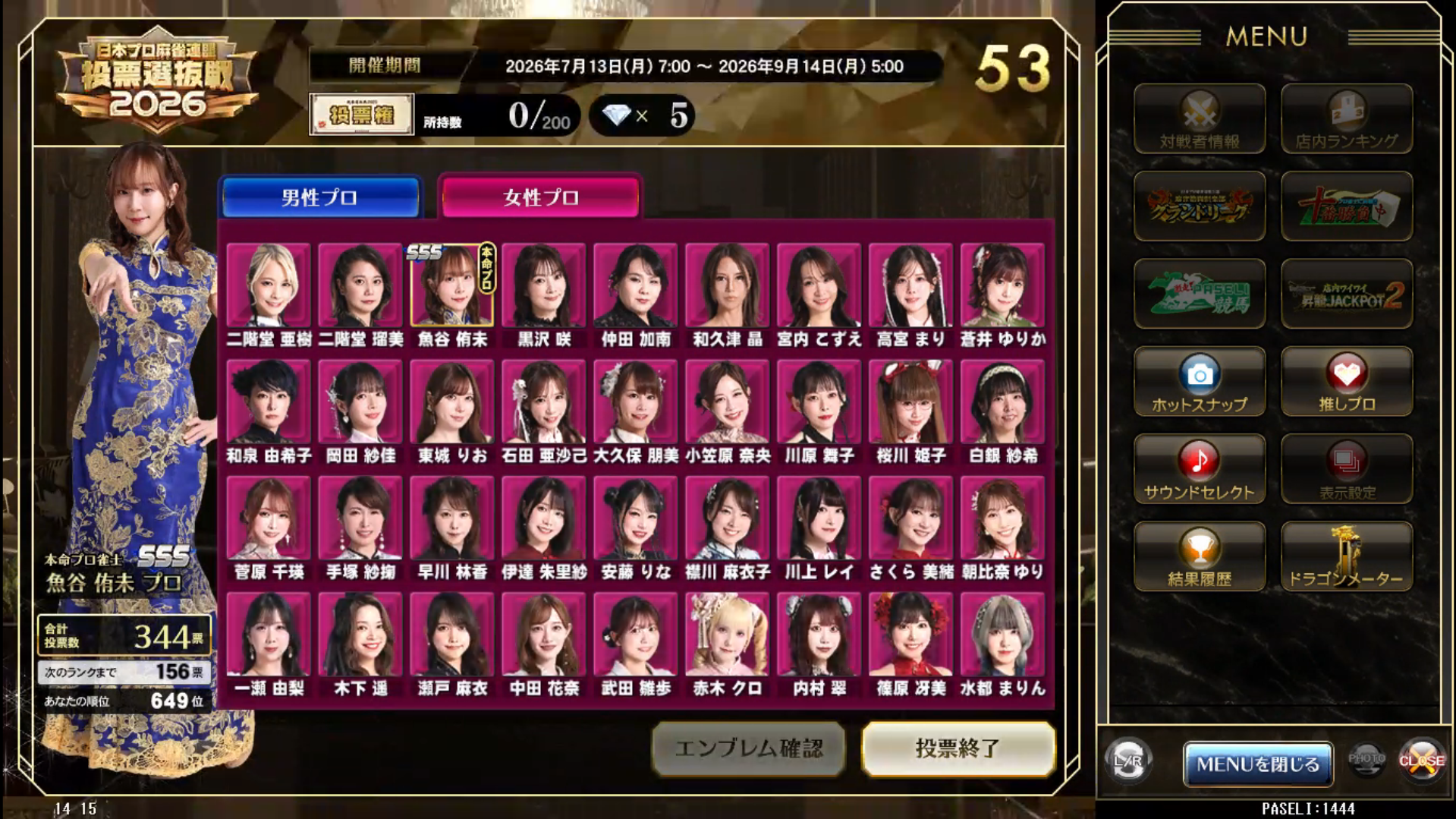
Bearing all that in mind, let’s talk about the cleverest and meanest thing that Mahjong Fight Club does to print money: the pro player voting contest. Log in and you’re presented with a voting leaderboard divided by gender, on which the top players have millions of votes. After that, a wall of faces, one for male players and one for female players. Pick a favorite, and from that point on your play will earn you votes in every session. The better you perform in matches, and the more minor objectives you complete, the more votes you’ll get to spend on your pro. Contribute more votes and you will level up as a “supporter” of that pro, from a D rank up to SSS, and then silver, gold, platinum, diamond, and “Legend” SSS rank.
Like other accolades in MFC, SSS-level supporters get introduced with pomp and circumstance and their own custom nameplates. Legends are numbered by how fast they got there (“the 23rd SSS Legend for [Pro]”), so for the true whales, it’s a race. In-game, these players get to use the voice and image of their chosen fave, along with fancy effects featuring the pro’s likeness when they win.
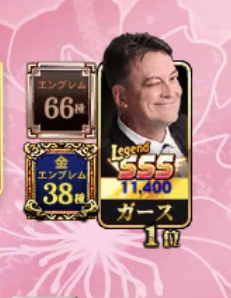
You don’t just get the satisfaction of “supporting” your fave, but preferential selection to play against them. When pros are online during the event, SSS players get shot to the top of the queue to play them. Again, I did not get lucky enough for this to happen.
You have to pay a little bit more than usual to participate in the vote, and if you pay even more per credit you’ll get a vote multiplier. So Konami knows what this is: a parasocial idol culture money-printing machine. (If you’re playing in Japan, you can even earn physical trading cards from a printing machine by reaching Legend status.)
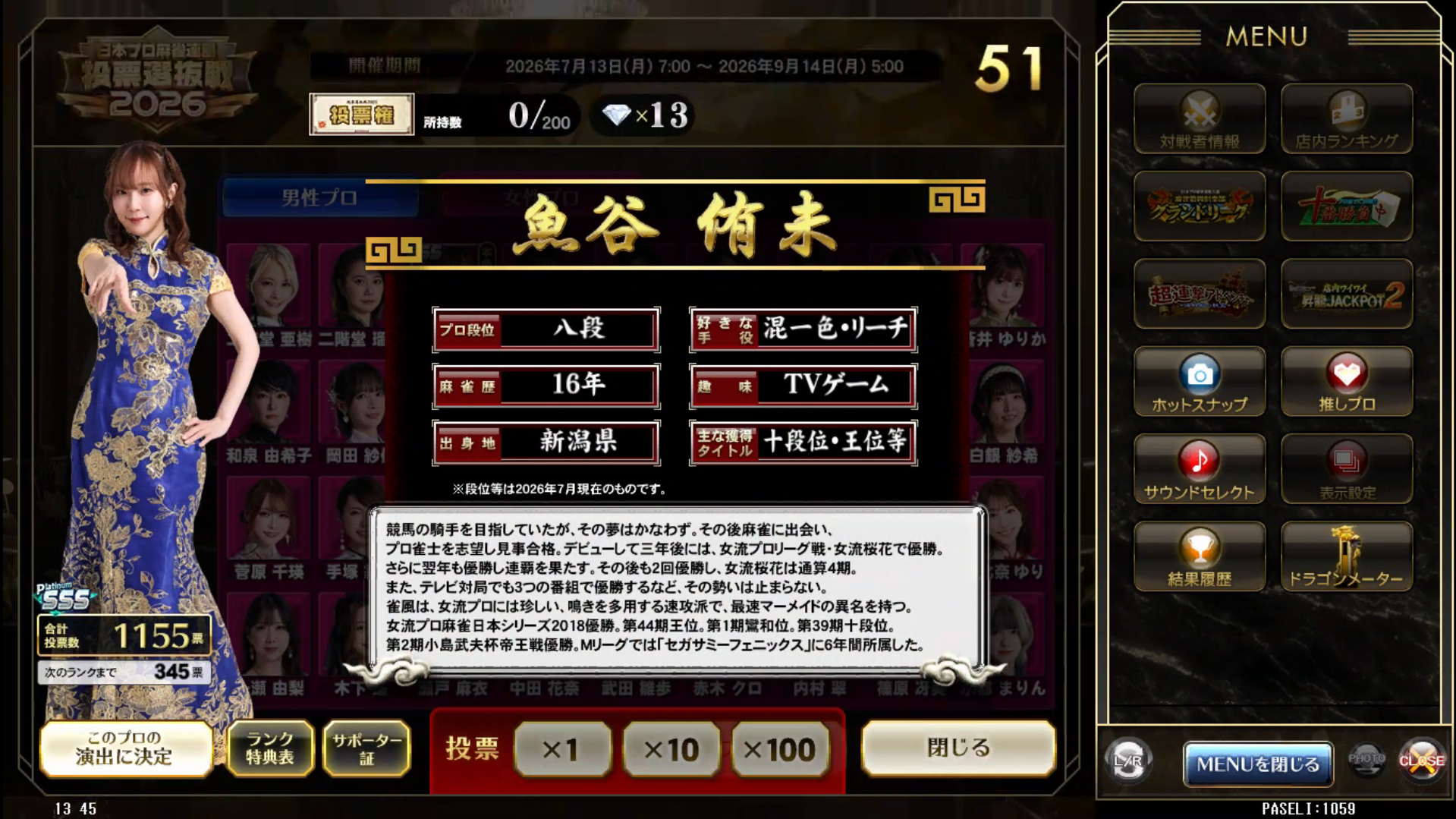
I chose Yuumi Uotani, who I had met at a pro meet and who had complimented the Rin Tohsaka and Neco-Arc keychains hanging from my bag. So obviously she was a good person, you know? And if I’m in a position to parasocially pay that back a little, why shouldn’t I? I got to Platinum SSS, and the road to Legend rank was far… and, well, a lot more money. Sorry, Uotani-san, I can only do so much.
But amassing votes is kind of addicting in and of itself. They are, after all, just experience points, and we all know how inherently addictive those are. It’s not a consistent number of votes every game, which of course only makes it more enticing. Maybe you’ll hit an achievement milestone and earn a few more votes today; maybe you’ll win a jackpot in the vote lottery; maybe you’ll just win three straight games for a windfall. I would be lying if I did not say that chasing the ranks wasn’t a motivator to play more games.
How I did, and ranked match

Instead of a granular point ranking system like Tenhou would later use, both MFC and Sega MJ have “orb” systems. First place gets two orbs, second place gets one, and by the inverse, third place gives one to the winner while last place gives two orbs to first and second place. Fill the rank screen with orbs and you level up through traditional dan and kyu ranks, followed by a wide range of increasingly fanciful ranks: over on Sega MJ, for example, I’m a Demon God. (鬼伸).
I like the way this visualization makes the rank point system feel very direct and personal: we are not trying to win rank points given by the game (though we actually are), we are fighting to steal precious orbs from each other.
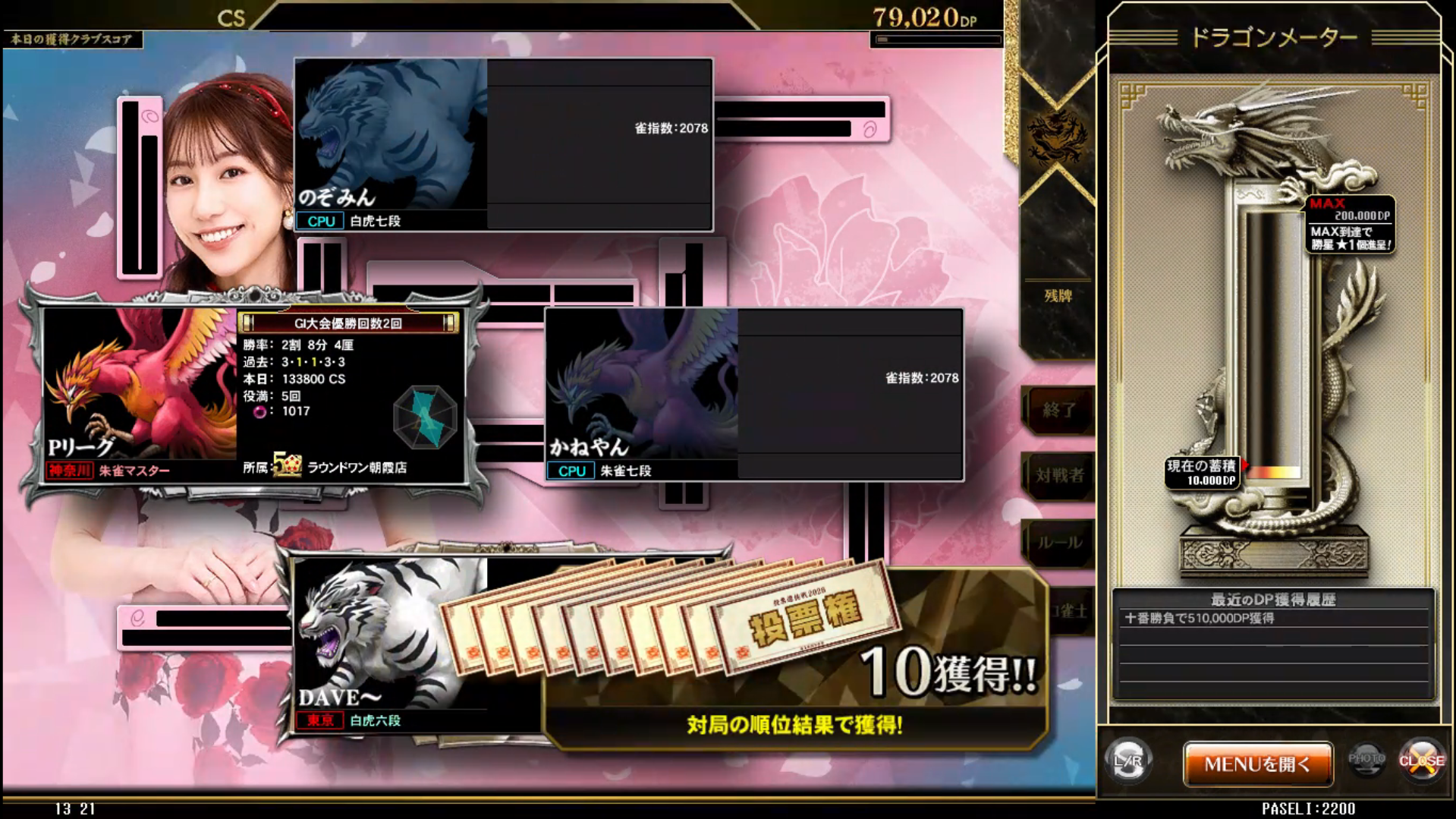
MFC has a flavorful system that assigns players personas via their play styles, using the Chinese Four Symbols, the divine beasts. The blue dragon is the greedy high-score player, the turtle-snake is the defensive wall who never deals in, the white tiger is a relentless attacker who doesn’t back down, and the vermillion bird goes for the fast win. (You might know these beasts’ names from anime/manga by their Japanese romanizations: Seiryuu, Genbu, Byakko, and Suzaku.) The game analyzes your play style via your stats and identifies you with one of the beasts. I was Byakko.

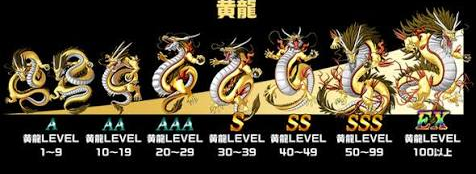
In MFC you reach Kouryu (yellow dragon) rank after the dan ranks. This is a major occasion; when it happened to me the game had a whole ceremony that commemorated the date and time at which I’d won the promotion, as well as the amount of games I made the rank in (50). After leveling up this rank, the dragon evolves like a Pokemon into a Shinryu (true dragon), themed after the elements (fire, ice, earth, water), based presumably on your style of play. This awakening happens through an unbelievably complex system of trials; the Shinryu ranks weren’t remotely in sight for a newbie like me. It’s a system established to continue giving players a level-up payoff even after years of regular, hard-fought matches.
But I did make Kouryu, and it seems like 50 matches was pretty damn fast to do so. I felt good about it. I guess I’m okay at mahjong after all.
What did we learn here?
The reason I try out all these different mahjong clients is that I think it’s important to change the scenery every so often if you're going to play the same game for as long as I have. Slightly different rules, meta-game, opponents, even sheer vibes make a difference and help keep things fresh. Riichi has genre-king platforms (Tenhou, Mahjong Soul), and it’s important to remember that their meta and systems are not the only way the game has ever been played. (And again, MFC predates these platforms.)
Mahjong Fight Club combines fast gameplay designed for the arcade with the video-game flash and atmosphere that I often find lacking in standard online clients. I appreciate that: there should be more dragons and lightning in video game mahjong.
I was never going to stick around— paying $30 a week to play online mahjong is pretty much a non-starter— but I definitely enjoyed my time, and I genuinely found it difficult to tear myself away.
(Little end note about Mahjong Fight Girl: as this game is not available outside Japan, I can’t speak for it as a player. However, as someone who was watched plenty of video, MFG combines very high production values with the single most predatory gacha I have ever seen in a video game, one in which 10,000 yen is a minimum investment. You will probably never get MFG as a home or gacha game, because it is interested in maintaining a game economy in which every player is a major whale with thousands of dollars of lifetime spending.)