In Virtua Fighter 5, a simple toe kick can kill you

(I use a tiny bit of numpad notation in this piece. You can google it.)
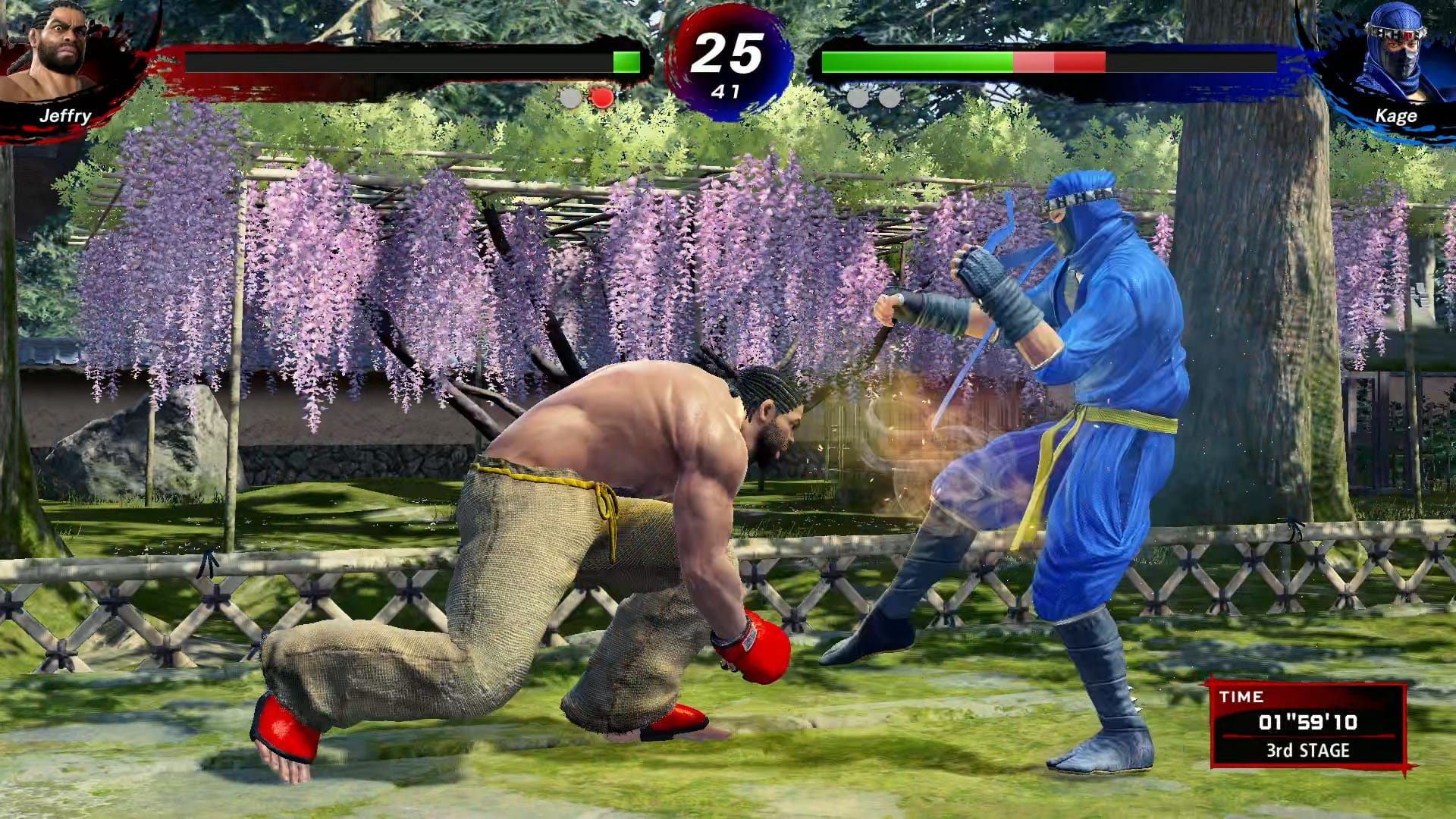
I have never really burned out on Virtua Fighter 5 in the decades since it first released, and one of the reasons for that is that I like to switch up my character. When VF5 REVO hit, I got really into playing Pai, a mobile, fast character who hits easily but not hard. Lately I’ve been into the opposite: the heavy berserker Jeffry.
As opposed to pro wrestler Wolf— probably my favorite grappler in a fighting game— Jeff’s style tilts more towards heavy strikes. He moves and attacks slower than other characters, leaving bigger openings to be punished… but if Jeffry reads you right and lands just the right hit, you die. I want to talk about one such move in Jeff’s arsenal, a very unique one. The move is the toe kick, performed by pressing down+K (2K.)
Writing about games is no longer a feasible occupation, and The Gamesoft Robo Fun Club is a solo labor of love that depends entirely on paid subscriptions from readers to exist. If you enjoyed this piece and you'd like to see more, I'd love to see you become a regular or paid subscriber. Paid subscribers get exclusive posts and keep me fed. Thanks for reading the pitch and hope to see you subscribe!
Toe kick
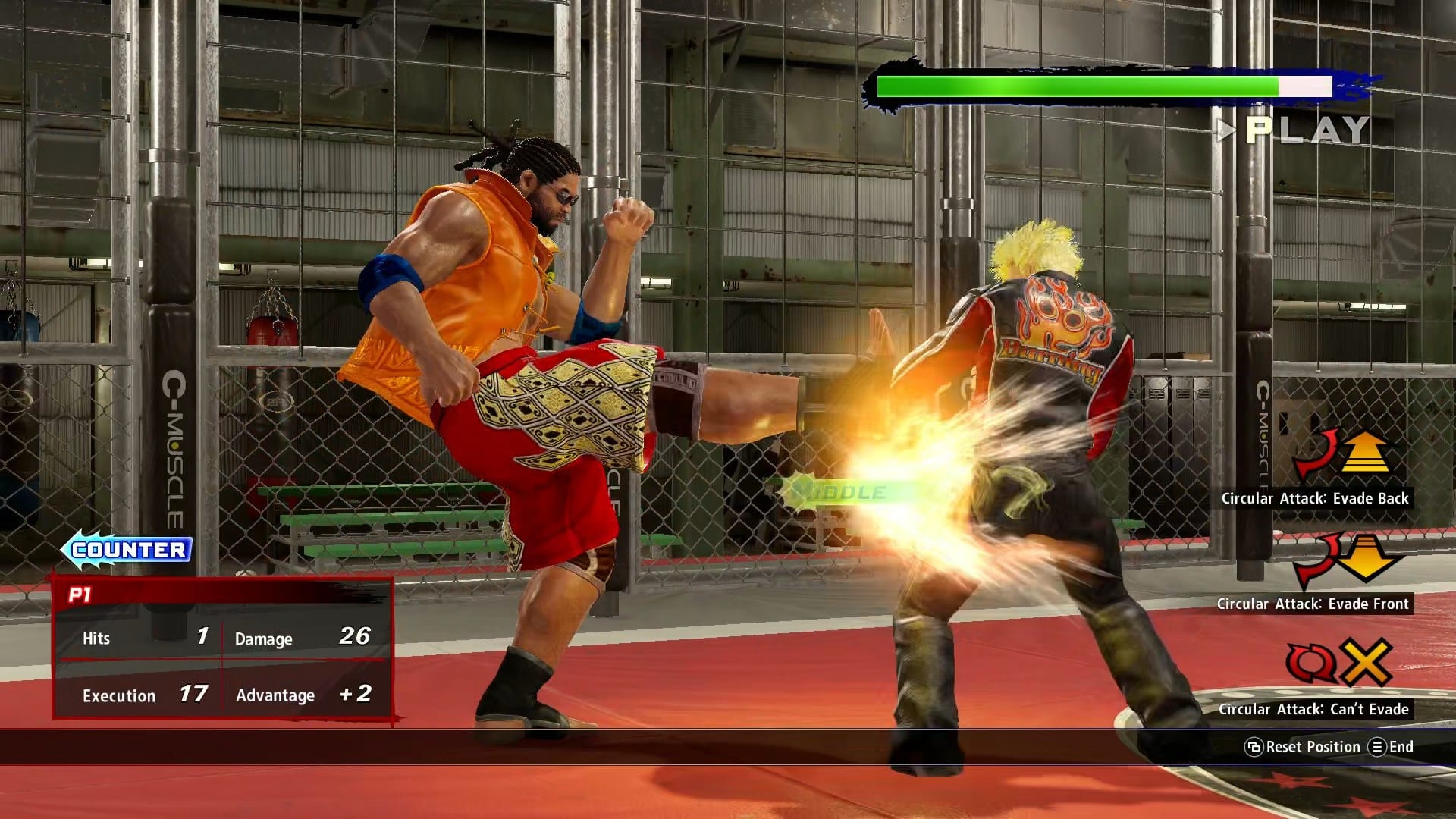
The toe kick is about as simple as strikes get: Jeffry swings up his back foot for a poke. The move has a deceptively long range that reaches all the way out to his toes, and as a mid attack it must be blocked high. It’s best at that long range, to punish foes who’ve whiffed an attack right in front of you, or who’ve started to charge in from a distance.
But Jeff has various great mid kick moves, and probably the best mid kick poke in the game in down/forward+kick (3K). What’s special about this one? Well, should this humble kick connect, it deletes about half of the opponent’s life bar.
There is no input forgiveness here and the game will not turn your sloppy attempt into a proper 236.
Allow me to explain. The toe kick is what we call a “hit-throw” in VF: if the move connects (or counter-hits), you quickly input a specific throw command to immediately execute an unavoidable throw on the other player for significant additional damage. In the case of the toe kick, Jeffry zooms to the staggered opponent no matter how far away they are— it's possible to make it look like he outright teleports forward— and immediately grab them up over his back to slam them down for his signature Splash Mountain throw. Thus this humble hit-throw delivers decisive, match-winning damage.
Most hit-throws require the player to execute the throw precisely at the moment of impact: mashing it out won’t work. The toe kick is not like that. Though it calls for precise timing, it is unlike any other move I can think of in the game in that you must time your input precisely slowly.
You must not execute the throw command (236P+G) until Jeffry’s stance has completely returned to normal after the strike: you watch and wait for both of his feet to be firmly planted on the ground again. Once the animation is completely over, you must then input 236P+G, cleanly and correctly. If you are too early or too late, Jeffry will simply perform a normal throw that follows the usual rules. It might even connect. But if you are just right, Jeffry will instantly do the Splash Mountain throw. Again, after being hit by the toe kick, there is no way to avoid being pulled into the throw.
Why this kind of damage?
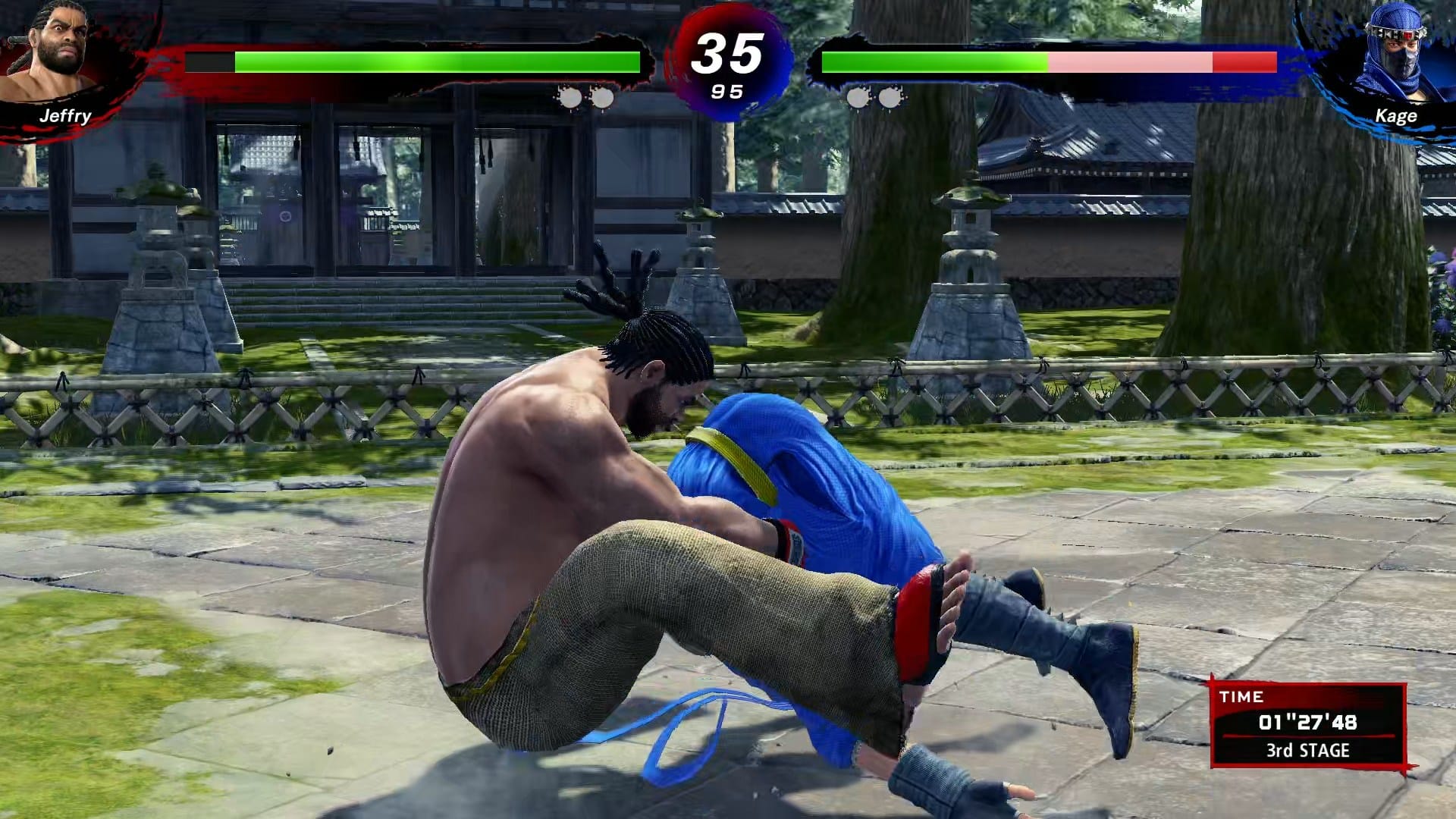
For new players, one of the big shocks of Virtua Fighter is getting hit by a high-damage move, especially when it's delivered by one of the big guys. (See also Wolf's Burning Hammer.) We are used to multi-hit combos delivering this kind of damage from a single strike, but when it’s laid down to its bare essence— you land this small hit, so now you get this huge hit for free— it can feel weird. Everyone would hate it if the toe kick just did half damage by itself, but is it functionally all that different?
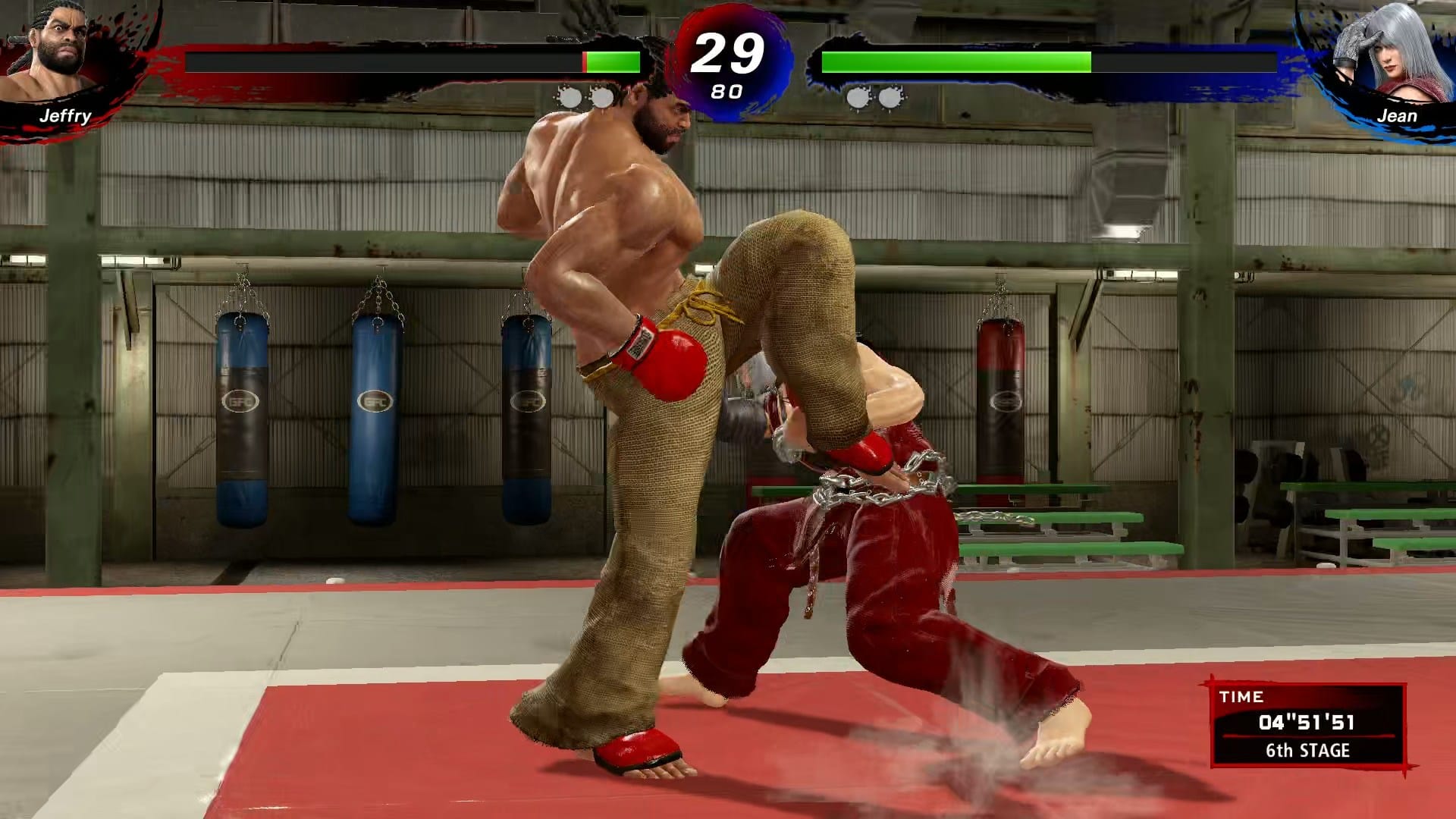
The toe kick isn’t very different from other comparable moves. At 17 frames, it’s the same speed as Jeffry’s leaping knee (6K) launcher that leads to similar damage via an air combo. The move leaves Jeff open for 10 frames when blocked, so the defender can punish Jeffry with a throw if he tries to use it up close. And since the move hits in a straight line forward, you can sidestep it on either side and punish with an attack. The level of risk is relatively low, but still appropriate relative to the damage payoff. If the knee’s fair, the toe kick is fair, right?
(An aside: Jeff’s toe kick was -7 on block in Final Showdown Ver.A, the version of the game played for over a decade. -7 at distance was really quite safe for such a big payoff, but nobody noticed the potential of the move for many years. The existence of the move actually shot Jeff up the tier lists from the bottom to a solid mid late in FS’ life. The first big balance patch for Ultimate Showdown/REVO, the remake, nerfed the frame data to -10, balancing the risk better to the reward while still keeping the move unique and strong.)
And of course, the additional command adds a little challenge; you could miss that damage. But it’s an easy move. The timing is slow. With some practice and experience, you should be able to pull it off every single time. But will you?
A slowball
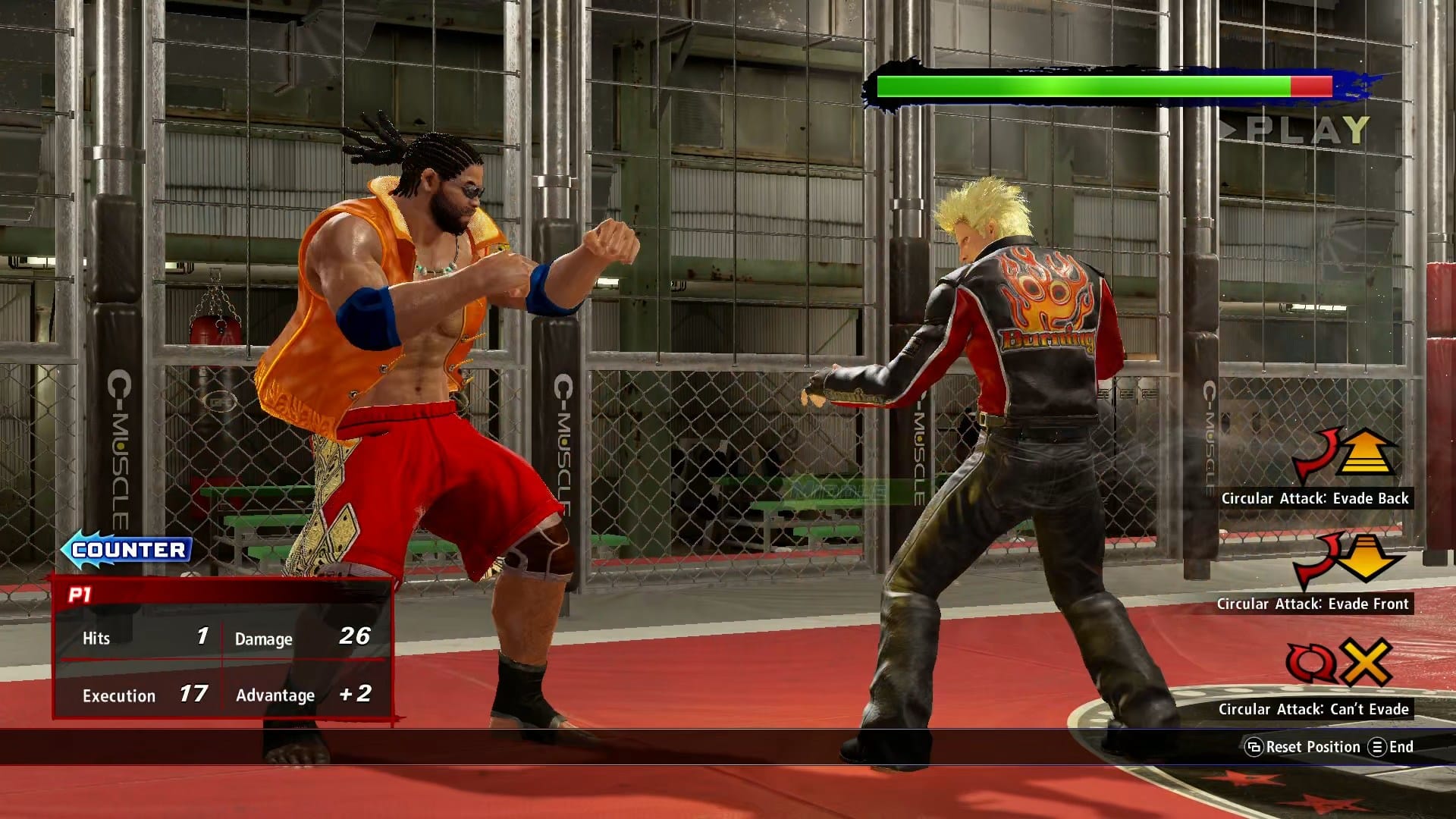
As I said before, players execute most hit-throws at the moment of impact. The timing is fast and tight, but it’s also easy to understand and feels great to pull off. It’s a very easy timing to get used to, and in the heat of a fight, you’ll execute it almost unconsciously.
The toe kick throw is different. In the moment you land that hit, you need to be very conscious. You must specifically suppress the instinct, learned from all those other moves, to quickly input the follow-up command. Though only for a quarter of a second, you have to wait. I have found that it is this precisely slow timing, not the moment-of-impact hit, that is easy to screw up in a real fight. Even though it shouldn’t be.
This move is a slowball that you have to hit along with the fastballs. Not unlike playing a musical instrument, timing and rhythm are part of what make fighting game moves so satisfying. To master and apply the techniques, hard and soft, slow and fast, with your hands (or other) and brain working in concert, is one of the great joys of fighting games. It’s a feel genre.
And if you ask me, after all these years, VF5 remains one of the best-feeling fighting games there is. That's in large part because it's so conscious of rhythm, weight, feel. It's by no means real– video games don't need absolute real!– but it uses these elements to create a world that feels right. And if you don't get these things right, it ain't Virtua. Thankfully, Crossroads is already looking good.